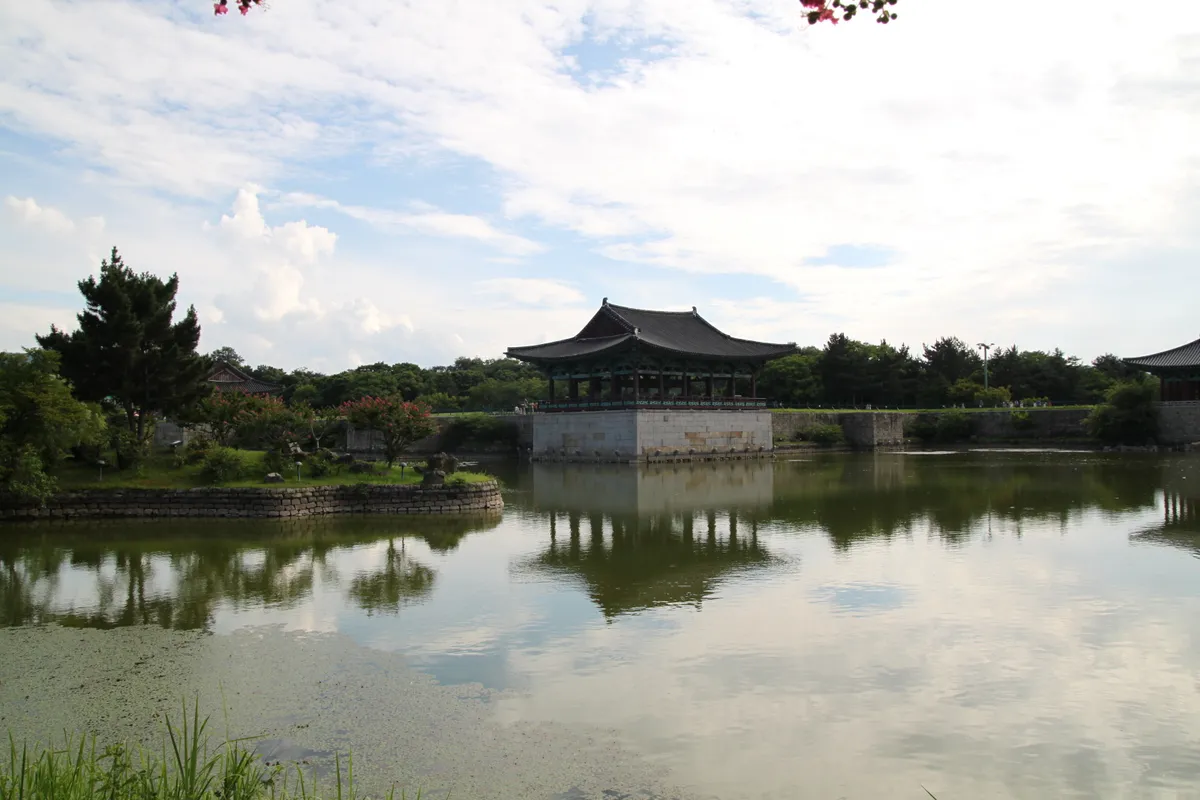
Donggung Palace and Wolji Pond, Gyeongju
慶州 東宮과 月池
경상북도 경주시
Basic information
- Designation
- Historic Site No.18
- Category
- Sites & Pagodas
- Era
- 통일신라시대
- Designated year
- 1963
- Location
- 경주시, 경상북도— 경북 경주시 인왕동 517 번지 일대
- Coordinates
- 35.834718, 129.226486
AI Docent
✨ AI-generatedWelcome to Donggung Palace and Wolji Pond! You're standing at one of Korea's most elegant historical sites, built over 1,300 years ago in 674 during the unified Silla period. Imagine a royal retreat designed with Taoist philosophy in mind—three islands surrounded by twelve hills, all landscaped with rare trees, flowers, and exotic animals gathered from across the kingdom. Pavilions like Imhaejeon dotted the shoreline, hosting grand state festivals and royal banquets. Even a prince called this place home. This wasn't just beautiful—it was ingeniously engineered. When archaeologists excavated here in the 1970s, they uncovered the original water systems, stone embankments, and 26 building foundations. They found exquisite pottery and decorative bricks inscribed with dates, revealing daily life from that distant era. History echoes here: this pond witnessed the final Silla king offering a banquet to the founder of Goryeo, marking the end of one dynasty and the birth of another. Come experience where power, nature, and artistry once converged.
⚠ This is an AI-generated retelling of the official description. For accuracy, refer to the official description below.
Description
Located on the west part of Anapji Pond, this is the Imhaejeon Palace Site of the Silla Period. Anapji Pond was built in 674 during the 14th year of the reign of King Munmu after the unification of the Korean Peninsula. It has three central islands, and to the north and east are 12 hills -- a composition reflecting the Taoist philosophy. Beautiful trees and flowers as well as rare birds and animals were brought from all over to these islands and hills. A number of pavilions, including Imhaejeon, were constructed around the lake and used for state festivals and banquets and as a prince's palace. Anapji is an excellent example of garden and lake construction of that period. The reconstruction of the present lake and archaeological construction sites was undertaken during the period 1975-76 and completed in 1980. The original water conduit, drainage channel, and stone embankments were excavated and restored accordingly. A total of 26 building foundations and many relics were excavated from this site, including bowls, plates, and flower-patterned bricks where "The Second Year of Joro (680)" was inscribed. This was also the place where King Gyeongsun, the last monarch of Silla, hosted for Wang Geon, founder of the Goryeo Dynasty, a banquet to ask for his aid.
Location
지도를 불러오는 중…
Have you visited this place?
Log in and verify your visit on-site via GPS to record a stamp in My Journey. (QR verification coming later.)
Images: KOGL (khs.go.kr) · Data source: Korea Heritage Service Open API (khs.go.kr)