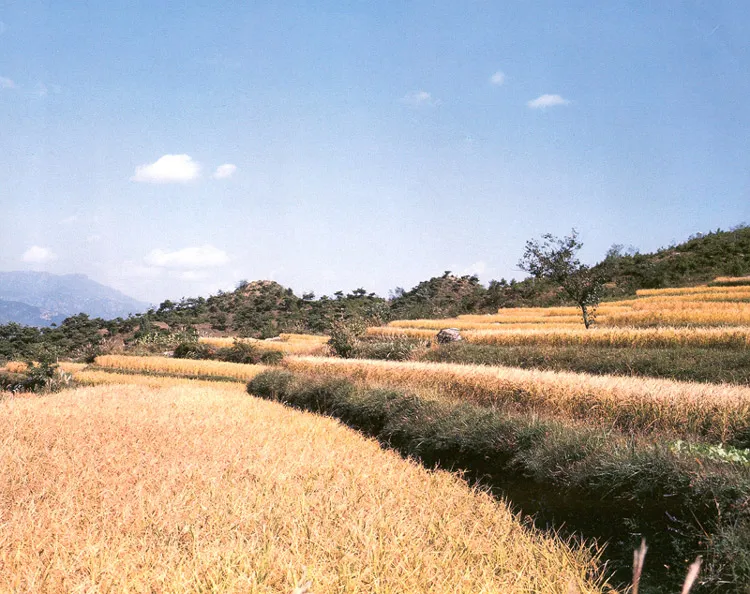
Ancient Tombs in Bukjeong-ri, Yangsan
梁山 北亭里 古墳群
경상남도 양산시
Basic information
- Designation
- Historic Site No.93
- Category
- 유적지
- Era
- 삼국시대
- Designated year
- 1963
- Location
- 양산시, 경상남도— 경남 양산시 북정동 697번지
- Coordinates
- 35.356798, 129.049165
AI Docent
Coming soonAn AI-generated, friendly retelling of this heritage site is available in Korean. An English version is on our roadmap — for now, please see the official description below.
Description
This is a group of tombs placed side by side along the central ridge of Obongsan Mountain. Among them, large tombs were scattered in the upper place of the mountain, and lots of relics were also excavated. On the other hand, small tombs were placed in the steep or the lower part of the mountain, which shows the possibility that the site of tombs has been possibly moved across the time. Bubuchong, or the tomb for a man and his wife, and Geumjochong excavated by the Japanese were included among those tombs and; in 1990, those were again investigated. As a result, the tombs of this area were verified to have been a front-open stone chamber tomb, including Bubuchong and Geumjochong. Bubuchong is a large tomb located in the upper part of the mountain, with the inner chamber and ceiling were painted white, exuding grace. On the other hand, the Geumjochong is a small tomb placed in a steep part of the mountain. The location and the different form of tombs seemed to be closely related to the social position of the corpse. The exquisite relics excavated in the two tombs including the golden crown, and golden accessories are similar to those found in the large tombs of the Gyeongju area. In the case of the Bubuchong, the husband as a head of the family died in the middle 5th century, and the tomb was built. When his wife died in the late 5th century, she seemed to have been buried next to the dead husband together. The person entombed in of Geumjochong seemed to have died around between the late 5th and the early 6th centuries. Judging from the relics excavated, the corpse is considered as a person closely related to the central government or the corresponding relative.
Location
지도를 불러오는 중…
Have you visited this place?
Log in and verify your visit on-site via GPS to record a stamp in My Journey. (QR verification coming later.)
Images: KOGL (khs.go.kr) · Data source: Korea Heritage Service Open API (khs.go.kr)