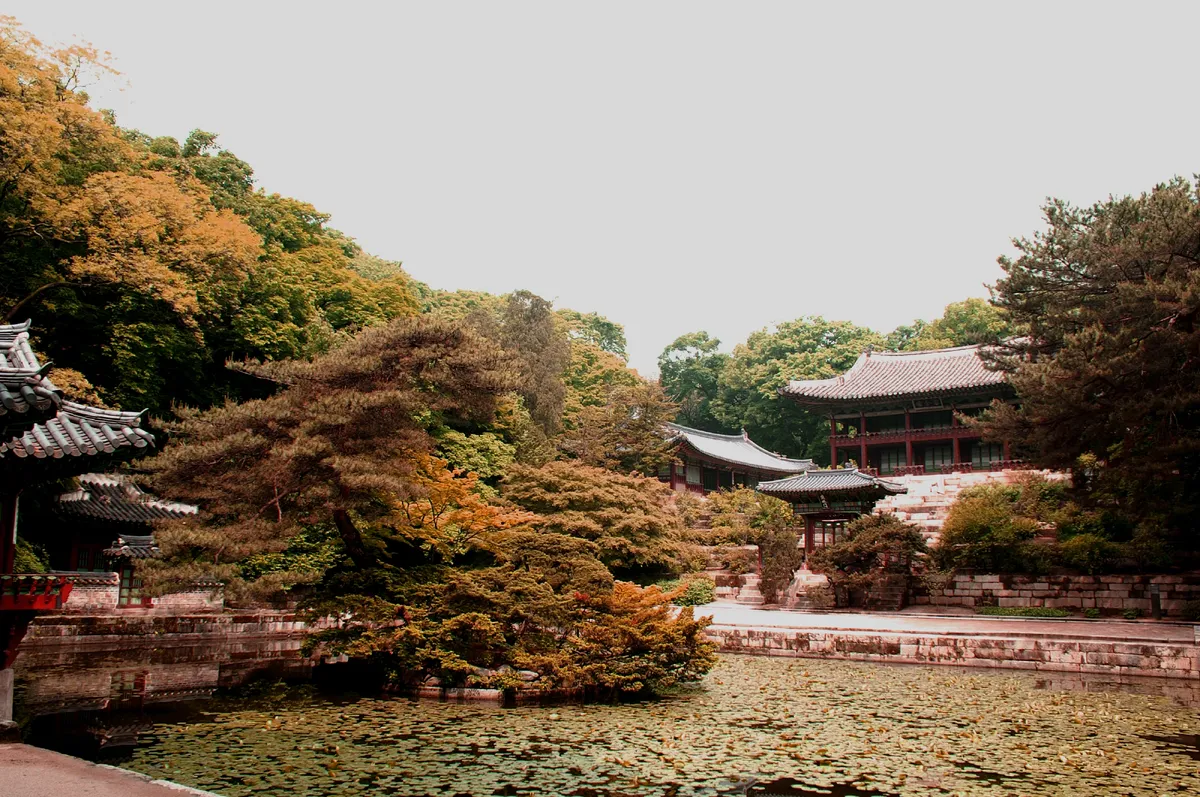
Changdeokgung Palace Complex, Seoul
昌德宮
서울특별시 종로구
Basic information
- Designation
- Historic Site No.122
- Category
- Sites & Pagodas
- Era
- 조선 태종 5년(1405)
- Designated year
- 1963
- Location
- 종로구, 서울특별시— 서울 종로구 율곡로 99 (와룡동)
- Coordinates
- 37.577838, 126.989912
AI Docent
✨ AI-generatedWelcome to Changdeokgung Palace, built over 600 years ago in 1405 as a royal retreat for Korea's Joseon Dynasty kings. Imagine stepping into a place where Korean royalty once lived, worked, and found peace. What makes this palace extraordinary? It's a survivor. While other palaces burned during the Japanese invasion of 1592, Changdeokgung was rebuilt first and became the main royal residence. Though fires struck multiple times over the centuries, it was carefully restored each time, preserving its original layout. The palace is organized into three distinct areas: the outer section for official ceremonies, the inner quarters where the king and queen slept, and—most beautifully—a rear garden considered one of Korea's finest examples of traditional landscape design. This garden perfectly blends human architecture with nature, creating spaces where royalty could genuinely rest and reflect. Today, you can walk through these same spaces and experience the harmony between building and nature that defined Korean royal life. It's living history.
⚠ This is an AI-generated retelling of the official description. For accuracy, refer to the official description below.
Description
Changdeokgung, a palace for the Joseon Dynasty, was built in the 5th year of the reign of King Taejong (1405). It was likely built as a detached palace, since Gyeongbokgung Palace served as a main hall along with Jongmyo Shrine and Sajikdan Altar. It was rarely used in the beginning because kings usually stayed in Gyeongbokgung Palace for their lives and works. However, that it had been restored earlier than any other palace after all the palaces were burnt down by Japanese invaders in 1592; it served as the main hall since then. Although it had been burnt down many times, it was able to maintain the original size of the palace in general since it had been restored and modified in time. It was divided into three sections: the outer hall where official state functions were performed; the inner hall, which served as the king's and queen's sleeping quarters, and; the rear garden, which served as a place to rest. Among them, the garden behind the inner hall was considered an excellent example of Korea's traditional naturalistic landscape design. In 1917, Daejojeon Hall caught fire, causing the buildings and its 19 add-on buildings, including Huijeongdang Hall. In 1920, Japan had various buildings in Gyeongbokgung Palace demolished and restored to rebuild buildings in Changdeokgung Palace. The Changdeokgung Palace and the Secret Garden are excellent examples of Korea's traditional, naturalistic landscape design based on harmony with nature and are designated as UNESCO World Heritage.
Location
지도를 불러오는 중…
Have you visited this place?
Log in and verify your visit on-site via GPS to record a stamp in My Journey. (QR verification coming later.)
Images: KOGL (khs.go.kr) · Data source: Korea Heritage Service Open API (khs.go.kr)