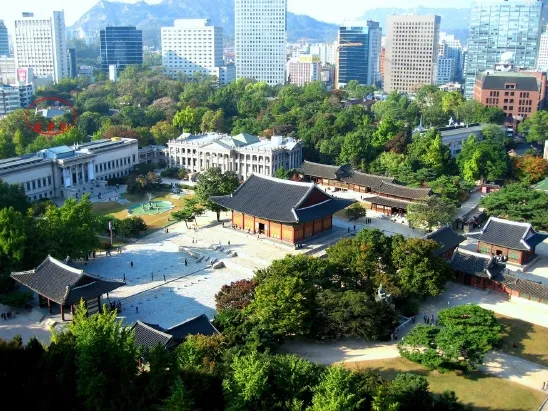
Deoksugung Palace
德壽宮
서울특별시 중구
Basic information
- Designation
- Historic Site No.124
- Category
- Sites & Pagodas
- Era
- 조선시대
- Designated year
- 1963
- Location
- 중구, 서울특별시— 서울 중구 세종대로 99 (정동)
- Coordinates
- 37.564998, 126.976515
AI Docent
Coming soonAn AI-generated, friendly retelling of this heritage site is available in Korean. An English version is on our roadmap — for now, please see the official description below.
Description
Built in the Joseon Dynasty, Deoksugung Palace was once called Gyeongungung Palace. Its name Deoksugung originated with praying for the long life of Emperor Gojong when he stayed here after he handed the throne over to his son, Emperor Sunjong, in 1907. In this site, there used to be a house for Prince Wolsan, brother of King Seongjong (1457-1494). After the Japanese Invasion of Korea in 1592, King Seonjo came back to Hanyang and made the house a temporary residence since all palaces were burnt down. It had served as a palace since the 26th year of the reign of King Seonjo (1593). The houses of Prince Gyerim and Sim Ui-gyeom in the vicinity were also included in this palace. Succeeding his father, King Gwanghaegun named it Gyeongungung in the 3rd year of his reign (1611), using it as the palace until moving into Changgyeonggung in 1615. Later, Queen Inmok, wife of King Seonjo, was expelled and detained here, and King Gwanghaegun renamed it Seogung. After the enthronement in 1623, King Injo gave the buildings in Deoksugung Palace back to the original owners except Jeukjodang and Seogeodang halls. Since Emperor Gojong moved in here after hiding at the Russian Legation, it was reused as a palace. The western-style building was built after it was burnt down in 1904. In particular, it lost the harmony with the original palace buildings since huge stone buildings were built. What changed the most was the location of the main gate. It was Inhwamun Gate on the South but changed into Daehanmun Gate, originally Daeanmun, on the east. Although it served as the palace in the late Joseon Dynasty, Deoksugung Palace was considered a unique palace of the Joseon Dynasty, with its historical presence at the end of the Joseon Dynasty; it preserved both traditional stone-made architectures and western-style ones.
Location
지도를 불러오는 중…
Have you visited this place?
Log in and verify your visit on-site via GPS to record a stamp in My Journey. (QR verification coming later.)
Images: KOGL (khs.go.kr) · Data source: Korea Heritage Service Open API (khs.go.kr)