Hoeamsa Temple Site, Yangju
楊州 檜巖寺址
경기도 양주시
Basic information
- Designation
- Historic Site No.128
- Category
- 유적지
- Era
- 고려 충숙왕<재>15년(1347)
- Designated year
- 1964
- Location
- 양주시, 경기도— 경기 양주시 회암동 산14번지
- Coordinates
- 37.845351, 127.105651
AI Docent
Coming soonAn AI-generated, friendly retelling of this heritage site is available in Korean. An English version is on our roadmap — for now, please see the official description below.
Description
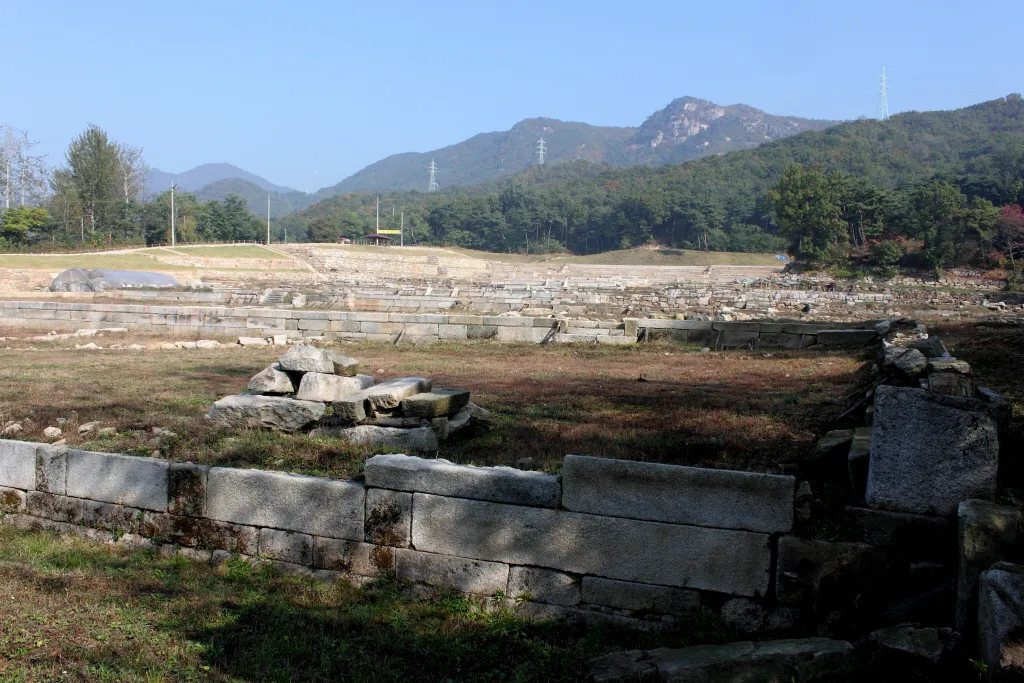
It was where Hoeamsa Temple, which was built by the Indian monk who came to Goryeo through China in the 15th year of the reign of King Chungsuk (1328), used to be located. Still, the temple is likely to have been built earlier than Hoeamsa Temple. According to Cheonbosan hoeamsa sojogi (A Construction Record of Hoeamsa Temple at Cheonbosan Mountain), which was written by Yi Saek in the early years of the Joseon Dynasty, it originated with the belief of Naong, follower of Jigong, that the temple built here would be prosperous in the 2nd year of the reign of King U (1376) of Goryeo. It had been the biggest temple in the country until the early Joseon Dynasty. A founder of Joseon, Yi Seong-gye had people stay in this temple with his master and Naong's pupil, Muhak, a monk who was regarded as a state mentor of the Goryeo Dynasty. After he abdicated the throne, he led an ascetic life here. It took 13 years to expand the temple by the order of Queen Jeonghui, wife of King Sejo. It had been the best temple during the reign of Queen Munjeong, who governed the country on behalf of King Myeongjong. Later, the temple was burnt down due to Goryeo's policy of suppressing Buddhism. Around Hoeamsa Temple, 500 meters up from the site of this temple, is the present Hoeamsa Temple where important cultural assets remain. There is the Stele for Royal Preceptor Seongak at the Hoeamsa Temple Site (Treasure No. 387) recording the achievement of Naong in the Goryeo Dynasty, Stupa and Stone Lantern of Jigong (Gyeonggi-do Tangible Cultural heritage), Stupa of Hoeamsa Temple Site (Treasure No. 388), Stupa and Stone Lantern of Naong (Gyeonggi-do Tangible Cultural heritage), Twin-lion Stone Lantern in the Joseon Dynasty (Treasure No. 389), Stele for Buddhist Monk Muhak (Gyeonggi-do Tangible Cultural heritage), Stupa of Hoeamsa Temple Site (Gyeonggi-do Tangible Cultural heritage), Eosadae Archery Monument (Gyeonggi-do Tangible Cultural heritage), Millstone (Gyeonggi-do Folk Material No. 1) and two posts of flag pole, and stone architecture of the foundation stone. Note that the temple had a south corridor -- a unique style of a temple located in a flat area -- while it was laid in the mountain area. Palaces and temples having a south corridor were characteristics of Goryeo architecture.
Location
지도를 불러오는 중…
Have you visited this place?
Log in and verify your visit on-site via GPS to record a stamp in My Journey. (QR verification coming later.)
Images: KOGL (khs.go.kr) · Data source: Korea Heritage Service Open API (khs.go.kr)