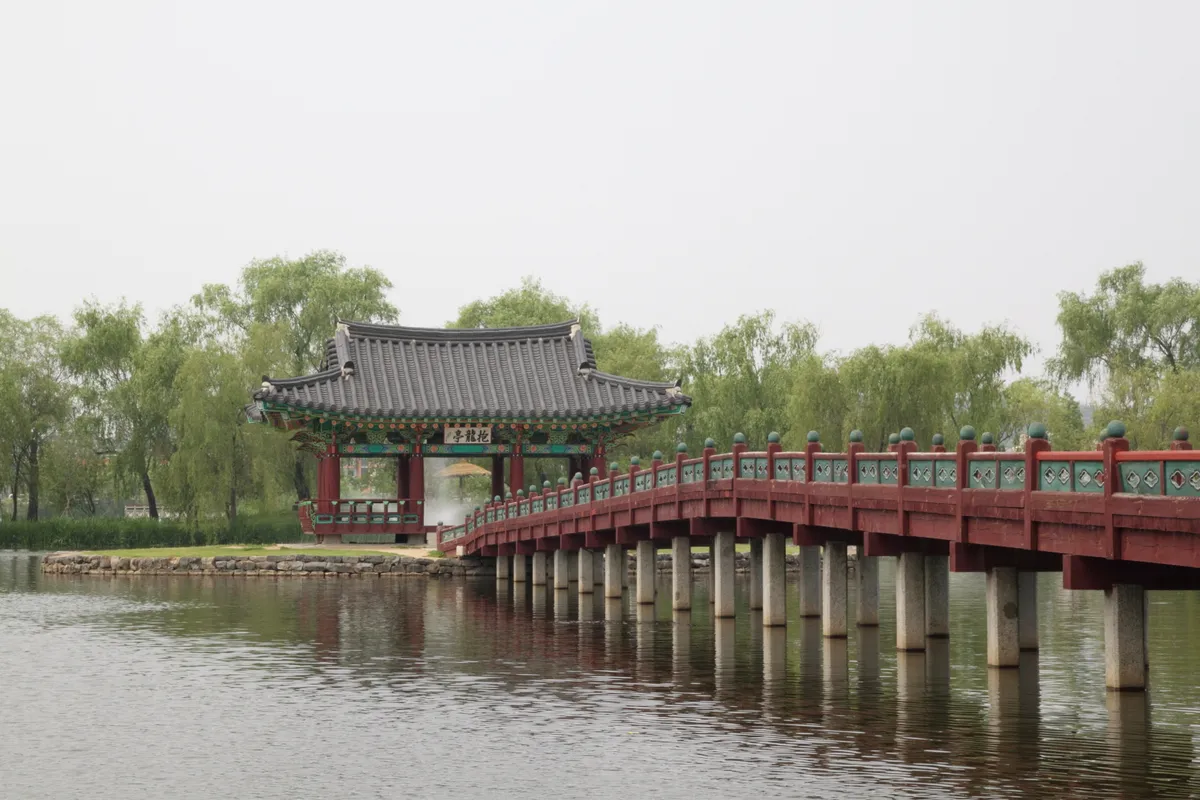
Gungnamji Pond, Buyeo
扶餘 宮南池
충청남도 부여군
Basic information
- Designation
- Historic Site No.135
- Category
- Architecture
- Era
- 삼국시대
- Designated year
- 1964
- Location
- 부여군, 충청남도— 충남 부여군 부여읍 동남리 117번지
- Coordinates
- 36.269631, 126.912314
AI Docent
Coming soonAn AI-generated, friendly retelling of this heritage site is available in Korean. An English version is on our roadmap — for now, please see the official description below.
Description
Located south of Buyeo, Gungnamji Pond was part of the detached palace in the Baekje Period. It had been mistakenly known as Maraebangjuk, the natural pond, until it was proven to be an artificial pond during the Baekje Period. Likely built during the reign of Baekje’s King Mu, it was called Gungnamji based on the phrase that the pond was built south of the palace in Kim Bu-sik's book, Samguk sagi (History of the Three Kingdoms). According to the book, water was brought through the 8-kilometer waterway to plant the cherry trees, with the island in the middle of the pond symbolizing Bangjangseonsan Mountain. Nonetheless, the shape of the waterway and island is not known. An island is assumed to have existed 30 years ago, judging from the preserved reinforcing stonewall and cheery trees. The vessels and tiles of the Baekje Period were excavated nearby. The size of the pond is not clear, but the size from the record suggested that people enjoyed boating there. The ancient Chinese believed that there used to be a Samsinsan where three ideal gods lived in the middle of East Sea. Therefore, they built the pond and prayed for eternal youth and longevity. Gungnamji, imitating the pond, was called the gods’ garden. On the east side of the pond, a detached palace during that period still remains. Gungnamji is estimated to have belonged to this palace. Around the pond, a wall and a foundation stone still remain, including the main hall and wooden bridge over the pond. It was the first gardening skill of Baekje demonstrated by the large pond, which is like a sea located near the palace, influencing Unified Silla and Japan.
Location
지도를 불러오는 중…
Have you visited this place?
Log in and verify your visit on-site via GPS to record a stamp in My Journey. (QR verification coming later.)
Images: KOGL (khs.go.kr) · Data source: Korea Heritage Service Open API (khs.go.kr)