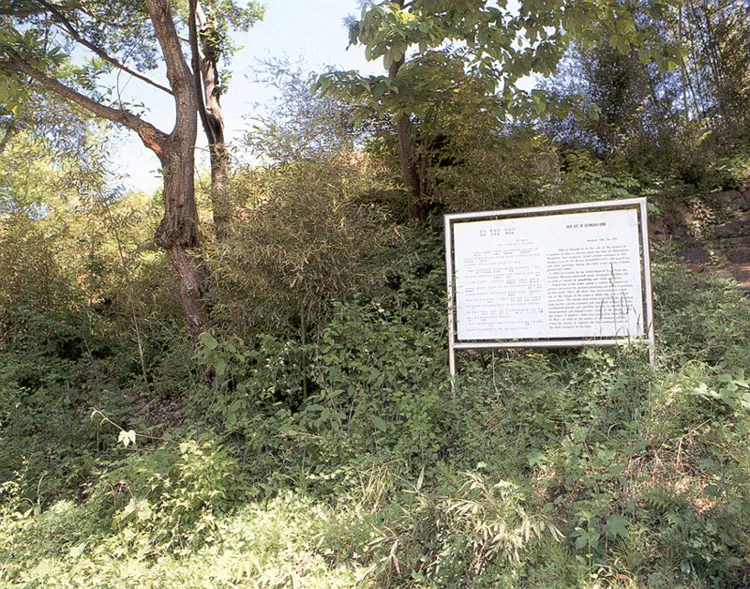
Kiln Site in Chunghyo-dong, Gwangju
光州 忠孝洞 窯址
광주광역시 북구
Basic information
- Designation
- Historic Site No.141
- Category
- 유적지
- Era
- 고려시대 후기~조선시대 전기
- Designated year
- 1964
- Location
- 북구, 광주광역시— 광주광역시 북구 풍암제길 14(금곡동, 분청사기박물관)
- Coordinates
- 35.168799, 126.996567
AI Docent
Coming soonAn AI-generated, friendly retelling of this heritage site is available in Korean. An English version is on our roadmap — for now, please see the official description below.
Description
The Chunghyo-dong ruins of pottery kiln are the best among the places where celadon with inlaid design, Buncheong ware, and white porcelain were baked on the north side of Mudeungsan Mountain from the late Goryeo Dynasty to the early Joseon Dynasty. Looking like several mounds connected, the kiln consisted of an entrance and an exit and a burning room for wares and chimneys. The record of Sejongsillok jiriji (Geography of the Annals of King Sejong) corresponded to the phenomenon, name, and relics of this area, and the kiln works started when the materials for the book were completely gathered around 1430. The kiln work had continued from 70 to 80 years but was suspended in the early 16th century. In the beginning, only Buncheong wares were the mainstream of ceramics. Although white porcelain was also produced, its production decreased because the pattern of Buncheong was too complicated. Nonetheless, white proclaim was made in earnest, and quality and quantity improved. Buncheong ware was the mainstream of ceramics in the beginning, but white porcelain came to the fore. The white porcelain pieces were usually small, but the Buncheong ones were both large and small. There were various kinds of Buncheong ware including dishes, bowls, pieces of glass, pots, jars, ink stones, ritual vessels, and others. The patterns in Buncheong ware were chrysanthemum, butterfly, fish, crab, cloud, and mixed type. The inside of the ruins of pottery kiln featured saucer and machines for making pottery. The Chunghyo-dong kiln site was used from the late Goryeo Dynasty to the early Joseon Dynasty, serving as an important material that showed the process from the late style of celadon to Buncheong ware.
Location
지도를 불러오는 중…
Have you visited this place?
Log in and verify your visit on-site via GPS to record a stamp in My Journey. (QR verification coming later.)
Images: KOGL (khs.go.kr) · Data source: Korea Heritage Service Open API (khs.go.kr)