Mireuksa Temple Site, Iksan
益山 彌勒寺址
전북특별자치도 익산시
Basic information
- Designation
- Historic Site No.150
- Category
- 유적지
- Era
- 백제시대
- Designated year
- 1966
- Location
- 익산시, 전북특별자치도— 전북 익산시 금마면 기양리 32-2번지
- Coordinates
- 36.012339, 127.030616
AI Docent
✨ AI-generatedWelcome to Mireuksa Temple Site! Imagine King Mu of Baekje witnessing a divine vision—a Maitreya Buddha appearing at a sacred pond. So moved was he that he ordered the pond reclaimed and built this magnificent temple to protect his kingdom with Buddhist spiritual power. What you see today are remarkable stone remnants: two elegant pagodas flanking where a wooden pagoda once stood, surrounded by halls for Buddha images. The layout is wonderfully unique—an ambulatory walkway divides the temple's spaces. The buildings featured ondol, an early floor-heating system, making them crucial for understanding how heating technology developed through later centuries. The West Pagoda is Korea's oldest stone pagoda and a National Treasure. Archaeological digs uncovered roof tiles, some inscribed with characters, plus pottery, metals, and wood—treasures that reveal daily life in ancient Baekje. A pavilion displays a miniature restoration, helping you visualize this guardian temple in its glory. Step back over 1,400 years and feel the spiritual purpose that shaped a kingdom.
⚠ This is an AI-generated retelling of the official description. For accuracy, refer to the official description below.
Description
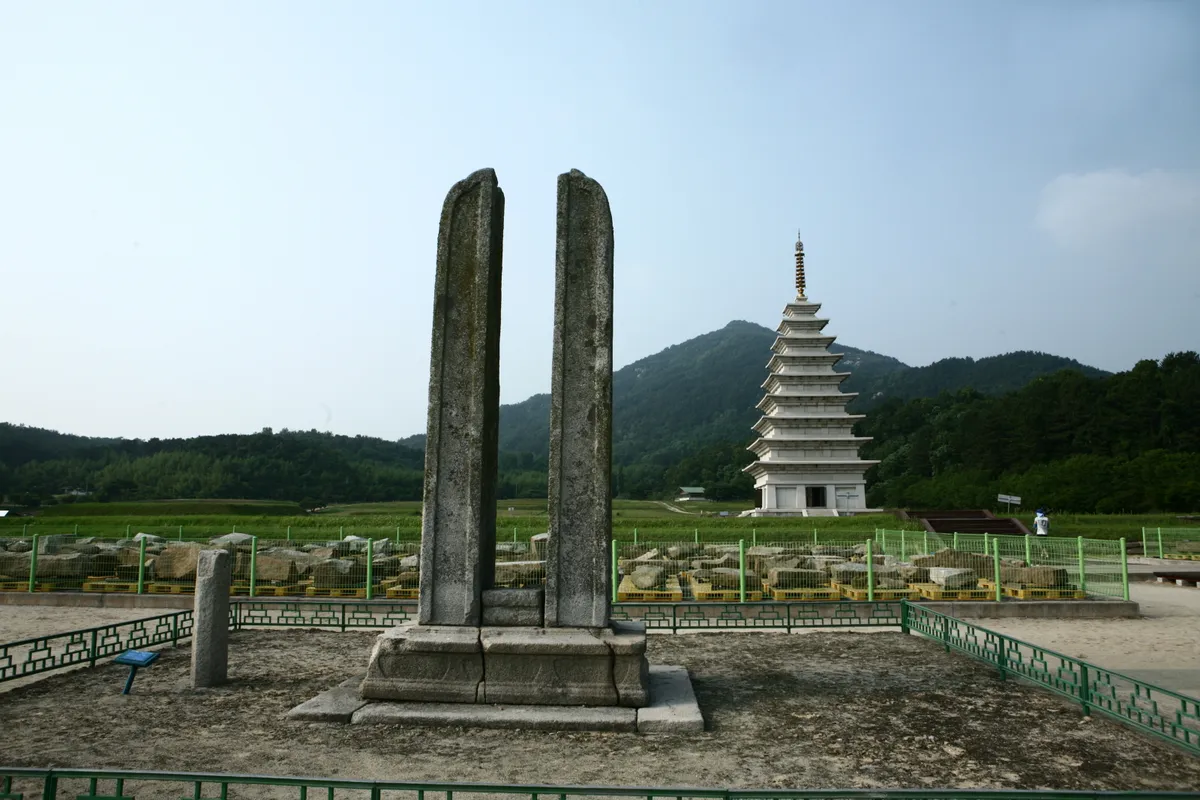
This is the site of Mireuksa Temple located in Giyang-ri, Iksan-gun. According to Samguk yusa (Memorabilia of the Three Kingdoms), on the way to Sajasa Temple, King Mu of Baekje Dynasty and his queen saw the Maitreya Buddha Triad appearing at the pond down Yonghwasan Mountain. Later, at the request of the queen, King Mu had the pond reclaimed and pagodas, halls for the image of Buddha, and ambulatory built. According to the record, Mireuksa Temple was built during the reign of King Mu and closed during the Joseon Dynasty. The temple has two stone pagodas -- Dongtap (east pagoda) and Seotop (west pagoda) – as well as one wooden pagoda between them and several halls for the image of Buddha behind the pagodas. The layout of the buildings of the temple is very unique, with the ambulatory dividing the buildings. All the halls for the image of Buddha have 5 front rooms and 4 side rooms. The area below the room seems to have been made to protect the wooden floor against moisture. Some buildings of the temple, which were equipped with Ondol (floor heating system), are important in studying the development of Ondol in the Goryeo and Joseon eras. The excavated relics of this temple include roof tiles -- some of which had letters written on them – as well as earthen vessels, metals, and wooden materials. Seotap (west pagoda), designated as National Treasure No. 11, is truly valuable as the oldest stone pagoda. In the pavilion, one can see the miniature of the restored Mireuksa Temple. Mireuksa, which has great historical importance, is a kind of guardian temple built with the intention of protecting the state with the spirit of Buddha and was considered very important until the end of the Baekje Dynasty.
Location
지도를 불러오는 중…
Have you visited this place?
Log in and verify your visit on-site via GPS to record a stamp in My Journey. (QR verification coming later.)
Images: KOGL (khs.go.kr) · Data source: Korea Heritage Service Open API (khs.go.kr)