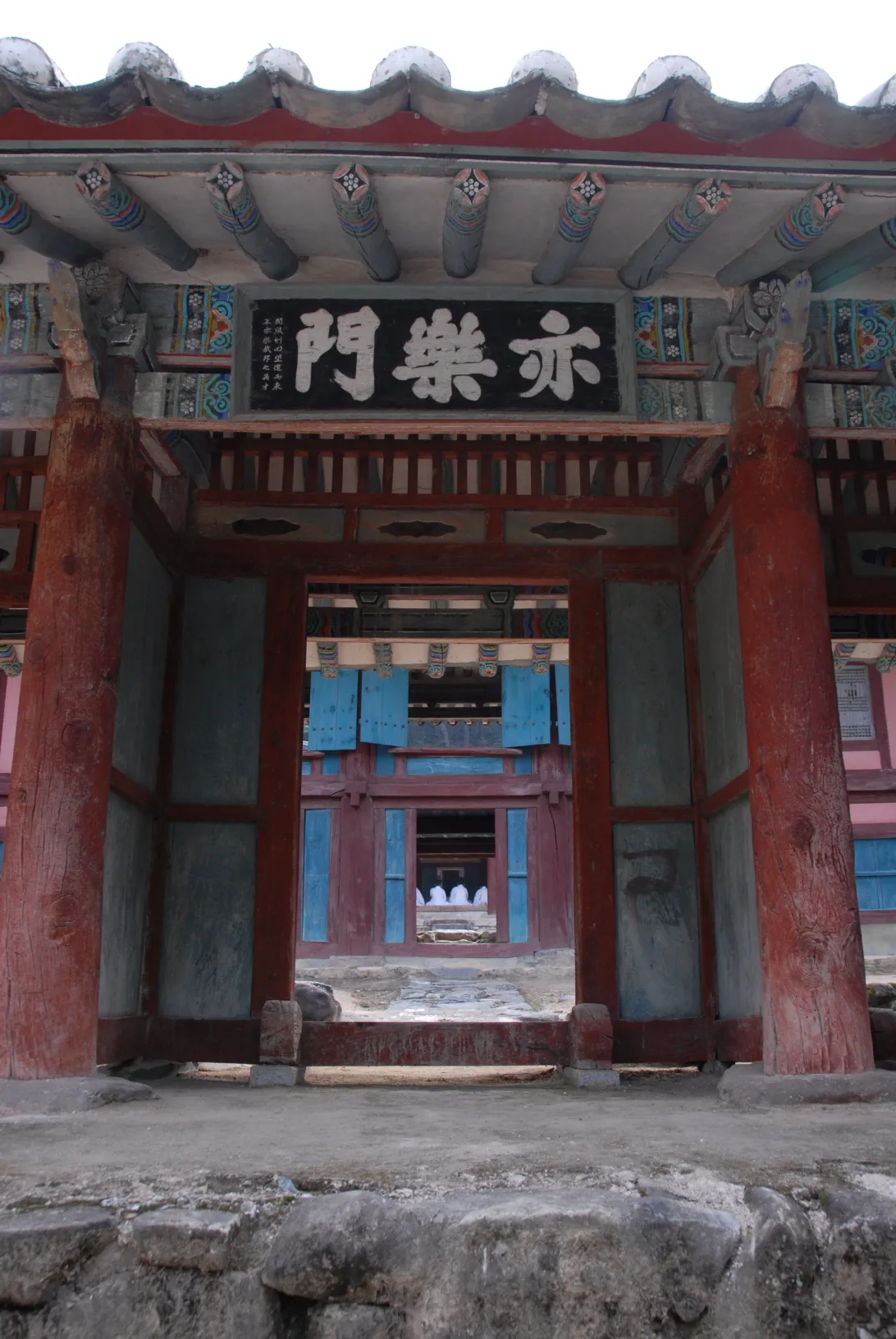
Oksan Seowon Confucian Academy, Gyeongju
慶州 玉山書院
경상북도 경주시
Basic information
- Designation
- Historic Site No.154
- Category
- Architecture
- Era
- 조선 선조 5년(1572)
- Designated year
- 1967
- Location
- 경주시, 경상북도— 경북 경주시 안강읍 옥산서원길 216-27 (옥산리)
- Coordinates
- 36.011767, 129.163367
AI Docent
✨ AI-generatedWelcome to Oksan Seowon! Picture yourself stepping into a place where Confucian learning has thrived for over 450 years. Founded in 1572, this academy honors Hoejae Yi Eon-jeok, a brilliant scholar who advanced Neo-Confucian thought in the Yeongnam region. The king himself was so impressed that he named it "Oksan" the following year, making it a government-sponsored academy. You'll notice two central buildings: Guindang Hall, where students studied, and Cheinmyo Shrine, honoring the great scholars. Look closely at their roofs—they're shaped like the Chinese character for "human," a beautiful reflection of the academy's purpose. Walk the grounds and explore the pavilions, dormitories, and gates. The 1972 Cheongbungak depository holds treasures like Yi Eon-jeok's personal manuscripts and a rare complete set of the History of Three Kingdoms. As one of only 47 academies to survive the late Joseon period, Oksan Seowon stands as a remarkable testament to Korea's scholarly heritage.
⚠ This is an AI-generated retelling of the official description. For accuracy, refer to the official description below.
Description
This Confucian academy is dedicated to Hoejae Yi Eon-jeok, a great Confucian scholar of the Joseon Dynasty. The study of Yi Eon-jeok succeeding Toegye Yi Hwang was the Neo-Confucianism initiative made by the school of Yeongnam. Constructed by Gyeongju Governor Yi Je-min in the 5th year of the reign of King Seonjo (1572), this shrine-academy was called “Oksan” by the king the following year, becoming a government-sponsored shrine-academy. It consists of Guindang Hall where the students study and Cheinmyo Shrine where people enshrine the precedent scholars. Cheinmyo has 3 rooms at the front and 2 at the sides. Its hip-and-gable roof looks like the Chinese character (人) meaning “human” when viewed from the side of the building. The tablet of Yi Eon-jeok is enshrined inside Cheinmyo. Guindang, which also has hip and gable roof and 5 rooms at the front and 2 at the sides, was burnt down in the 5th year of the reign of King Heonjong (1893) but rebuilt later. Besides those two buildings, there are more buildings such as Yeongnangmun Gate (front gate), two-story Mullu Pavilion, Dongjae (east dorm for students), Seojae (west dorm for students), Amsujae (stockroom), etc. On the southeastern part of the academy, Cheongbungak (depository for books), built for posterity purposes in 1972, exhibits some famous books such as Supilgobon (Manuscript Collection) written by Yi Eon-jeok and Kim Bu-sik's complete set of Samguk sagi (History of Three Kingdoms) with 9 volumes. Oksanseowon, one of the 47 Confucian academies exempted from abolishment during the reign of Daewongun in the late Joseon, preserves the calligraphies or collected works of famous scholars.
Location
지도를 불러오는 중…
Have you visited this place?
Log in and verify your visit on-site via GPS to record a stamp in My Journey. (QR verification coming later.)
Images: KOGL (khs.go.kr) · Data source: Korea Heritage Service Open API (khs.go.kr)