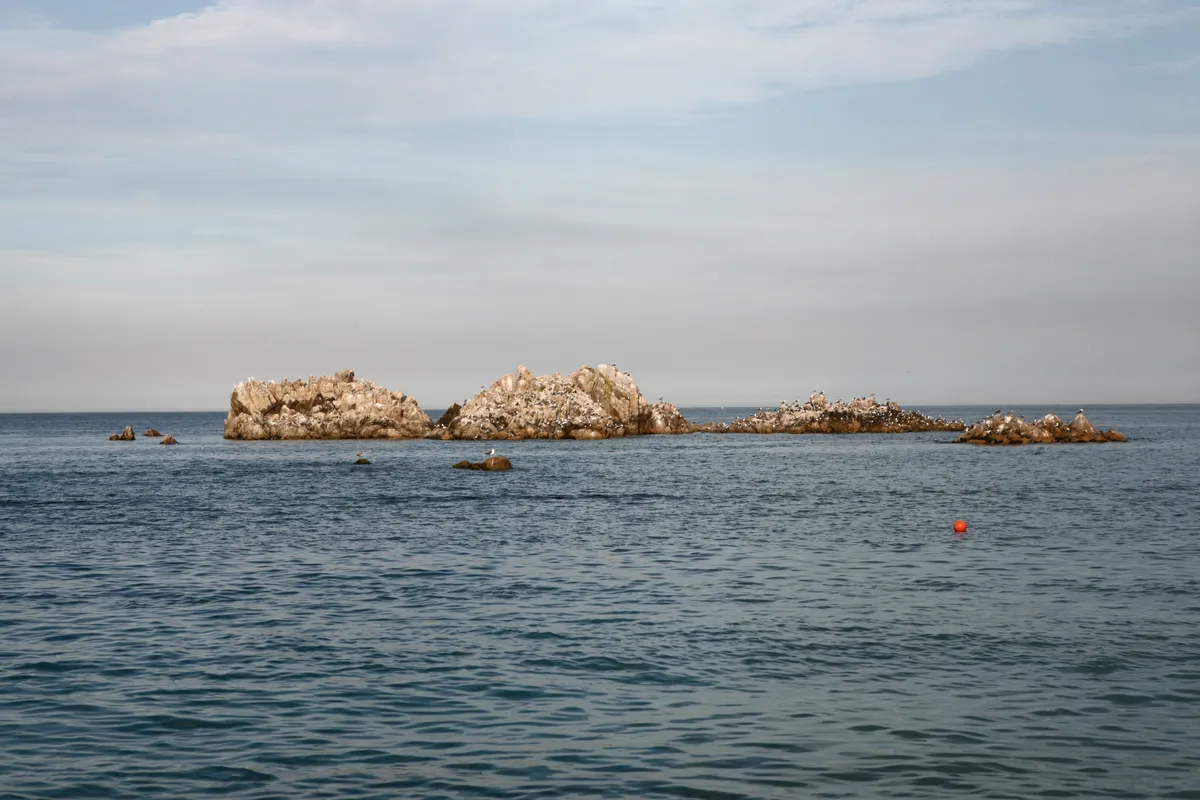
Tomb of King Munmu, Gyeongju
慶州 文武大王陵
경상북도 경주시
Basic information
- Designation
- Historic Site No.158
- Category
- 유적지
- Era
- 신라시대
- Designated year
- 1967
- Location
- 경주시, 경상북도— 경북 경주시 양북면 봉길리 앞 해중(대왕암)
- Coordinates
- 35.738140, 129.484385
AI Docent
Coming soonAn AI-generated, friendly retelling of this heritage site is available in Korean. An English version is on our roadmap — for now, please see the official description below.
Description
Located 200m away from the shore of the East Sea, this tomb, which is that of King Munmu, the 30th king of Silla (661-181), is the world’s first submerged burial place. Succeeding King Muyeol, King Munmu completed the unification of the Dynasties by defeating Goguryeo in 668 and driving out the Tang Dynasty of China. He provided the foundation for completing the national system by establishing the government offices Byeongbu and Changbu, the administrative district 5 Sogyeong for ruling the local area, and the military systems 9 Seodang and 10 Jeong. This submerged tomb is made of unpolished natural stones and equipped with 4 channels in 4 directions. The water flow from the east channel to the west channel makes the level of water inside the tomb constant. The remains of King Munmu are believed to have been buried under the tortoise-shaped rock lying underwater with length of 3.7m from south to north and width of 2.06m. According to Samguk sagi (History of the Three Kingdoms), the king willed that, in conformity to the Buddhist canon, his body be cremated in a simple funeral and buried under the East Sea, and that he be reincarnated as a great dragon to defend Silla from invaders. King Sinmun, the son of the king, ordered the construction of Gameunsa Temple near the East Sea, which has a waterway to the East Sea under the main hall. The waterway symbolizes the dead King Munmu's pathway between the sea and the temple. This submerged tomb, the only one of its kind in the world, is an excellent relic showing the creativity of the Silla people.
Location
지도를 불러오는 중…
Have you visited this place?
Log in and verify your visit on-site via GPS to record a stamp in My Journey. (QR verification coming later.)
Images: KOGL (khs.go.kr) · Data source: Korea Heritage Service Open API (khs.go.kr)