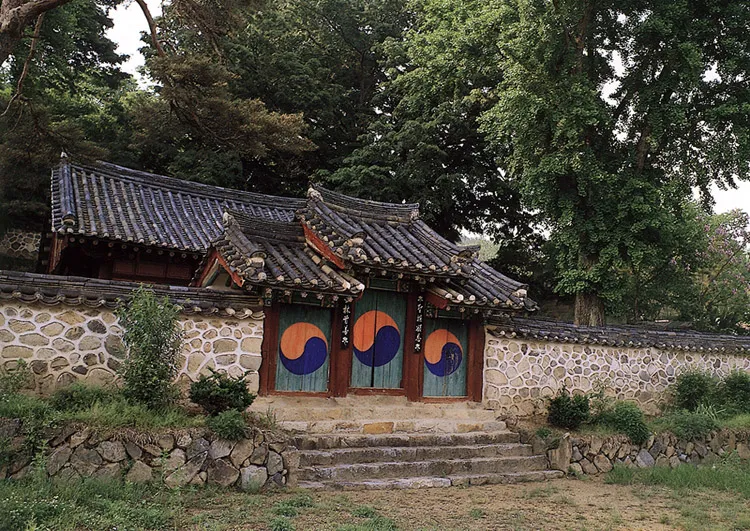
Mueseong Seowon Confucian Academy, Jeongeup
井邑 武城書院
전북특별자치도 정읍시
Basic information
- Designation
- Historic Site No.166
- Category
- Architecture
- Era
- 조선시대
- Designated year
- 1968
- Location
- 정읍시, 전북특별자치도— 전북 정읍시 칠보면 무성리 500번지
- Coordinates
- 35.601881, 126.983721
AI Docent
✨ AI-generated# Welcome to Mueseong Seowon Welcome to one of Korea's most historically significant Confucian academies! You're standing at Mueseong Seowon, a place where education and honor intertwine beautifully. This academy began with a mission: to honor two great scholars and educate future generations. The first shrine was built to commemorate Choe Chi-won from the Goryeo Dynasty. Then, in 1549, a second shrine for Sin Jam was added. Nearly 150 years later, King Sukjong united them into one academy, naming it "Museong"—a name you can still see today. Notice how the buildings are arranged: classrooms sit in front, shrines behind. This traditional layout reflects the academy's dual purpose. The beautiful pavilions with their distinctive roof shapes and the preserved lecture halls still stand as they have for centuries. Inside, you'll find remarkable records—visitor lists, lecture notes, and student rules—offering glimpses into the vibrant intellectual life that flourished here since the 1480s. This academy survived Korea's turbulent history, persisting when many others closed. That resilience makes it truly special.
⚠ This is an AI-generated retelling of the official description. For accuracy, refer to the official description below.
Description
Putting together the shrines for Choe Chi-won and Sin Jam, people established this Confucian academy as a place for education as well as for the enshrinement of ancient scholars. To commemorate the learning and virtue of Choe Chi-won of the Goryeo Dynasty, a shrine called Taesanseowon Confucian Academy was constructed. Four years later, in the 4th year of the reign of King Myeongjong (1549), the shrine for Sin Jam was also established. In the 22nd year of the reign of King Sukjong (1696), the two shrines were combined to become a shrine-academy under the name “Museong” given by the king. The layout of the buildings of the shrine-academy follows the style called Jeonhakhumyo, which means the building for education is at the front and that for enshrinement is at the back. The remaining buildings include a shrine as well as Hyeongaru Pavilion, two dorms named Dongjae (east dorm) and Seojae (west dorm), Bigak (monument house), and lecture hall named Myeongnyundang. Constructed in the 15th year of the reign of King Seongjong (1484), the shrine consists of 5 rooms in the front and 3 on the side; Hyeongaru Pavilion has 3 front rooms and 2 side rooms. It has hip and gable roof whose shape looks like the Chinese character “pal 八 (eight)” when viewed from the side. The lecture hall Myeongnyundang, whose roof is also hip and gable, has 2 rooms each in the front and on the side. Some valuable record materials such as Bongsiman (list of visitors), Gangan (lecture materials), Simwonnok (visitors’ book), and Wongyu (rules for academy students) during the period after the 17th year of the reign of King Seongjong (1486) are preserved here. This is one of the 47 Confucian academies that were preserved during the abolishment movement of the academy during the reign of Daewongun in the late Joseon.
Location
지도를 불러오는 중…
Have you visited this place?
Log in and verify your visit on-site via GPS to record a stamp in My Journey. (QR verification coming later.)
Images: KOGL (khs.go.kr) · Data source: Korea Heritage Service Open API (khs.go.kr)