Yeongneung and Nyeongneung Royal Tombs, Yeoju
驪州 英陵과 寧陵
경기도 여주시
Basic information
- Designation
- Historic Site No.195
- Category
- 유적지
- Era
- 조선시대
- Designated year
- 1970
- Location
- 여주시, 경기도— 경기도 여주시 영릉로 269-10 (능서면) 여주 영릉과 영릉
- Coordinates
- 37.304291, 127.605376
AI Docent
✨ AI-generatedWelcome to Yeongneung and Nyeongneung, two remarkable royal tombs that shaped Joseon dynasty burial practices! Here lies King Sejong the Great, the visionary fourth king who brought Joseon culture to its golden age, alongside his queen. Built in 1446, this tomb pioneered something revolutionary: separate interior rooms for each coffin. Notice the distinctive twelve-sided balustrade encircling the site—it became the blueprint for royal tombs across early Joseon. Just nearby, King Hyojong and Queen Inseon rest at Nyeongneung. What makes this tomb extraordinary is its unconventional design: the graves stack one atop the other, a first for Joseon royal burials, based on geomancy beliefs. The absence of a stone screen marks a turning point in tomb architecture. Both sites reflect the sophisticated rituals and architectural ideals documented in the Five Rites of State. Walking here, you're witnessing not just tombs, but the evolution of an entire dynasty's way of honoring its greatest leaders.
⚠ This is an AI-generated retelling of the official description. For accuracy, refer to the official description below.
Description
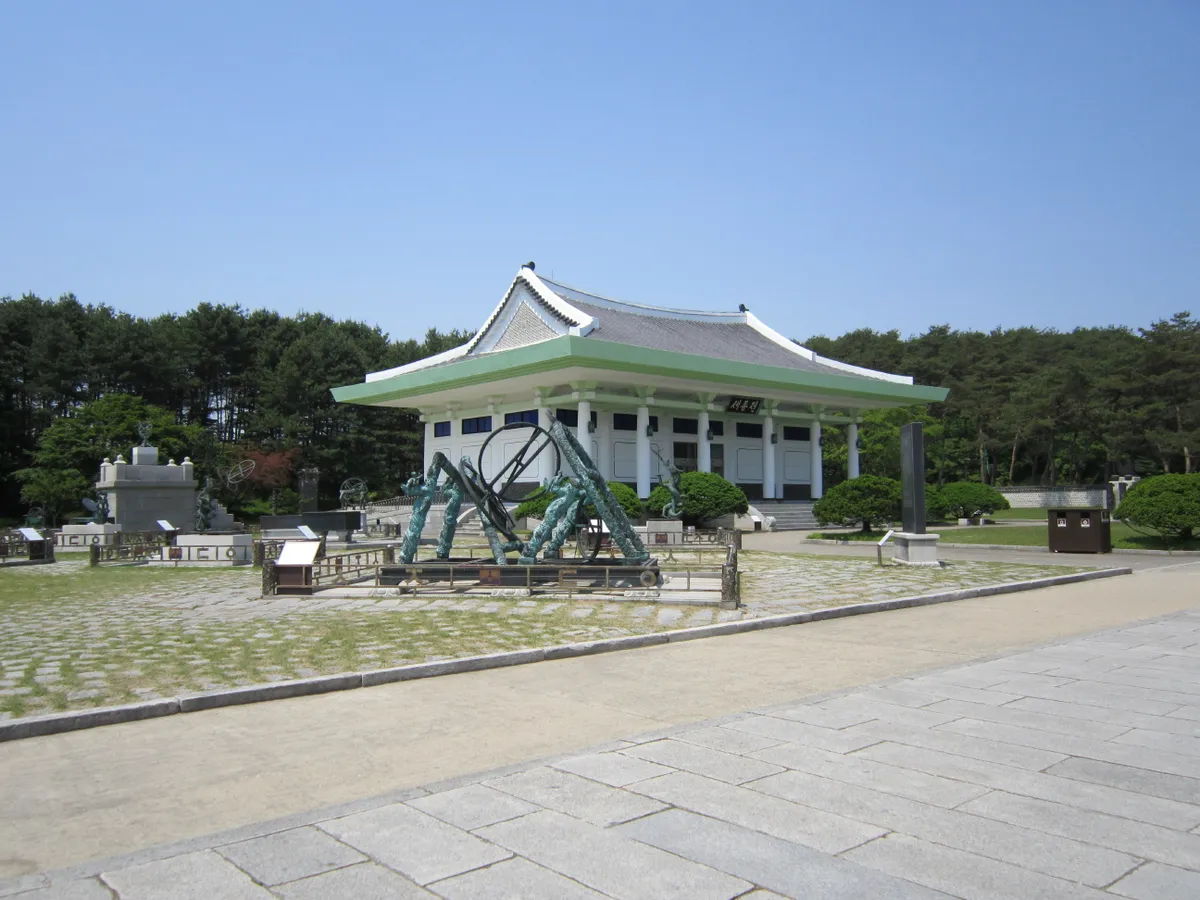
This is the royal tomb named Yeongneung where the Great King Sejong, the fourth king of Joseon, and his consort, Queen Soheon, are buried. The Great King Sejong is the good and wise king who worked hard to lead the culture of Joseon to the golden era. Yeongneung was constructed after the death of the queen during the reign of the Great King Sejong in 1446. The eastern part of Yeongneung was assigned for the queen, and the western part, for the Great King Sejong before his death. The royal couple was buried together when the king passed away. This tomb is the first one to have separate rooms for each coffin inside. The tomb was arranged based on the rules stipulated in Gukjooryeui (Five Rites of State), becoming the sample for other royal tombs in the early days of Joseon. There were some claims that the location of this tomb was inauspicious during the reign of King Sejo. The twelve-sided balustrade surrounds the tomb. The stone figure installed before the move was buried at the same spot but discovered in 1974 and moved to the monument center of the Great King Sejong. Other structures such as Hunminmun Gate, statue of the Great King Sejong, and Sejongjeon Exhibition Hall were built in 1977 under the project of improving Yeongneung. This is the royal tomb named Nyeongneung where King Hyojong, the 17th king of Joseon, and Queen Inseon, his wife, are buried. It used to be located in the western direction of the tomb of King Taejo but was later moved in the eastern direction of the Great King Sejong's tomb because of the cracks on the stone statute in 1673. Nyeongneung keeps the couple's grave not side by side but one on top of the other . Such arrangement of the graves was done in the royal tomb for the first time according to the geomancy belief; the tomb of King Gyeongjong has such arrangement, too. Serving as a turning point in the style of the royal tombs of Joseon, this tomb has no stone screen but twelve-sided balustrade with stone props engraved with letters. By King Sejo's will, the stone screen was not raised in this tomb, ceasing to appear with the twelve-zodiac animal deity decoration. Several stone images including the t-shaped wooden shrine are placed in front of the tomb.
Location
지도를 불러오는 중…
Have you visited this place?
Log in and verify your visit on-site via GPS to record a stamp in My Journey. (QR verification coming later.)
Images: KOGL (khs.go.kr) · Data source: Korea Heritage Service Open API (khs.go.kr)