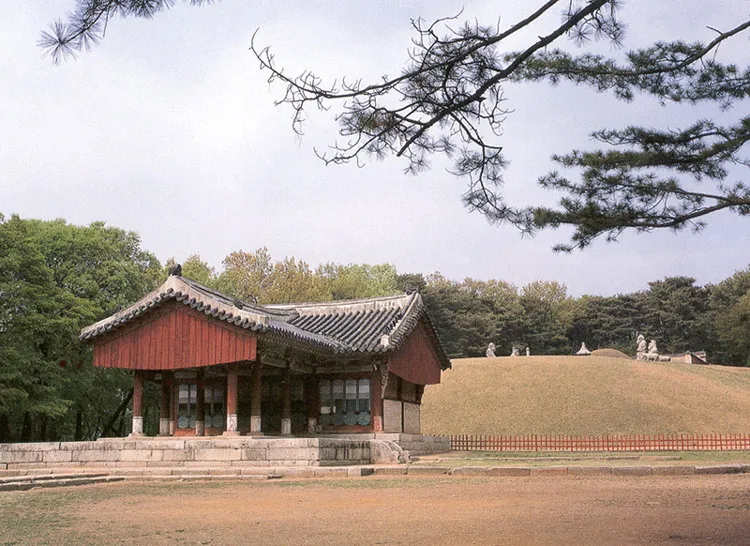
Seosamneung Royal Tomb Cluster, Goyang
高陽 西三陵
경기도 고양시
Basic information
- Designation
- Historic Site No.200
- Category
- 유적지
- Era
- 조선 중종 10년(1516)
- Designated year
- 1970
- Location
- 고양시, 경기도— 경기도 고양시 덕양구 서삼릉길 233-126 (원당동, 서삼릉)
- Coordinates
- 37.662971, 126.867104
AI Docent
✨ AI-generated# Seosamneung Royal Tomb Cluster, Goyang Welcome to one of Korea's most significant royal burial grounds. Here in the western part of Seoul, you'll find the resting places of some of Joseon's most important figures—King Cheoljong and Queen Cheolin among them. The cluster earned its name, "Three Western Royal Tombs," from this royal couple. What makes this place unique is its story. Originally, Joseon tradition kept royal tombs separate from those of concubines, princes, and princesses. But during the Japanese colonial period, administrators gathered these tombs together here—a decision that actually changed how the site developed. Today, you can walk among the graves of famous crown princes like Sohyeon and Munhyo, and discover the final resting place of Prince Yeonsan's mother. As part of the Joseon Royal Tombs UNESCO site, this cluster represents centuries of royal history in one remarkable place. Come explore where history and reverence intersect.
⚠ This is an AI-generated retelling of the official description. For accuracy, refer to the official description below.
Description
This is the royal tomb complex located in the western part of Seoul where the grave of Jungjong’s consort lies. Later, more graves of concubines, princes, and princesses enlarged the size of the cluster as they were placed around here. King Cheoljong and his consort, Queen Cheolin, are buried here; hence the name Three Western Royal Tombs. In this cluster of royal tombs, many members of Joseon's royal family are buried. Famous crown-princes such as Sohyeon, Uiso, and Munhyo are buried here, too. The grave of the mother of Prince Yeonsan, the notorious prince of Joseon, is located here. Originally, placing the king’s and queen's tombs with those of concubines, princes, and princesses was prohibited. Note, however, that the Japanese colonial administrative gathered the tombs of the royal family for better keeping. Such strategy by the Japanese can be interpreted as degrading the dignity and the status of the royal tombs of kings and queen to a kind of public cemetery
Location
지도를 불러오는 중…
Have you visited this place?
Log in and verify your visit on-site via GPS to record a stamp in My Journey. (QR verification coming later.)
Images: KOGL (khs.go.kr) · Data source: Korea Heritage Service Open API (khs.go.kr)