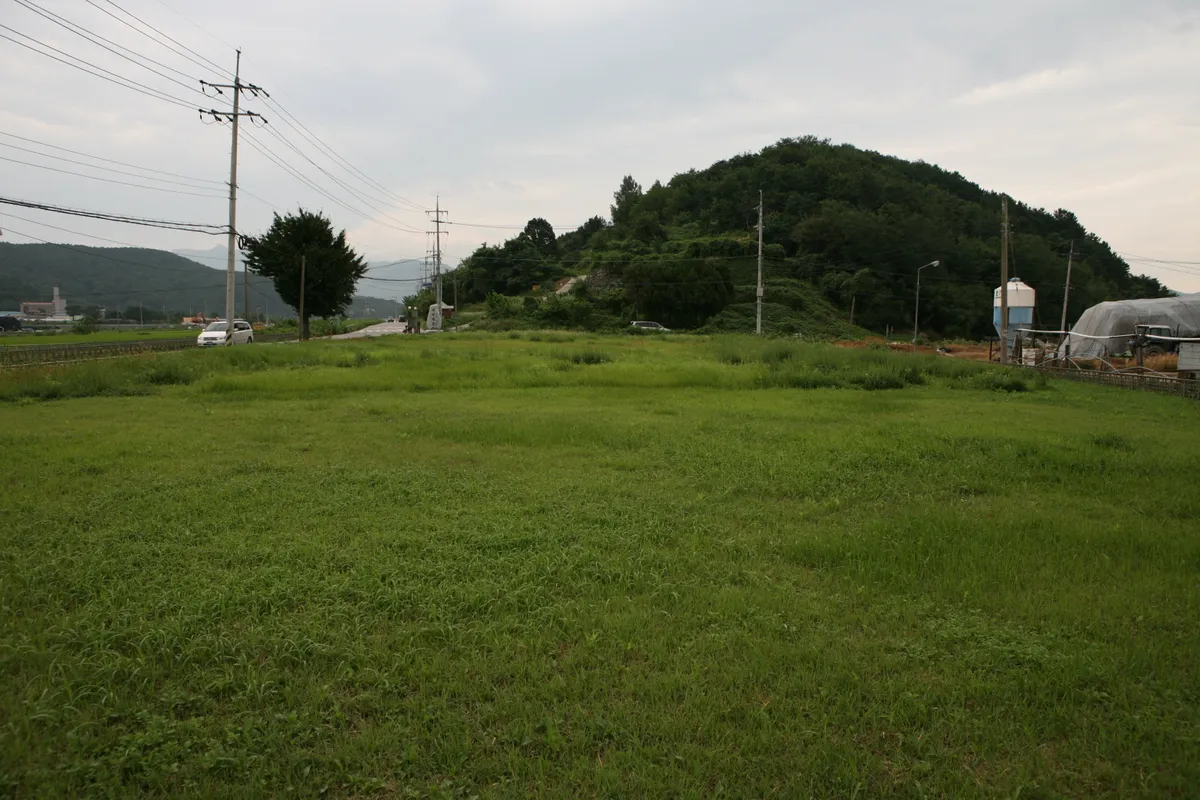
Ancient Tombs in Yean-ri, Gimhae
金海 禮安里 古墳群
경상남도 김해시
Basic information
- Designation
- Historic Site No.261
- Category
- 유적지
- Era
- 가야시대(3C ∼7C)
- Designated year
- 1978
- Location
- 김해시, 경상남도— 경남 김해시 대동면 예안리 369-6번지
- Coordinates
- 35.238547, 128.965654
AI Docent
Coming soonAn AI-generated, friendly retelling of this heritage site is available in Korean. An English version is on our roadmap — for now, please see the official description below.
Description
These are tombs of the Gaya period scattered around Sirye Village in Yean-ri, Gimhae. As a result of several excavations, various types of tombs can be seen in the area, and the bones of the person buried in the tomb have been dug up from every one. A total of 212 tombs have ben investigated. Of these 64 are pit tombs, 108 are pit-style square stone chamber tombs, 24 are jar coffin tombs, and 16 are open-entrance square stone chamber tombs. The pit tomb was the earliest type to be made among the tombs here. It is not certain whether coffins were used in this type of tomb. The pit-style square stone chamber tomb has four walls and a floor, enabling the explanation which was made before which. The jar coffin tombs are made by two or three jugs connected to each other, and the whole length is up to 1m. The fact that they are located near the pit-style square stone chamber tomb indicates that the buried in the two types of tombs may have been of kinship. The open-entrance square stone chamber tombs are almost wholly destroyed, so it is not easy to discover their overall structure. Of the excavated relics, there are three types of earthenware, gray tile pottery, brownish red soft pottery and grayish blue hard pottery. The ironware excavated from the tombs includes nails and scissors. From the pit tomb no. 150, an iron helmet was unearthed. Human bones are found in every tomb. Ornaments such as gold and silver earrings, and glass and amber beads have been excavated. The site appears to cover the period from early to late Gaya. Because many overlapping types of tomb can be seen in the area, it is an important source of material in dating of of tombs in the Gaya period and of the changes in relics. The iron helmet excavated from no. 150 pit tomb is of an early period and tells us when helmets were first worn in Gaya. The human bones from each tomb are perfect material for tracing the physical constitution of people who lived long ago, and they are invaluable for anthropological studies.
Location
지도를 불러오는 중…
Have you visited this place?
Log in and verify your visit on-site via GPS to record a stamp in My Journey. (QR verification coming later.)
Images: KOGL (khs.go.kr) · Data source: Korea Heritage Service Open API (khs.go.kr)