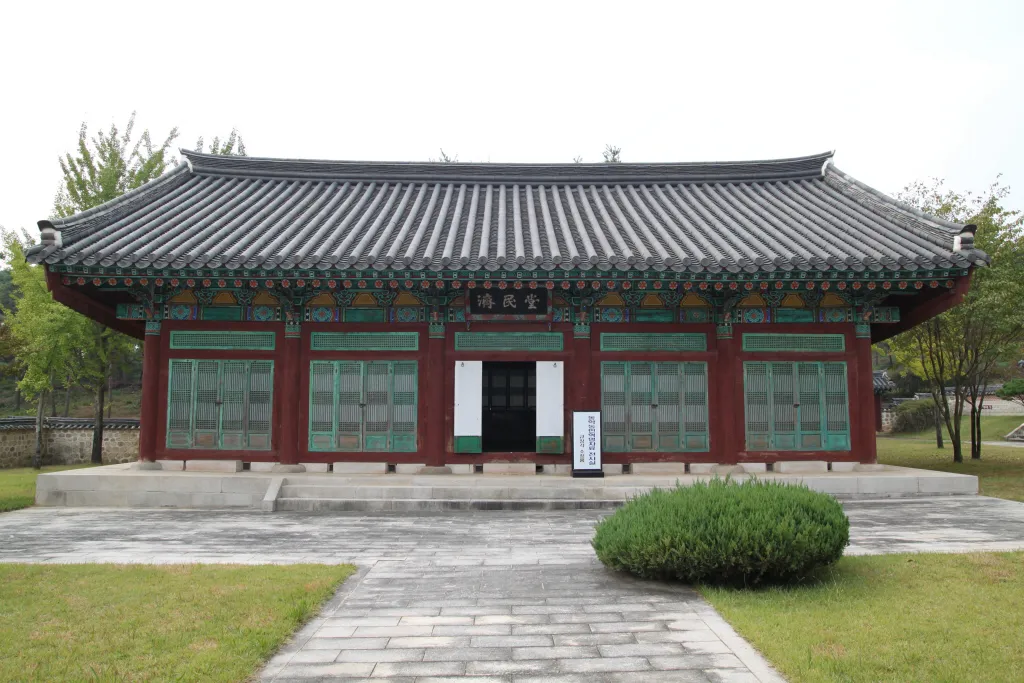
Hwangtohyeon Battlefield, Jeongeup
井邑 黃土峴 戰蹟
전북특별자치도 정읍시
Basic information
- Designation
- Historic Site No.295
- Category
- Sites & Pagodas
- Era
- 조선 고종
- Designated year
- 1981
- Location
- 정읍시, 전북특별자치도— 전북 정읍시 덕천면 동학로 742 (하학리)
- Coordinates
- 35.633567, 126.827601
AI Docent
Coming soonAn AI-generated, friendly retelling of this heritage site is available in Korean. An English version is on our roadmap — for now, please see the official description below.
Description
It was a historic site where the army of Donghak peasants defeated the forces during the Donghak Peasant Movement at that time. The victory in this place was a great opportunity for the Donghak Peasant Movement to be expanded. The torch that kindled this movement was the 1893 oppression of the county head, Jo Byeong-gap. The peasant army attacked the county office of Gobu in December 1894, only to disband in 10 days. The official dispatched to crush this movement suppressed Donghak by attributing all responsibility of this movement to it. This led to the birth of the peasant's army under the control of Jeon Bong-jun with the initiative of "Boguganmin and Jepokgumin, meaning the peaceful and secure life of the people"; they attacked and occupied the county office of Gobu, stayed there for four days to burn the powder house down, and headed to Baeksan Mountain. This mountain was a small hill, less than 50m north from the office of Gobu, and was the fortress that commanded a full view of the neighboring grain belt. This peasant army of the neighboring village, under the cover of dawn, launched a surprise attack on the forces of the Jeonju office, which set up camp here on March 11, 1984. The victory in combat in the Hwangtohyeon area boost the army’s confidence such that the army’s influence spread to neighboring areas like Jeongeup, Heungdeok, Gochang, Mujang, etc., until the army finally occupied Jeonju. Nonetheless, the Japanese and Chinese forces intervened due to the incompetence of the government, and the Donghak army retreated here to stop the intervention of foreign powers after making a peace treaty and subsequently established Jipgangso, an independent organization of Donghak, in 53 areas of Jeolla-do Province to propel a reform policy. When Japan, which started the war against China in 1894, clearly revealed its intention of aggression, however, the peasant's army was organized again, launching a combat in every area to fight against Japan. This time, the Japanese forces, armed with new weapons, won the Ugeumchi Battle against the peasant's army, and the strength of the peasant's army waned to a considerable degree. The leaders including Jeon Bong-jun were arrested and sentenced to death; thus, the Donghak Movement, which was established to oppose the aggression of foreign powers and maintain political reform, failed. The reform initiative and the consciousness of self-independence as shown in the Donghak Movement wielded great influence on the post-independence movement.
Location
지도를 불러오는 중…
Have you visited this place?
Log in and verify your visit on-site via GPS to record a stamp in My Journey. (QR verification coming later.)
Images: KOGL (khs.go.kr) · Data source: Korea Heritage Service Open API (khs.go.kr)