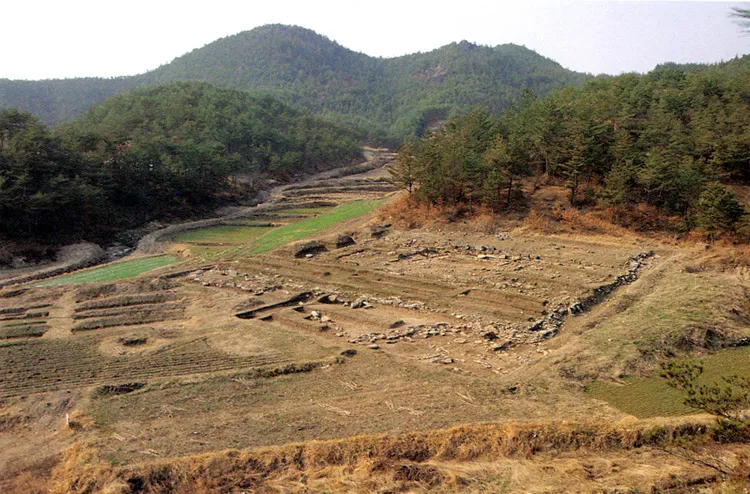
Unjusa Temple Site, Hwasun
和順 雲住寺址
전라남도 화순군
Basic information
- Designation
- Historic Site No.312
- Category
- 유적지
- Designated year
- 1985
- Location
- 화순군, 전라남도— 전남 화순군 도암면 용강리 산3번지 외
- Coordinates
- 34.924591, 126.879916
AI Docent
Coming soonAn AI-generated, friendly retelling of this heritage site is available in Korean. An English version is on our roadmap — for now, please see the official description below.
Description
Unjusa Temple carries the legend that State Preceptor Doseon built a thousand Buddha statues and pagodas in one day, but only the remains of the temple site are found in a low basin. The precise time when the temple was built is not known, but it seems to have flourished from the middle to the end of Goryeo. It was rebuilt on a large scale at the end of the 15th century and closed during the Japanese Invasion of Korea in 1597. Unjusa means “the place where clouds stay” or “driving the ship.” At least 70 stone statues of Buddha and 18 stone pagodas currently remain, but about 1000 statues of Buddha and pagodas originally existed. The 70 Buddha statues are scattered in the field, and the mountains vary in size, from scores of centimeter-small statues to more than 10m tall, big stone statues of Buddha. The plain and native shapes and the structure of unbalanced and strange body, etc., mirror the local features during the Age of Goryeo. The expression method of the figure or pattern of stone pagoda is very unique, and the building has various types such as 3-, 5-, 7-stories, etc. The ball-shaped pagoda or the round stone-piled pagoda is an example of special-shaped pagodas. It is special because geometric patterns such as X and 川 are carved on the surface of the pagoda. Legend has it that, when State Preceptor Doseon built a thousand statues of Buddha and pagodas in one day, he tried to raise the Recumbent Buddha finally that night, but a tired, young monk told him a lie to stop working until morning came. The fact that Unjusa Temple has all special stone statues of Buddha and stone pagodas within one temple is a good example of expressing the religious creed through a thousand statues of Buddha and pagodas. It is helpful in research on the history of art and Buddhism in Korea.
Location
지도를 불러오는 중…
Have you visited this place?
Log in and verify your visit on-site via GPS to record a stamp in My Journey. (QR verification coming later.)
Images: KOGL (khs.go.kr) · Data source: Korea Heritage Service Open API (khs.go.kr)