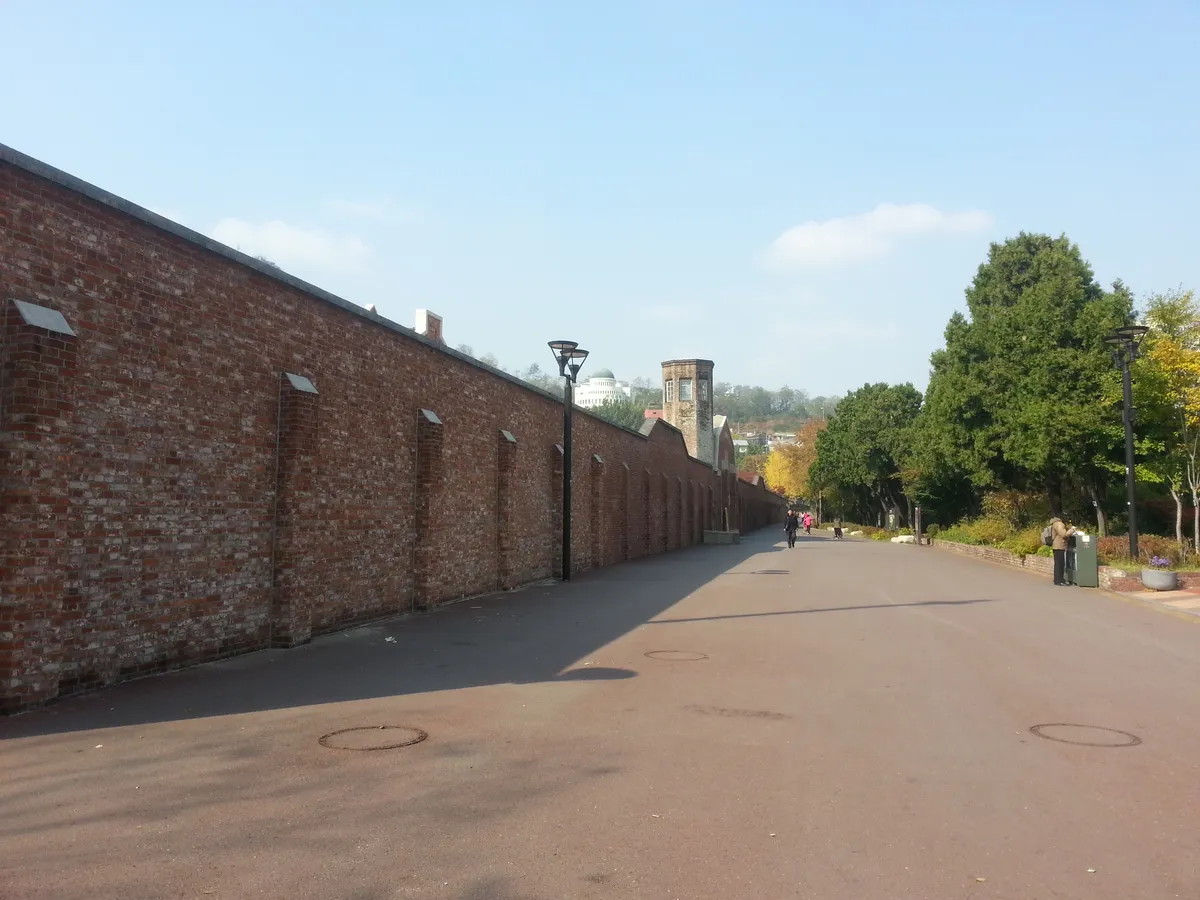
Former Seodaemun Prison, Seoul
서울 舊 西大門刑務所
서울특별시 서대문구
Basic information
- Designation
- Historic Site No.324
- Category
- Sites & Pagodas
- Era
- 1907
- Designated year
- 1988
- Location
- 서대문구, 서울특별시— 서울특별시 서대문구 통일로 251 (현저동, 독립공원)
- Coordinates
- 37.574282, 126.955941
AI Docent
Coming soonAn AI-generated, friendly retelling of this heritage site is available in Korean. An English version is on our roadmap — for now, please see the official description below.
Description
Gyeongseong Prison was designed and built by the Japanese on Inwangsan Mountain in 1907 in order for the Japanese Colonial Government, which seized sovereignty of our country, to cement its control over our country. As a wooden building measuring approximately 560 pyeong (about 1.4 m2), it can accommodate about 500 prisoners. About 500 prisoners were moved from Jongno Prison to this place, and the Japanese Colonial Government had arrested and imprisoned many fighters for national independence to torture, abuse, and execute them till 1945 as the Independence Year. The increasing number of people imprisoned prompted the Japanese Government to build a prison in Gongdeok-dong, Mapo-gu in 1912, naming it Gyeongseong Prison; the original Gyeongseong Prison was renamed Seodaemun Prison and Seodaemun Criminal Prison in 1923. This prison accommodated 2,890 prisoners in 1944, including girls less than 18 years, prisoners sentenced to jail terms of 10 years or more, and those with life sentences; Martyr Yu Gwan-sun died for national independence here. It was renamed Gyeongseong, and then Seoul Criminal Prison in 1946 immediately after the Restoration of Independence, and the pro-Japanese group and those who betrayed the country were put in prison. It was renamed Seoul Prison in 1961, and then Seoul Detention House in 1967. Many activists were imprisoned here in relation to political situations such as 4.19 Revolution, 5.16 Military Coup, etc. It was moved to Uiwang-si, Gyeonggi-do in 1987 and designated as historical remains in 1988. Independence activists including Kim Gu, Gang U-gyu, etc., were detained here. It carries meaning as a historic place of national independence during the Japanese Occupation and later as a place with traces of democratization and political change. This is a very meaningful site for educating descendants to instill national pride and spirit of independence.
Location
지도를 불러오는 중…
Have you visited this place?
Log in and verify your visit on-site via GPS to record a stamp in My Journey. (QR verification coming later.)
Images: KOGL (khs.go.kr) · Data source: Korea Heritage Service Open API (khs.go.kr)