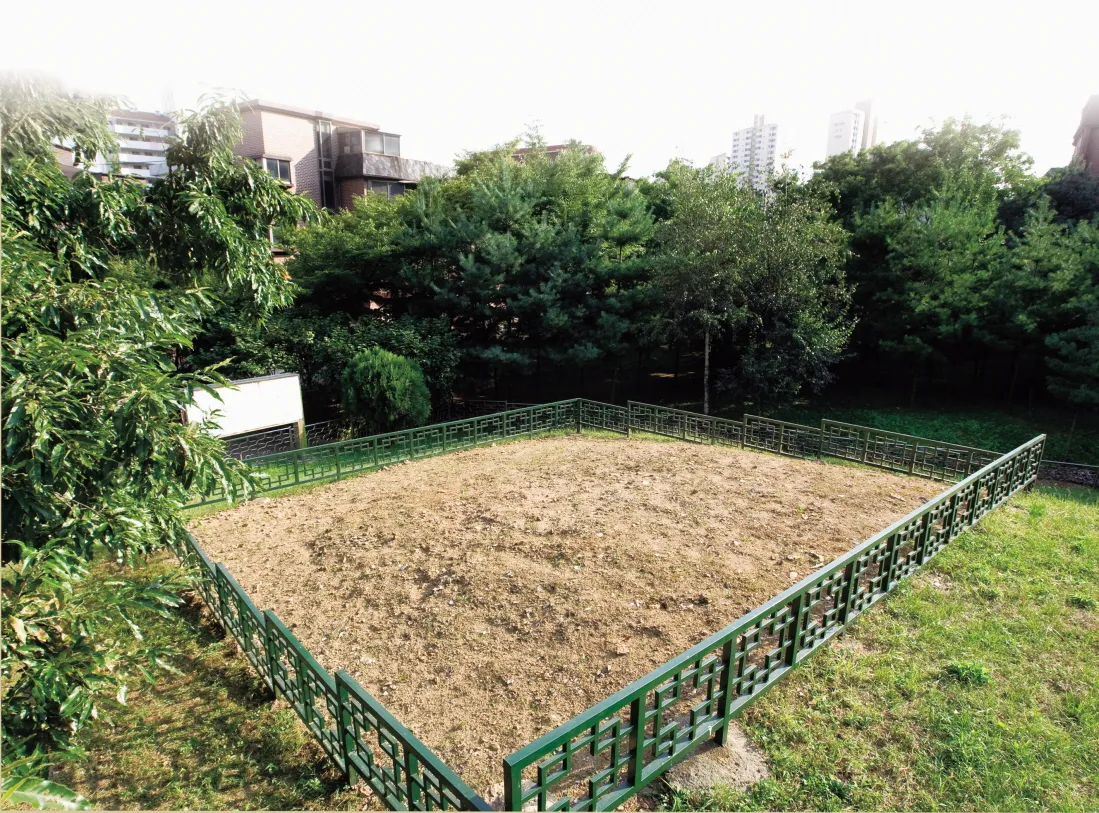
Joseon White Porcelain Kiln Site in Sanbon-dong, Gunpo
軍浦 山本洞 朝鮮白磁 窯址
경기도 군포시
Basic information
- Designation
- Historic Site No.342
- Category
- 유적지
- Era
- 조선 전기
- Designated year
- 1991
- Location
- 군포시, 경기도— 경기도 군포시 산본동 1057-4
- Coordinates
- 37.374921, 126.928535
AI Docent
Coming soonAn AI-generated, friendly retelling of this heritage site is available in Korean. An English version is on our roadmap — for now, please see the official description below.
Description
This site is where ceramics, roof tiles, and potteries were made and fired for everyday use or decoration. Made in the Joseon Dynasty, this kiln site is located on a hill with elevation of 91-98cm in the southeast area of Surisan Mountain. Specifically, it is located on a rock bed with a comparatively steep gradient. The surrounding debris of the structure was difficult to identify because of the destruction, but it supplies adequate information on how kilns were used. The kiln consists of seven rooms and reflects the general structural style of the Joseon Dynasty wherein the fire hole area is narrow and the chimney section is broad. The fire hole structure is particularly special. Many types of bowls and dishes were excavated, and large amounts of ceramics including jar and lidded bowl were found. One notable relic was a broken piece of white porcelain in underglaze cobalt blue; on the bowl, Chinese letters such as 福 (fortune) and 祭 (memorial ceremony) were written. This structure gives evidence that, at this kiln site, vessels were made not only for daily use but also for special purposes. The kiln site in Geumsa-ri, Gwangju, Gyeonggi-do was a gwanyo (government-managed kiln site), having similar kinds of ceramics and kiln structure. This shows that it was created in the first half of the 18th century, including the similarities between the gwanyo and the general kiln site. The kiln site in Sanbon-dong, despite its serious destruction, is a very important relic from the end of the Joseon Dynasty, showing the production method for a kiln and the relationship between the gwanyo and the general kiln site. In addition, the fact that special vessels were made at a general kiln site contributes significantly to Korean-Chinese historical studies.
Location
지도를 불러오는 중…
Have you visited this place?
Log in and verify your visit on-site via GPS to record a stamp in My Journey. (QR verification coming later.)
Images: KOGL (khs.go.kr) · Data source: Korea Heritage Service Open API (khs.go.kr)