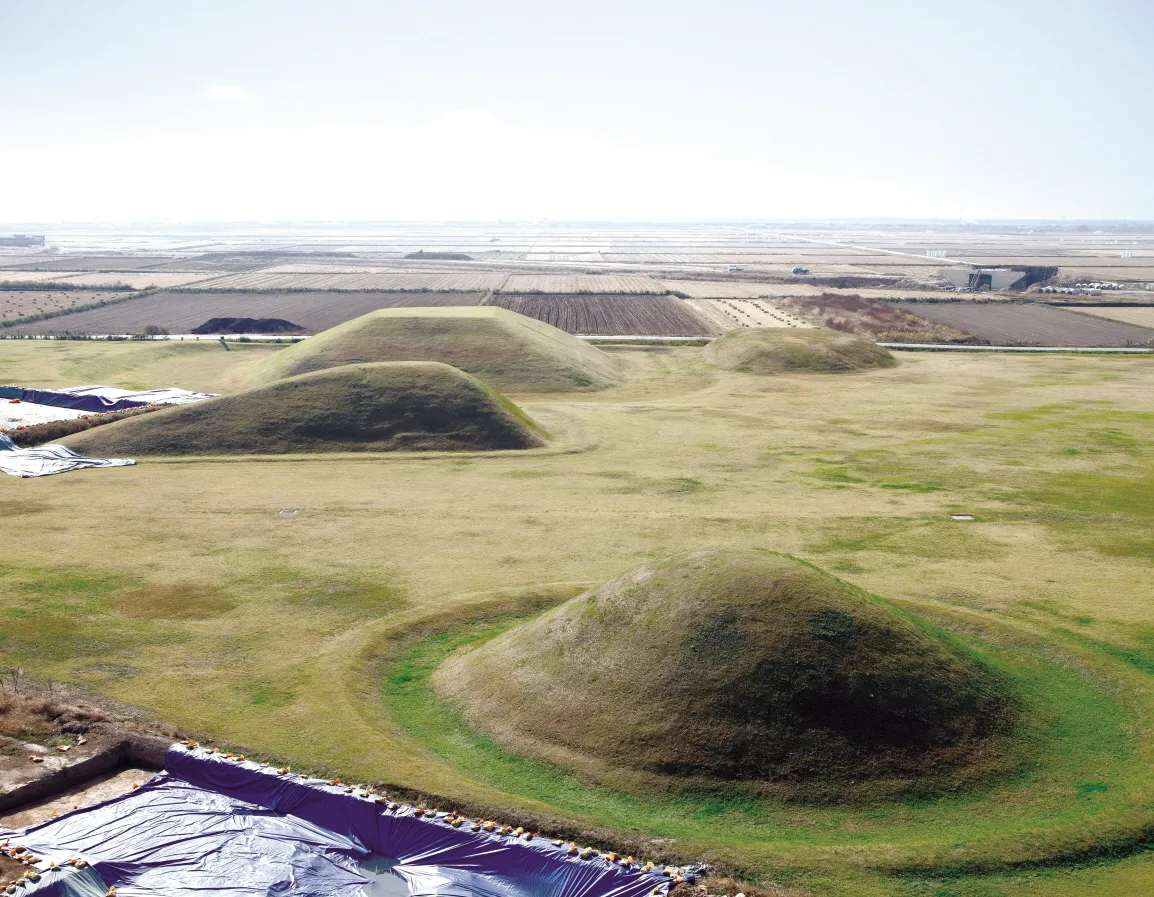
Ancient Tombs in Bogam-ri, Naju
羅州 伏岩里 古墳群
전라남도 나주시
Basic information
- Designation
- Historic Site No.404
- Category
- 유적지
- Designated year
- 1998
- Location
- 나주시, 전라남도— 전남 나주시 다시면 복암리 873-17번지 외
- Coordinates
- 34.995509, 126.650613
AI Docent
Coming soonAn AI-generated, friendly retelling of this heritage site is available in Korean. An English version is on our roadmap — for now, please see the official description below.
Description
These tombs are the ancient tombs from the Three Kingdoms Period in Bogam-ri, Naju-si, Jeollanam-do. A total of 32 different tombs had been excavated from one site (third tomb site) through this excavation from 1995 to 1997. No other case similar to this one has been found. The various forms of tombs could be seen from this site, such as jar coffin tomb, pit-style stone chamber tomb, stone-lined tomb, stone chamber tomb with tunnel entrances, and horizontal entrance stone chamber tomb. Various finds including the golden bronze shoes, official caps, and swords with ring pommel indicate that these tombs belonged to people from the upper ruling class. The dates when the tombs were built vary from the stone tomb built in the 4th century to the stone chamber tomb with tunnel entrances built between the late 6th century and the early 7th century. As a result of the amalgamation between the indigenous people making jar coffin tombs around Yeongsangang River and the people from the Baekje Dynasty building stone chamber tombs, various kinds of tombs had been built in this area. Therefore, the ancient tombs in this area could serve as archaeological evidence that the Baekje Dynasty conquered the indigenous Mahan Dynasty. Moreover, this area is a very important historic site providing crucial evidence for research on the ancient tombs and their historic changes. In particular, the stone chamber tomb and jar coffin tomb present the standard for the research on the ancient burial custom and vestiges from the ancient tombs since they have been spared from any illegal excavation.
Location
지도를 불러오는 중…
Have you visited this place?
Log in and verify your visit on-site via GPS to record a stamp in My Journey. (QR verification coming later.)
Images: KOGL (khs.go.kr) · Data source: Korea Heritage Service Open API (khs.go.kr)