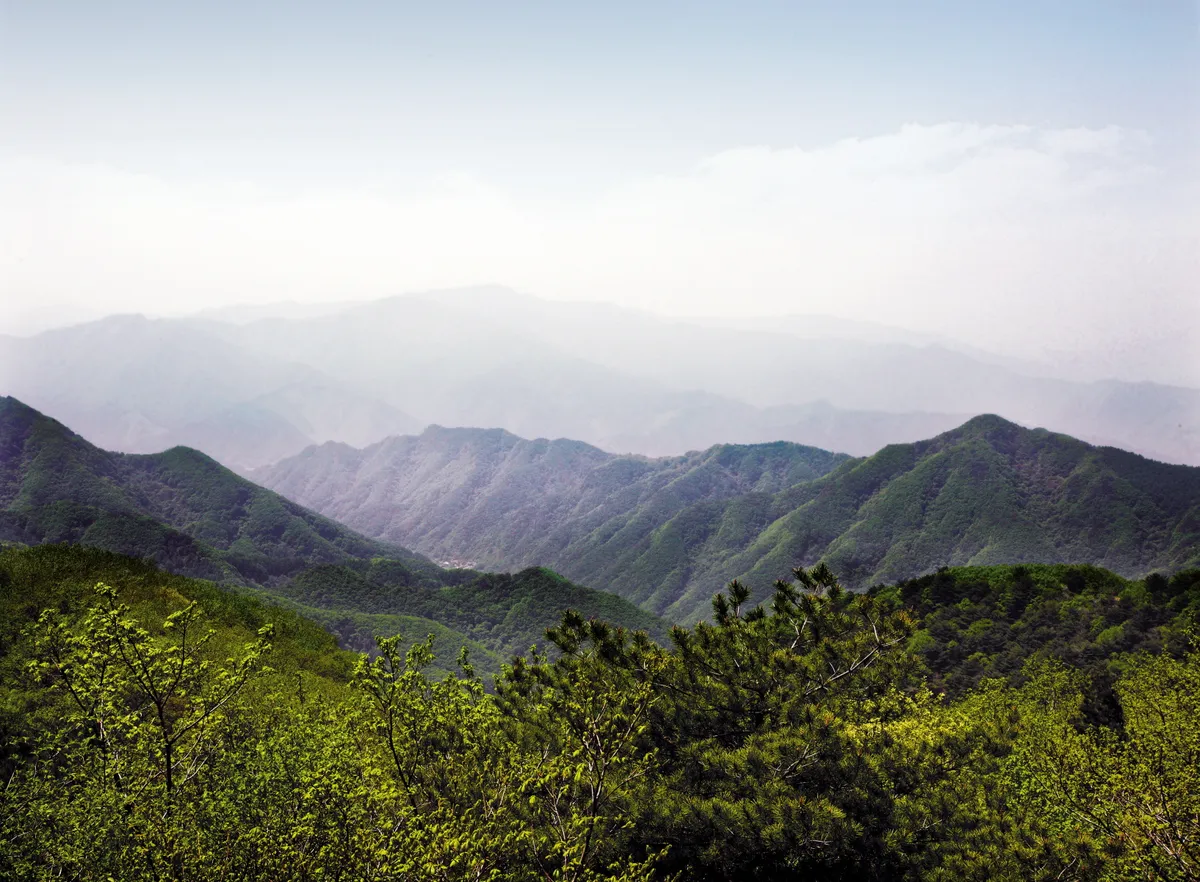
Yeongwonsanseong Fortress, Wonju
原州 領願山城
강원특별자치도 원주시
Basic information
- Designation
- Historic Site No.447
- Category
- Sites & Pagodas
- Designated year
- 2003
- Location
- 원주시, 강원특별자치도— 강원 원주시 판부면 금대리 산50-2번지 외 1필
- Coordinates
- 37.309599, 128.037627
AI Docent
Coming soonAn AI-generated, friendly retelling of this heritage site is available in Korean. An English version is on our roadmap — for now, please see the official description below.
Description
Yeongwonsanseong is a fortress made of stones on Chiaksan Mountain (1,288m) in Wonju. Although the exact date of construction is not certain, it is known to be connected in some way with figures Yang Gil and Gung Ye of Northern Yuan (present day Wonju area), the largest regional force during the late Silla period. It is the place where General Won Chung-gap soundly defeated the Yuan insurgent Hapdan and his invading soldiers in 1291 (17th year of the reign of King Chungnyeol). It is also a site of tragedy since, during the Japanese Invasion of Korea in 1592, Wonju residents led by local governor Kim Je-gap fought to the end here but were massacred. Afterward, the fortress was used for a time as an important post on the upstream part of Hangang River but later fell into ruins. The layout of the fortress is an irregular oval, almost triangular, with the total length of the walls reaching approximately 2.4km. A fairly large portion of the walls -- made of natural stones piled one on top of the other -- remains. At the northeastern corner is an extended wall like a tail reaching an outpost on a higher peak, where it was easy to make contact with other regions and to watch out for or attack invaders approaching along the ridge from the direction of Namdaeryeong. In places along the ridge where the fortress walls turned, bastions were created: four along the southeastern wall, four along the northern wall, and four along the western wall. An old record states thus: “Yeongwonsanseong is a stone-wall fortress with circumference of 3,749 cheok (approx.1.14km) including a well and five springs inside the walls but is now in ruins.” Inside the fortress are the remains of the sites of the north, south, and west gates and a water gate; to the east of the north gate is a square bastion made to enhance defense capabilities. Several building sites have been found inside the walls, too, three of which have the remains of charcoal-fired kilns. Relics found include ceramics and roof tiles from the Goryeo and Joseon Dynasties, although they are few in kind and number. The distinguishing feature of this fortress is that, although the fences and ramparts are clearly distinguished from the inside, the division is impossible to discern from the outside, including the fact that there are no embrasures in the fences. This fortress is the most typical Korean fortress in terms of form and method of construction. In other words, the location, use of an extended wall to the outpost, remains of defensive fences, and structure of gates and bastions show most clearly the characteristics of a Goryeo fortress. Yeongwonsanseong in Wonju is a good example of the characteristics of fortresses in Korea from the Middle Ages (fences, square bastions, gates) and is historically valuable as the site of fierce battles during the Goryeo and Joseon Dynasties.
Location
지도를 불러오는 중…
Have you visited this place?
Log in and verify your visit on-site via GPS to record a stamp in My Journey. (QR verification coming later.)
Images: KOGL (khs.go.kr) · Data source: Korea Heritage Service Open API (khs.go.kr)