Chunyanggyo and Woljeonggyo Bridge Sites, Gyeongju
慶州 春陽橋址와 月精橋址
경상북도 경주시
Basic information
- Designation
- Historic Site No.457
- Category
- Sites & Pagodas
- Era
- 경덕왕 19년(760)
- Designated year
- 2004
- Location
- 경주시, 경상북도— 경북 경주시 인왕동 921-1번지 외, 교동 274 등
- Coordinates
- 35.829237, 129.221845
AI Docent
Coming soonAn AI-generated, friendly retelling of this heritage site is available in Korean. An English version is on our roadmap — for now, please see the official description below.
Description
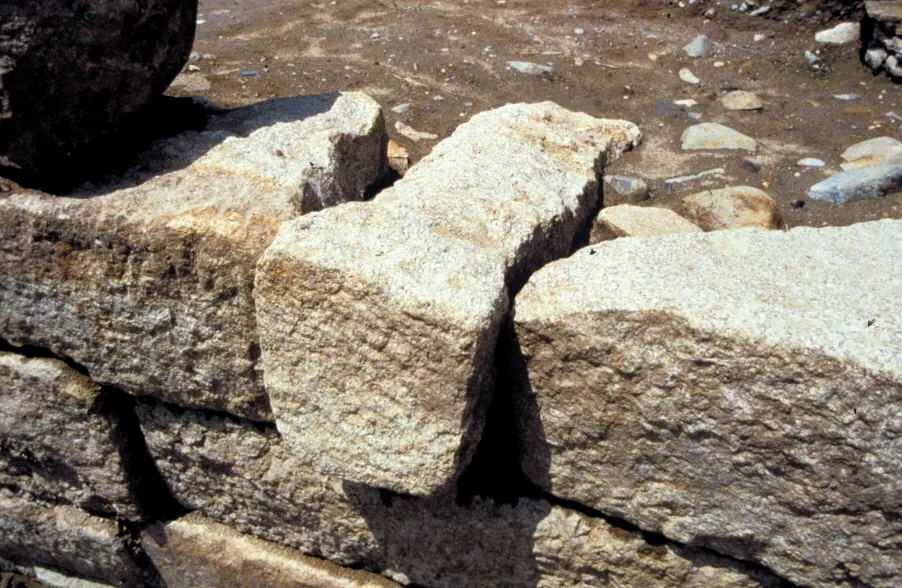
The Iljeonggyo and Woljeonggyo Bridges are presumed to be the bridges referred to in a passage of Samguk sagi (History of the Three Kingdoms) that reads: “In the second moth of the nineteenth year of King Gyeongdeok’s reign, two bridges, Chunyang and Woljeong, were built over the Muncheon stream on the south side of the palace.” Over time, the name “Woljeong” came to be written as “月精” instead of “月淨,” and the name “Chunyanggyo” was replaced by “Iljeonggyo,” “Hyobulhyogyo” or “Chilseonggyo.” The names appear to have eventually become settled as Iljeonggyo and Woljeonggyo, symbolizing the spirit of the sun and the spirit of the moon, respectively. As for the names “Hyobulhyogyo” and “Chilseonggyo,” they seemed to have emerged during the Joseon period, from folk legends that became associated with the Iljeonggyo Bridge. The Iljeonggyo, conjectured to be the Chunyanggyo mentioned in Samguk Sagi (History of the Three Kingdoms), is believed to have consisted of an east and a west abutment and abutment wing walls and three boat-shaped supports, with an estimated length of at least 55m, deck width of 12m and total height of 5m or more. The Woljeonggyo, on the other hand, is believed to have been comprised of a south and north abutment and four boat-shaped supports, and its total length is estimated at approximately 60.57m. Judging from pieces of burnt wood and broken roof tile shards, discovered in the area between the former locations of these bridges, it is likely that there was a bridgehouse on top of them. The two bridges, similar in shape and size, appear also to have been built using the same method of construction. Stone nails are used in a similar fashion in both bridges for the abutment wing walls, and the masonry is in the toemulim style in both of them. The color and texture of the stones are also quite similar. These two bridge sites cast light on the bridge construction and engineering technique used in ancient Korea. Further, as the Iljeonggyo appears to have linked the Namsan Mountain of Gyeongju with the city’s southern outskirts, while the Woljeonggyo seems to have been part of the main transportation route in the area lying west of Gyeongju, they can provide important clues as to the size and characteristics of Silla’s capital city.
Location
지도를 불러오는 중…
Have you visited this place?
Log in and verify your visit on-site via GPS to record a stamp in My Journey. (QR verification coming later.)
Images: KOGL (khs.go.kr) · Data source: Korea Heritage Service Open API (khs.go.kr)