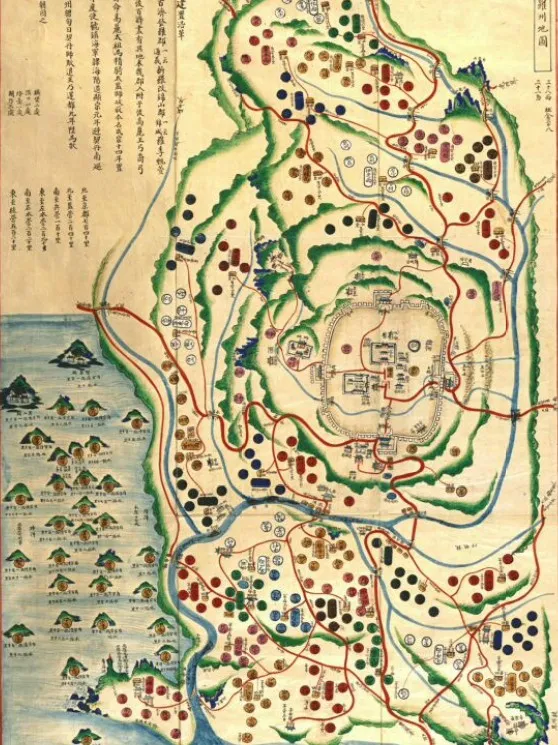
Naju-mok Government Office and Local Confucian School
羅州牧 官衙와 鄕校
전라남도 나주시
Basic information
- Designation
- Historic Site No.483
- Category
- Sites & Pagodas
- Era
- 조선시대
- Designated year
- 2007
- Location
- 나주시, 전라남도— 전남 나주시 금계동 일원
- Coordinates
- 35.032368, 126.716770
AI Docent
Coming soonAn AI-generated, friendly retelling of this heritage site is available in Korean. An English version is on our roadmap — for now, please see the official description below.
Description
Agriculture was highly developed in the Naju area from the Three Kingdoms Period (1st century BC- AD 7th century), contributing to the region's affluence throughout the pre-modern times. From the Goryeo (918-1392) to the Joseon (1392-1910) Periods, Naju was the administrative seat of Jeolla-do Province and Naju-mok at the time. The existing Joseon government offices and local Confucian school attest to the remarkable influence of the region over a millennium. The location and layout of the Naju-mok government offices are described in detail in several ancient books and documents, including Sinjeung dongguk yeoji seungnam (New Augmented Survey of the Geography of Korea), Geumseong eupji (Annals of Naju), Yeojido (Detailed Map), and Map of Naju-mok. Among its various structures, the main office building survives, serving as the coordinate axis for archaeological excavators surveying the local government compound. The local Confucian school of Naju has an impressive main shrine dedicated to Confucian sages standing in front of a lecture hall. The layout is typical of the Joseon Confucian schools built on flat land. The Daeseongjeon Shrine of this school, designated as Treasure No. 394, stands out in terms of both scale and style. Its prominent architectural value aside, the Naju Confucian school was second only to the Seonggyungwan National Academy in all of Joseon in terms of its importance as a public education institution and a venue for rites to Confucius and eminent scholars of Korea and China of the past ages.
Location
지도를 불러오는 중…
Have you visited this place?
Log in and verify your visit on-site via GPS to record a stamp in My Journey. (QR verification coming later.)
Images: KOGL (khs.go.kr) · Data source: Korea Heritage Service Open API (khs.go.kr)