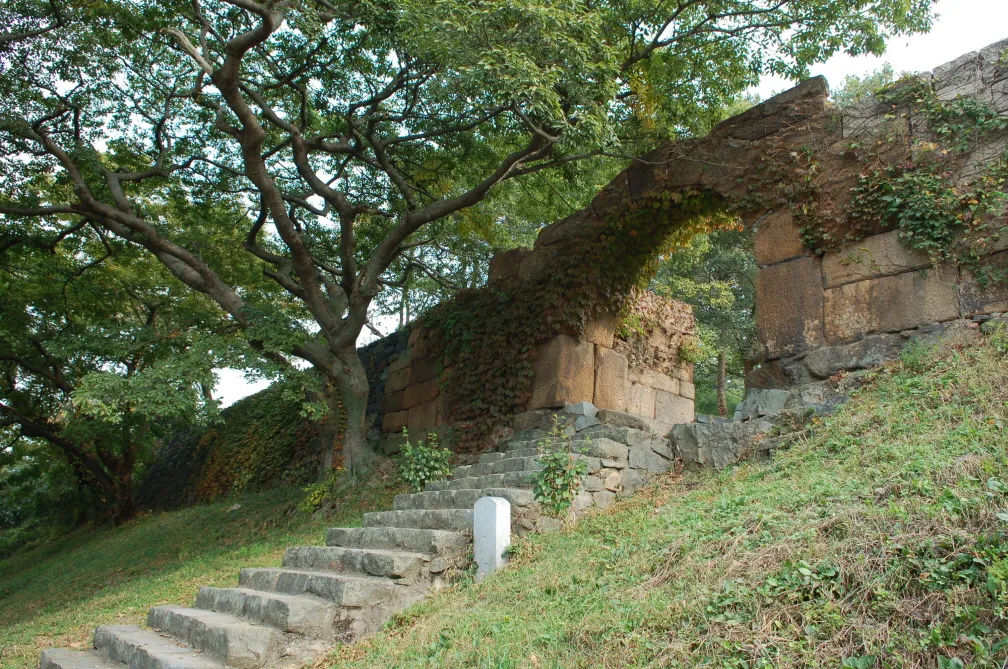
Navy Headquarters of Chungcheong-do Province, Boryeong
保寧 忠淸水營城
충청남도 보령시
Basic information
- Designation
- Historic Site No.501
- Category
- Sites & Pagodas
- Designated year
- 2009
- Location
- 보령시, 충청남도— 충남 보령시 오천면 소성리 931번지 일대
- Coordinates
- 36.439855, 126.522189
AI Docent
Coming soonAn AI-generated, friendly retelling of this heritage site is available in Korean. An English version is on our roadmap — for now, please see the official description below.
Description
Established in the early Joseon Dynasty, this fortress remained in service until 1896 (or the 33rd year of King Gojong’s reign). According to Sejong sillok jiriji (Geographical Records of the Annals of King Sejong), the number of warships and marines belonging to the Navy Headquarters of Chungcheong-do Province came to 142 and 8,414, respectively. The local naval headquarters were assigned the duty of protecting boats carrying goods to Hanyang (now Seoul), repelling incursions by Japanese pirates, and observing the movement of foreign boats. In 1596 (or the 29th year of King Seonjo’s reign), Chungcheong-do Naval Commander Choe Ho, along with his troops, joined the Naval Commander-in-Chief Won Gyun at Hansando Island off the South Coast to repel Japanese invaders. However, they were both killed in action in July of the following year. As the area in which the Navy Headquarters of Chungcheong-do Province was located (at the entrance to Cheonsuman Bay) was renowned for its elegant natural scenery, many poets and authors liked to visit the area. Galmajindu, situated outside the West Gate of the fortress, was the site where violators of military discipline were punished. In 1866, five Catholic priests were executed during the central government’s massive persecution of Catholics. The site of the fortress and nearby areas has been well preserved, with the exception of some areas that have been altered by the construction of roads or an embankment reclamation scheme. It is regarded as a valuable site that sheds light on how local naval units were organized.
Location
지도를 불러오는 중…
Have you visited this place?
Log in and verify your visit on-site via GPS to record a stamp in My Journey. (QR verification coming later.)
Images: KOGL (khs.go.kr) · Data source: Korea Heritage Service Open API (khs.go.kr)