Guamdong Tumuli, Daegu
大邱 鳩岩洞 古墳群
대구광역시 북구
Basic information
- Designation
- Historic Site No.544
- Category
- 유적지
- Designated year
- 2018
- Location
- 북구, 대구광역시— 대구광역시 북구 구암동 456
- Coordinates
- 35.931438, 128.567473
AI Docent
Coming soonAn AI-generated, friendly retelling of this heritage site is available in Korean. An English version is on our roadmap — for now, please see the official description below.
Description
Machine-translatedThis English description was machine-translated and may contain inaccuracies. Refer to the original Korean text for details.
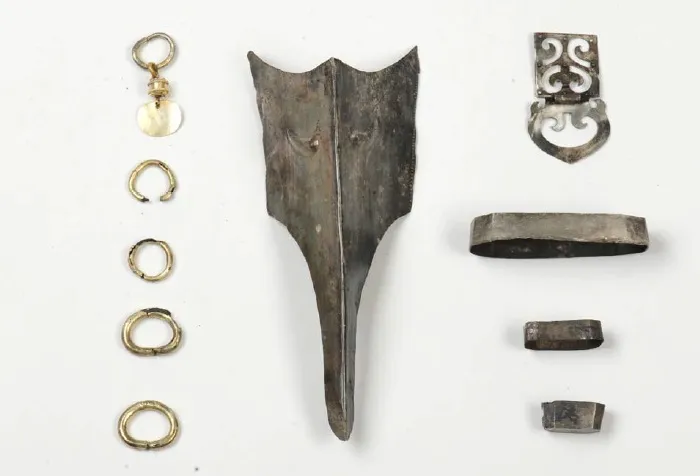
The Daegu Guam-dong Tumuli are extensively distributed along the western ridge of Mount Hamji in the northern district of Daegu, commanding a panoramic view of the Palgeo Plain. The ridge where the tumuli are distributed is divided into multiple sections with steep slopes, containing 360 mounds. The prominent ridges feature large-scale burial mounds, including 34 mounds with diameters of 15-25 meters across three main ridges and 7 large mounds exceeding 25 meters in diameter. Smaller mounds are positioned on the slopes. Excavation surveys were conducted in 1975 (Mound 56) and 2015 (Mound 1), revealing unique construction methods of stone-lined burial chambers covered with stone-built mounds on two mounds. Mound 1-1 (excavated in 2015) demonstrates an adjacent mound system with multiple burial chambers, featuring Mound 1-2 to the northeast of Mound 1-1 and Mound 1-3 to the southwest, connected by stacked stones. The burial chambers consist of a primary and secondary stone chamber arranged in an inverted T-shape. The Daegu Guam-dong Tumuli represent 5th-6th century elite burials of Silla regional powers centered on the Palgeo Plain, displaying characteristic Silla mound features such as stone-filled mounds, adjacent mound construction, and primary-secondary chamber structures. However, their significant value lies in the unique construction method of stone-filled stone-lined burial chambers, which has not been confirmed in other Silla or Gaya mounds, making them invaluable resources for studying ancient Korean history and burial practices.
Location
지도를 불러오는 중…
Have you visited this place?
Log in and verify your visit on-site via GPS to record a stamp in My Journey. (QR verification coming later.)
Images: KOGL (khs.go.kr) · Data source: Korea Heritage Service Open API (khs.go.kr)