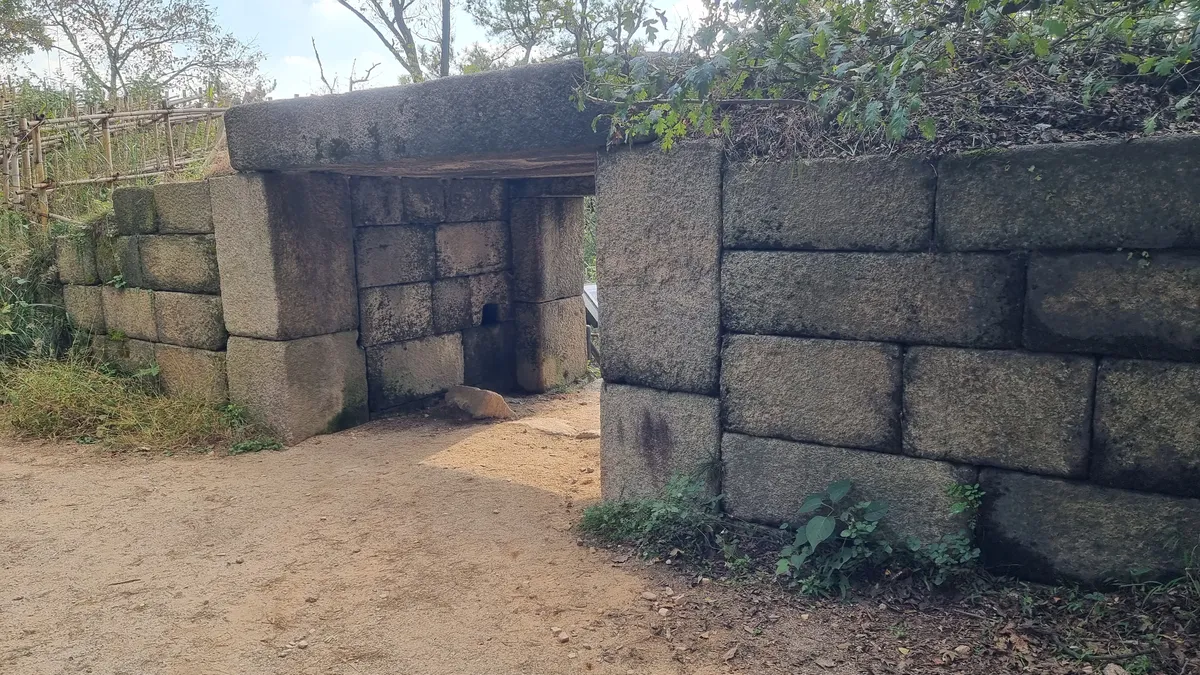
Tangchundae Fortress
蕩春臺城
서울특별시 종로구
Basic information
- Designation
- Historic Site No.573
- Category
- Sites & Pagodas
- Era
- 조선 숙종 41년~영조 30년
- Designated year
- 2024
- Location
- 종로구, 서울특별시— 서울특별시 종로구 부암동 산 22-1 외 35필지
- Coordinates
- 37.596770, 126.958628Kakao address conversion
AI Docent
Coming soonAn AI-generated, friendly retelling of this heritage site is available in Korean. An English version is on our roadmap — for now, please see the official description below.
Description
Machine-translatedThis English description was machine-translated and may contain inaccuracies. Refer to the original Korean text for details.
Tangchundaeseong is a uniquely structured defensive fortress demonstrating the late Joseon Dynasty's urban defense system. Construction began in 1715 (the 41st year of King Sukjong's reign) and was completed in 1754 (the 30th year of King Yeongjo's reign). Following the Imjin War and the Second Manchu Invasion of Korea, to supplement the limitations of the existing urban defense system, the Hanyang city wall was reinforced and the Bukhansan Fortress was newly constructed, connected by Tangchundaeseong, establishing an innovative urban defense system with three organically integrated fortifications. During wartime, in addition to its defensive function in the northwestern part of Hanyang, it served as a supply base for military provisions through storage facilities such as Pyeongchang located within the fortress, and functioned as a passage route for the court and urban residents to move to Bukhansan Fortress when defending Hanyang became difficult. With the construction of Tangchundaeseong, the late Joseon Dynasty's defense system that firmly protected the capital was completed. Within the fortress, adjacent relics such as the Chongyungcheong administrative site and Pyeongchang storage site provide understanding of late Joseon Dynasty national defense facilities, and it is an important cultural heritage for understanding the late Joseon Dynasty's urban defense system, possessing outstanding historical and scholarly value.
Location
지도를 불러오는 중…
Have you visited this place?
Log in and verify your visit on-site via GPS to record a stamp in My Journey. (QR verification coming later.)
Images: KOGL (khs.go.kr) · Data source: Korea Heritage Service Open API (khs.go.kr)