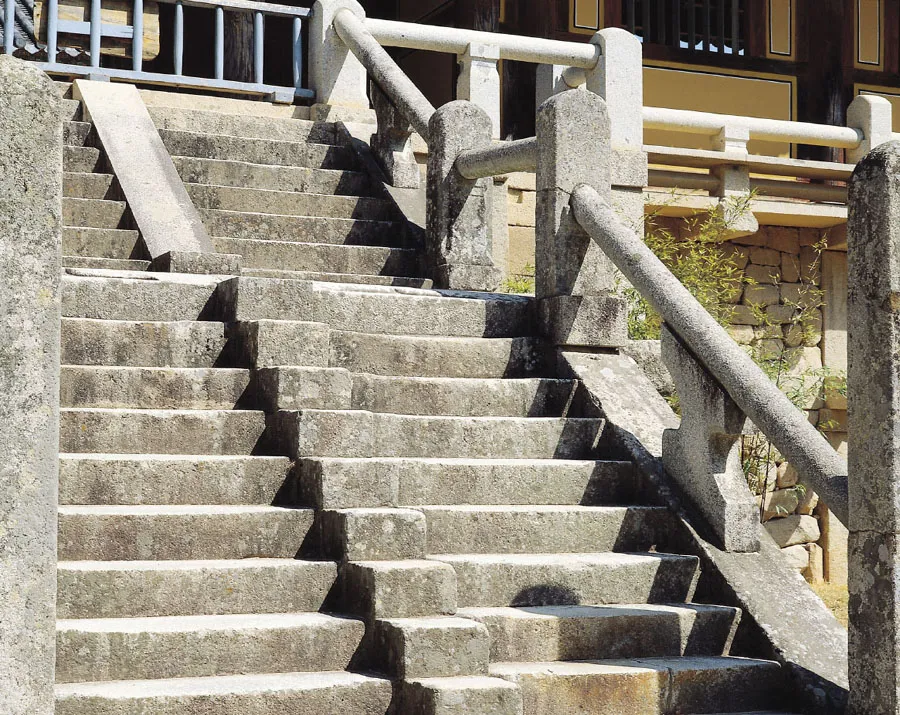
Yeonhwa and Chilbo Stone Bridges of Bulguksa Temple, Gyeongju
慶州 佛國寺 蓮華橋 및 七寶橋
경상북도 경주시
Basic information
- Designation
- National Treasure No.22
- Category
- Sites & Pagodas
- Era
- 통일신라시대
- Designated year
- 1962
- Location
- 경주시, 경상북도— 경북 경주시 불국로 385, 불국사 (진현동)
- Coordinates
- 35.789719, 129.331643
AI Docent
✨ AI-generatedWelcome to the Yeonhwa and Chilbo Stone Bridges at Bulguksa Temple! These aren't ordinary staircases—they're sacred pathways built over 1,270 years ago as spiritual gateways to paradise. Imagine climbing eighteen exquisite stone steps, each one carved with lotus flower petals, ascending toward enlightenment. The ten lower steps form Yeonhwagyo Bridge, while eight upper steps create Chilbogyo Bridge. Together, they lead to Geungnakjeon Hall through Anyangmun Gate—a route reserved, it's said, for those who'd glimpsed Buddhist paradise. What makes these bridges special? Their delicate beauty contrasts beautifully with the grander eastern bridges. Each step features distinctive 45-degree slopes and graceful rainbow-shaped arches. Even a queen once walked here, seeking peaceful blessings for her husband. Today, these bridges are protected from foot traffic—their ancient lotus carvings preserved for you to admire. They remain Bulguksa's most intimate spiritual passage, blending architectural elegance with profound spiritual purpose.
⚠ This is an AI-generated retelling of the official description. For accuracy, refer to the official description below.
Description
Daeungjeon and Geungnakjeon, the prayer halls of Bulguksa Temple, can be reached by two ways – via Cheongungyo and Baegungyo Bridges to the east, or via Yeonhwagyo and Chilbogyo Bridges to the west. The latter two bridges are connected to Anyangmun Gate, which leads to Geungnakjeon Hall, and it is said that these bridges were not destined for earthly people, but only for those who had realized the Buddhist paradise. The bridges are made of eighteen steps of which ten on the lower part are called Yeonhwagyo Bridge and eight at the upper part are called Chilbogyo Bridge. They are smaller than Cheongungyo and Baegungyo Bridges, but share certain structural similarities, including the unique formation of the bridge-shaped staircase, the 45-degree slope, and the rainbow-shaped arches of the bridges. Despite these similarities, however, each has its own unique characteristic, such as the prominent carvings of lotus flower petals on each step of Yeonhwagyo Bridge, which unfortunately have faded due to the tramping of feet over the centuries. (As such, access to the bridge is now restricted.) It is said that these bridges were built in 751 (the 10th year of the reign of King Gyeongdeok of Unified Silla), and have been continuously crossed by numerous visitors to this temple. The Queen of King Heongang, who became a Buddhist monk to pray for an easy and peaceful death for her husband, also used these bridges to reach the temple and offer prayers there. Yeonhwagyo and Chilbogyo Bridges exhibit a delicate beauty, while Cheongungyo and Baegungyo Bridges in the east display a grand beauty. Together these magnificent bridges lend additional harmony to Bulguksa Temple as well as a variation of formative beauty.
Location
지도를 불러오는 중…
Have you visited this place?
Log in and verify your visit on-site via GPS to record a stamp in My Journey. (QR verification coming later.)
Images: KOGL (khs.go.kr) · Data source: Korea Heritage Service Open API (khs.go.kr)