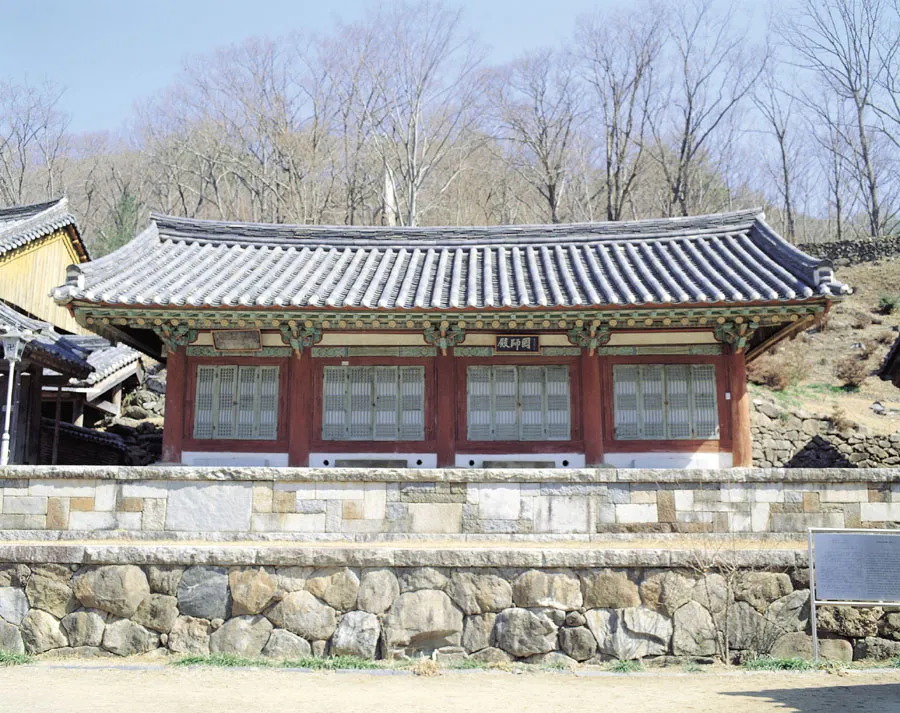
Guksajeon Shrine of Songgwangsa Temple, Suncheon
順天 松廣寺 國師殿
전라남도 순천시
Basic information
- Designation
- National Treasure No.56
- Category
- Architecture
- Era
- 조선시대 초기
- Designated year
- 1962
- Location
- 순천시, 전라남도— 전남 순천시 송광면 송광사안길 100, 송광사 (신평리) / (지번)전남 순천시 송광면 신평리 12 송광사
- Coordinates
- 35.001882, 127.276493
AI Docent
Coming soonAn AI-generated, friendly retelling of this heritage site is available in Korean. An English version is on our roadmap — for now, please see the official description below.
Description
Songgwangsa Temple in Jogyesan Mountain is an old historical Buddhist monastery generally regarded as one of the three temples representing the Triple Jewels. The name of the temple, Songgwang (literally meaning “expanse of water”), is known to have come from one of the old names of the mountain where the temple sits. There is no clear evidence showing when the temple was established, although a record states that it was founded in the 9th century by a Silla monk named Chejing (804-880). Guksajeon Shrine of Songgwangsa Temple had originally been a meditation center but was turned into a shrine housing the official portraits of the 16 monks who had been revered as state preceptors. The shrine was built in 1369 when Goryeo was under the rule of King Gongmin (1330-1374); since then, it had undergone two major repair works. The shrine building features a structure of four kan (a unit of measurement referring to the distance between two columns) on the front and back and three kan on the sides, gable roof, and ornamental brackets set up on top of the columns supporting the roof. Its interior has a grid ceiling decorated with lotus design and the main beam carved with dragon design, and they maintained their original condition. The details of the structure show that the shrine was built during the early phases of the Joseon Period (1392-1910), during the same period as Hasadang Hall (Treasure No. 263) in Songgwangsa Temple, Suncheon. Today, the building is widely praised for its simple, elegant structure and is considered an important cultural asset in terms of the column-to-brackets architectural style in the middle phase.
Location
지도를 불러오는 중…
Have you visited this place?
Log in and verify your visit on-site via GPS to record a stamp in My Journey. (QR verification coming later.)
Images: KOGL (khs.go.kr) · Data source: Korea Heritage Service Open API (khs.go.kr)