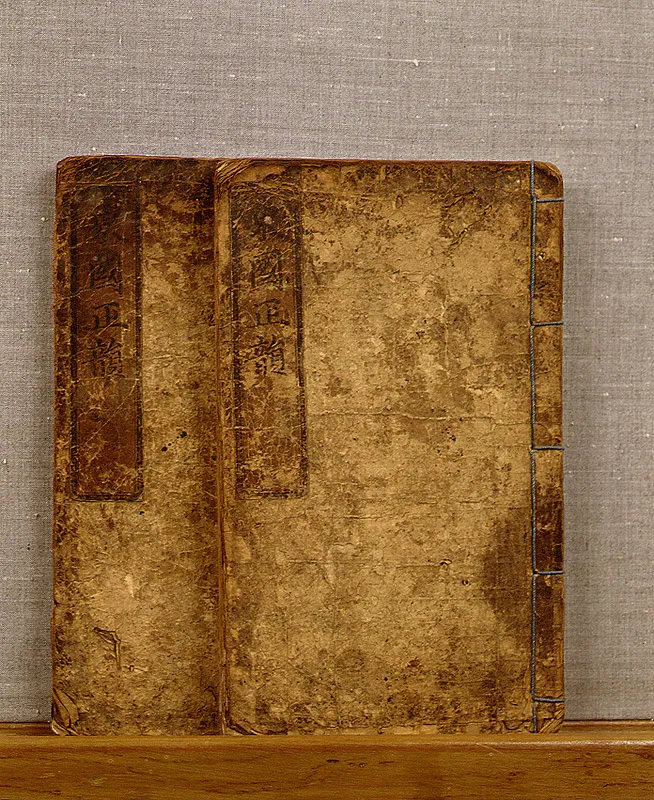
Dongguk jeongun (Standard Rhymes of the Eastern State), Volumes 1 and 6
東國正韻 卷一, 六
서울특별시 성북구
Basic information
- Designation
- National Treasure No.71
- Category
- Books & Records
- Era
- 조선 세종 30년(1448)
- Designated year
- 1962
- Location
- 성북구, 서울특별시— 서울특별시 성북구 성북로 102-11 (성북동, 간송미술관)
- Coordinates
- 37.589116, 127.018215
AI Docent
Coming soonAn AI-generated, friendly retelling of this heritage site is available in Korean. An English version is on our roadmap — for now, please see the official description below.
Description
Published in 1448 by a group of distinguished scholar-statesmen including Sin Suk-ju, Choe Hang, and Bak Paeng-nyeon according to a royal order by King Sejong, this book, Dongguk jeongun (“Standard Rhymes of the Eastern State”), focuses on the “standard sounds” of the Korean language. Consisting of six volumes printed with movable types, it is known as the first book published to deal with the subject. According to historical records, the publication of the book was inspired by Hongmu jeongun (“Correct Rhymes from the Hongwu Reign”), a Chinese rhyming dictionary completed in 1375. King Sejong and his scholar-officials wanted the book to be able to provide standard Korean sounds for Chinese characters, which had been a chaotic situation. The compilation of the Korean book was completed in the ninth month of 1447 and was published and distributed to major educational institutions across the capital including Seonggyungwan, the top institution of higher education, and the Four Academies (Sabuhakdang) in the eleventh month of the following year. Today, only two of its original six volumes -- Volumes 1 and 6 -- have survived. The remaining volumes show that the large scripts in the book’s main text were printed using wooden movable types; the small scripts, plus large scripts in the Introduction, were printed with the Gabin Types cast in 1434. The scripts were made from handwritings by Prince Jinyang, later known as King Sejo (r. 1455-1468). The book is considered extremely valuable since it is the first tangible effort to use the newly created Korean alphabet to mark the Korean sounds of Chinese characters. Its value as a source material for the study of the Korean language and background of creation of the Korean alphabet and phonetic system of the Korean language is also regarded highly and often compared with the Hunminjeongeum or the Korean writing system itself.
Location
지도를 불러오는 중…
Have you visited this place?
Log in and verify your visit on-site via GPS to record a stamp in My Journey. (QR verification coming later.)
Images: KOGL (khs.go.kr) · Data source: Korea Heritage Service Open API (khs.go.kr)