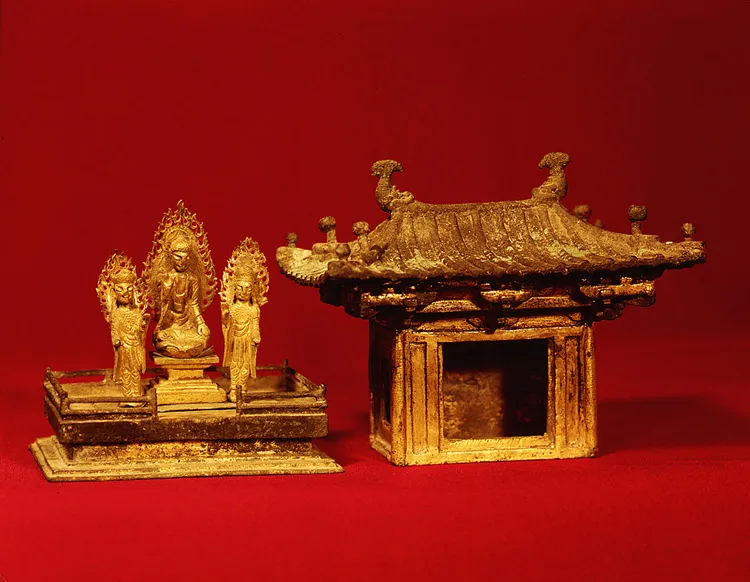
Portable Shrine of Gilt-bronze Buddha Triad
金銅三尊佛龕
서울특별시 성북구
Basic information
- Designation
- National Treasure No.73
- Category
- Craft
- Era
- 고려시대 초기
- Designated year
- 1962
- Location
- 성북구, 서울특별시— 서울특별시 성북구 성북로 102-11 (성북동, 간송미술관)
- Coordinates
- 37.589116, 127.018215
AI Docent
Coming soonAn AI-generated, friendly retelling of this heritage site is available in Korean. An English version is on our roadmap — for now, please see the official description below.
Description
Korean Buddhists had a long tradition of carrying a portable shrine with Buddha images stored in it. The shrine of this type tended to feature the shape of a house built by carving wood, metal, or even stone. Today, it provides important clues about the Korean architectural styles in the past. This particular shrine, 18 centimeters high and made of gilt-bronze, was made to treasure a tiny Buddha triad, also made of bronze and gilt. Originally placed on a rectangular altar with handrails in the shrine, the triad consists of the principal Buddha seated in the middle with two acolytes standing on either side. The shrine features the shape of a Buddhist prayer hall complete with columns, roof with ornaments, and three windows -- one in the front and the other two on both sides -- through which one can have a clear view of the sacred images enshrined in it. The principal Buddha is marked by a rather stylized face, with the dharma robe covering both shoulders and having folds expressed by simple lines; behind him are glorious head and body lights edged with flame patterns. The two bodhisattvas flanking the Buddha display stylistic and technical similarities, but they wear beaded ornamental headgears. The shrine is substantially preserved in original condition, still retaining the gilt walls and green-rusted roof. The Buddha’s long waist, robe folds expressed rather haphazardly, and beaded crowns worn by bodhisattvas suggest that the statuettes were made under the influence of the north of the Korean Peninsula in the 11th and 12th centuries. Today, the triad and the shrine provide valuable information on the traditional style of Korean architecture and carving techniques developed during or before the Goryeo Period (918-1392).
Location
지도를 불러오는 중…
Have you visited this place?
Log in and verify your visit on-site via GPS to record a stamp in My Journey. (QR verification coming later.)
Images: KOGL (khs.go.kr) · Data source: Korea Heritage Service Open API (khs.go.kr)