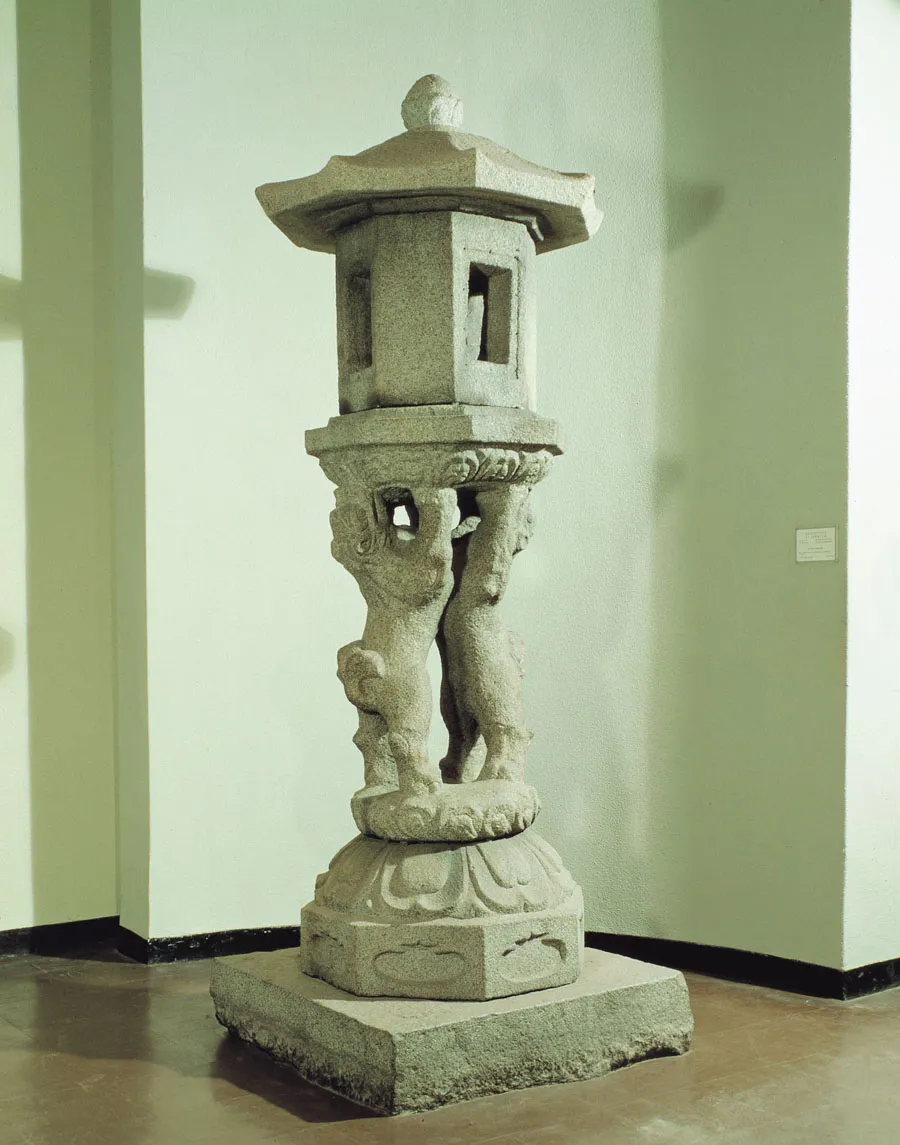
Twin Lion Stone Lantern of Jungheungsanseong Fortress, Gwangyang
光陽 中興山城 雙獅子 石燈
광주광역시 북구
Basic information
- Designation
- National Treasure No.103
- Category
- Sites & Pagodas
- Era
- 통일신라시대
- Designated year
- 1962
- Location
- 북구, 광주광역시— 광주 북구 하서로 110, 국립광주박물관 (매곡동)
- Coordinates
- 35.189095, 126.883091
AI Docent
Coming soonAn AI-generated, friendly retelling of this heritage site is available in Korean. An English version is on our roadmap — for now, please see the official description below.
Description
Korean Buddhism has a long tradition of setting up one or more stone lanterns symbolizing the all-pervading light of Buddha’s wisdom in front of the Hall of Shakyamuni or a pagoda in a temple. Traditionally, a Korean stone lantern consists of four sections, a three-tier pedestal, the main body containing the light chamber, a roofstone, and the finial. This particular stone is characterized by the use of a unique pedestal featuring elaborately rendered twin lions standing between the lower and upper lotus pedestals. The lions stand upright on their hind legs, chest to chest, supporting the upper pedestal with their raised front legs. The light chamber stone placed on the upper pedestal has an octagonal shape and four light windows. The roofstone is also octagonal with eight corners nicely turned up, with a finial shaped like a lotus bud. The stone lantern of the Unified Silla period (676-935) is generally regarded as a masterpiece with its delightfully simple structure combined with elaborately carved animal sculptures. The lantern had originally been in Jungheungsanseong Fortress in Gwangyang, Jeollanam-do but was moved to Gyeongbokgung Palace in Seoul after a plan to smuggle it into Japan was uncovered during the Japanese Occupation (1910-1945). It is currently stored in the Gwangju National Museum.
Location
지도를 불러오는 중…
Have you visited this place?
Log in and verify your visit on-site via GPS to record a stamp in My Journey. (QR verification coming later.)
Images: KOGL (khs.go.kr) · Data source: Korea Heritage Service Open API (khs.go.kr)