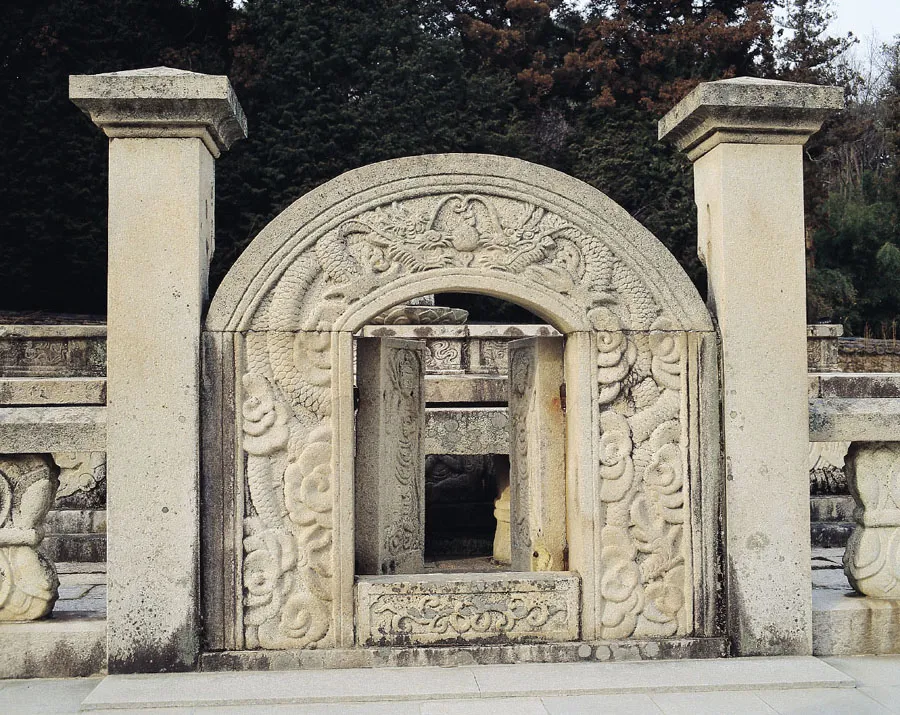
Daeungjeon Hall and Geumganggyedan Ordination Platform of Tongdosa Temple, Yangsan
梁山 通度寺 大雄殿 및 金剛戒壇
경상남도 양산시
Basic information
- Designation
- National Treasure No.290
- Category
- Architecture
- Era
- 조선 인조 23년(1645)
- Designated year
- 1997
- Location
- 양산시, 경상남도— 경남 양산시 하북면 통도사로 108, 통도사 (지산리)
- Coordinates
- 35.488044, 129.063713
AI Docent
✨ AI-generated# Welcome to Tongdosa Temple You're standing before one of Korea's three greatest temples, a place where faith and craftsmanship converge beautifully. The Daeungjeon Hall holds something extraordinarily sacred: the sarira—a relic of Buddha himself—preserved behind the stunning Geumgang Ordination Platform. Look closely at the architecture. Built in 1645 after being destroyed during the Japanese invasions, this hall showcases mid-Joseon mastery. Notice the distinctive T-shaped roof and the intricate lotus designs carved into granite stairs—echoes of Unified Silla artistry. The beams rest not just atop pillars but between them too, showing sophisticated engineering. The Geumgang Platform symbolizes diamond-like Buddhist principles, representing Buddha's eternal presence. Inside, 1,000 portraits were carved, with protective deities guarding the outer surface. Each stone tells a story of devotion. This isn't merely a building—it's a testament to centuries of Korean Buddhist tradition and architectural excellence. Imagine the hands that shaped these stones, the faith that rebuilt this temple again and again.
⚠ This is an AI-generated retelling of the official description. For accuracy, refer to the official description below.
Description
Tongdosa Temple is one of the three great temples in Korea. Daeungjeon is originally for preserving Bodhisattva, but Daeungjeon in Tongdosa Temple through the Geumgang Ordination Platform behind the building preserves the sarira of Buddha. The name 'tongdo' means one that cultivated the religious sense through the stairs and one that works the salvation of all creatures. It was first built in Queen Seondeok of Silla, then burnt down by the Japanese Invasion in 1592 and again reconstructed in 1645 (the 23rd year of King Injo of Joseon). It was built with 3 rooms in the front and 5 rooms in the side, while the roofs look 'T' shape. Under the eaves, the eaves beams were not only placed on the top of the pillar but also among the pillars. On the platform outside the building, as well as on the granite stairs, and the either side of the stairways, the beautiful lotus design could be seen that came from the unified Silla period. The Geumgang Ordination Platform meant sound and valuable Buddhist rules like a diamond. It symbolized that Buddha always stays there. The present Ordination Platform has been repaired many times in the Goryeo and Joseon Dynasties. As a typical Korean Geumgang ordination platform, the stones made sculpture like a bell, which preserved a bone of Buddha, and was placed in the middle. Inside the platform of the first floor, 1000 portraits were carved in with the outside showing the God for Buddhism. Knowing the eras of its construction, Daeungjeon was a typical work of the mid Joseon Dynasty, and Geumgang Ordination Platform that preserved the sarira of Buddha has been considered as important cultural assets with its great implications of the structures and history of architecture.
Location
지도를 불러오는 중…
Have you visited this place?
Log in and verify your visit on-site via GPS to record a stamp in My Journey. (QR verification coming later.)
Images: KOGL (khs.go.kr) · Data source: Korea Heritage Service Open API (khs.go.kr)