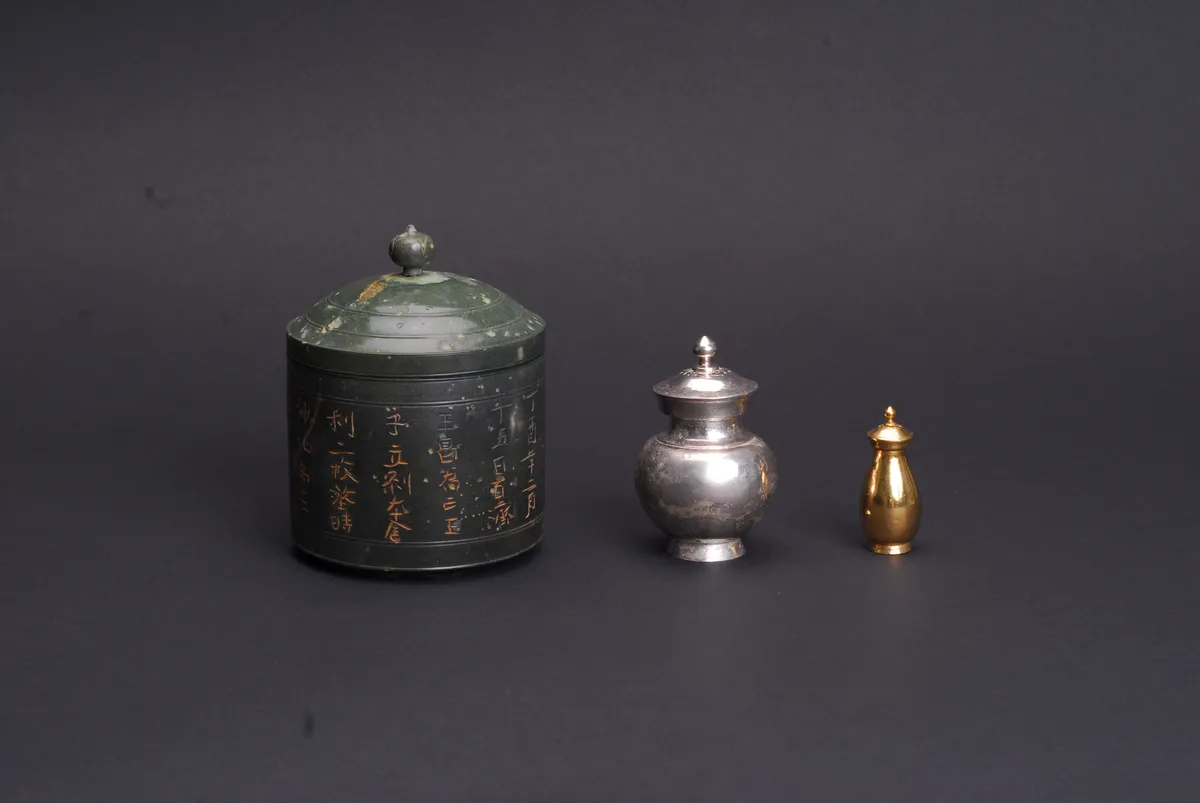
Reliquary from Wangheungsa Temple Site, Buyeo
扶餘 王興寺址 出土 舍利器
충청남도 부여군
Basic information
- Designation
- National Treasure No.327
- Category
- Craft
- Era
- 577년(백제 위덕왕 24)
- Designated year
- 2019
- Location
- 부여군, 충청남도— 충청남도 부여군 금성로 5(부여읍, 국립부여박물관)
- Coordinates
- 36.276100, 126.901200Museum-based location
AI Docent
Coming soonAn AI-generated, friendly retelling of this heritage site is available in Korean. An English version is on our roadmap — for now, please see the official description below.
Description
Known as the oldest extant sarira reliquary in Korea, the Sarira Reliquary of the Wangheungsa Temple Site in Buyeo was found at the site of Wangheungsa Temple (Bakeje) when it was excavated in 2007 by the Buyeo National Institute of Cultural Heritage. The inscription on the bronze sarira case shows that the reliquary was made in 577 during the reign of King Wideok (r. 554-598) of Baekje. The origins of the temple are recorded in The History of the Three Kingdoms (Samguk sagi, 1145). The sarira bottles of the reliquary display the typically high level of workmanship of Baekje artisans in terms of the techniques used to cast, cut, join and polish them. The vessels are also highly regarded for the delightfully simple and elegant shape of their body, the onion-shaped cintamani knob on their lid, and the lotus motif decoration on their surface. Generally regarded as a masterpiece among the sarira reliquaries of late sixth-century Baekje, this particular reliquary is a valuable link between the Baekje metalcraft represented by the silver cup and saucer excavated at King Muryeong’s tomb built in 525 and that represented by the sarira reliquary excavated from the Mireuksa Temple site, which dates back to the first half of the seventh century.
Location
지도를 불러오는 중…
Have you visited this place?
Log in and verify your visit on-site via GPS to record a stamp in My Journey. (QR verification coming later.)
Images: KOGL (khs.go.kr) · Data source: Korea Heritage Service Open API (khs.go.kr)