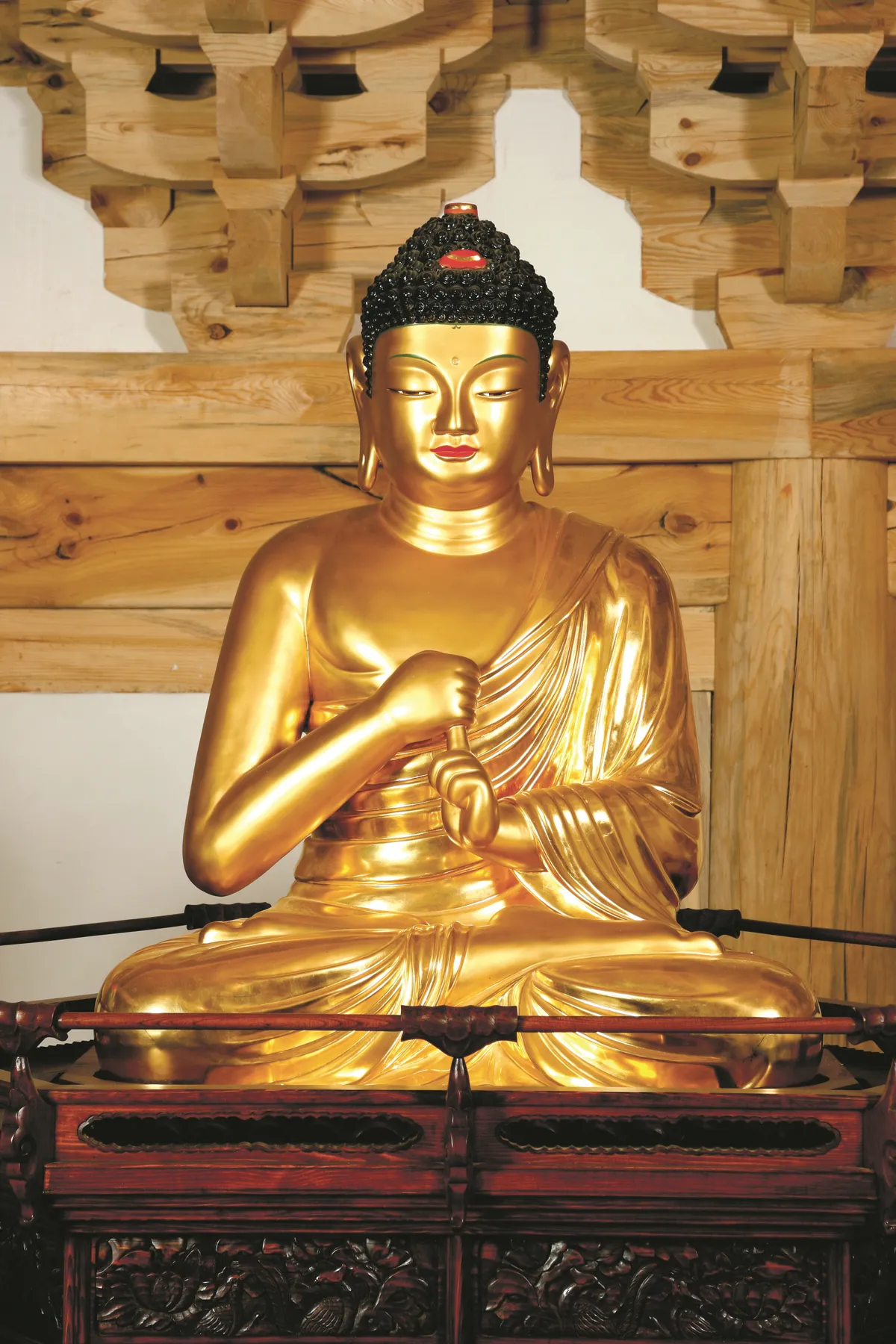
Wooden Seated Vairocana Buddha and Enshrined Votive Offerings in Beopbojeon Hall of Haeinsa Temple, Hapcheon
陜川 海印寺 法寶殿 木造毘盧遮那佛坐像 및 腹藏遺物
경상남도 합천군
Basic information
- Designation
- National Treasure No.338
- Category
- Sculpture
- Era
- 신라 9세기 후반
- Designated year
- 2022
- Location
- 합천군, 경상남도— 경상남도 합천군 해인사길 122(가야면, 해인사)
- Coordinates
- 35.801200, 128.102200Museum-based location
AI Docent
Coming soonAn AI-generated, friendly retelling of this heritage site is available in Korean. An English version is on our roadmap — for now, please see the official description below.
Description
Machine-translatedThis English description was machine-translated and may contain inaccuracies. Refer to the original Korean text for details.
Wooden Seated Vairocana Buddha and Reliquary Objects in the Beopbojeon Hall of Haeinsa Temple, Hapcheon. Based on sculptural style, iconography, and scientific analysis, this wooden seated Vairocana Buddha is estimated to date to the late 9th century of Unified Silla, and possesses exceptionally high historical and academic value as the oldest extant wooden Buddhist statue in Korea. The wisdom fist mudra, one-shouldered robe with exposed shoulder, fan-shaped drapery folds between the knees, rounded face, and dignified physique show stylistic similarities to the 9th-century Seokguram grotto sculptures. The statue is carved from Korean juniper (sandalwood), distinguishing it from the majority of Korean wooden Buddhist statues made from pine or ginkgo. The construction method — a single cylindrical trunk for the body with separately carved and joined head and arms — represents an early proto-form of the wood-joining technique that emerged in the Goryeo period. The reliquary objects contain precious texts and textiles added during restoration periods from Goryeo through Joseon, with the 1490 restoration reliquary serving as a representative example of early Joseon royal patronage.
Location
지도를 불러오는 중…
Have you visited this place?
Log in and verify your visit on-site via GPS to record a stamp in My Journey. (QR verification coming later.)
Images: KOGL (khs.go.kr) · Data source: Korea Heritage Service Open API (khs.go.kr)