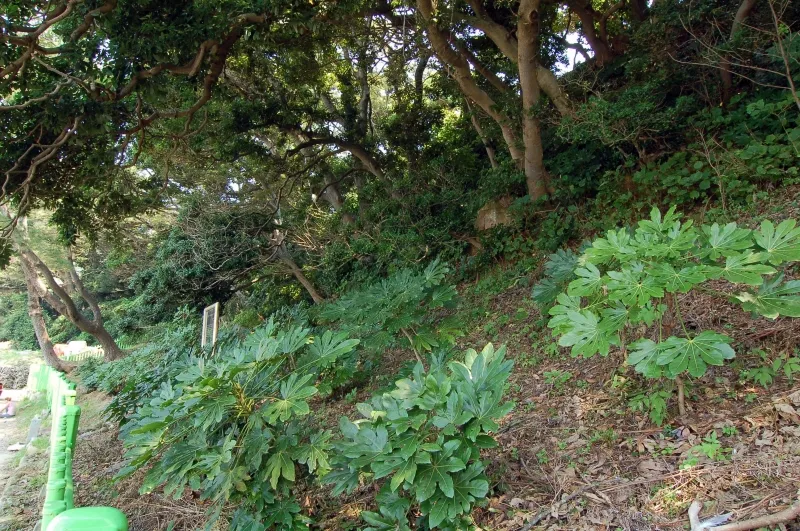
Natural Habitat of Formosa Rice Trees on Bijindo Island, Tongyeong
統營 比珍島 팔손이나무 自生地
경상남도 통영시
Basic information
- Designation
- Natural Monument No.63
- Category
- 동식물
- Designated year
- 1962
- Location
- 통영시, 경상남도— 경남 통영시 한산면 비진리 산51번지
- Coordinates
- 34.730042, 128.458176
AI Docent
Coming soonAn AI-generated, friendly retelling of this heritage site is available in Korean. An English version is on our roadmap — for now, please see the official description below.
Description
Formosa rice trees grow on the southern shore of Korea's mainland and on Geojedo Island. The Korean name of the tree, Palsoninamu (palsoni means “eight fingers”), originated from the fact that its leaves are divided into between 7 and 9 parts. It is also known as Palgakgeumban or Palgeumban. Bijindo Island in Hansan-myeon, Tongyeong City is a natural habitat of Formosa rice trees. This tree was once damaged by a typhoon. Camellias, magnolias, and ardisia japonica also grow in the vicinity. According to a local story about this species of tree, there was once an Indian princess named Vasba who received a set of twin rings as a 17th birthday present from her mother. One day, however, a maid who was cleaning the princess's room put the rings on her thumbs out of curiosity. Unfortunately, she couldn’t pull the rings off her fingers, and became so frightened that she covered them up completely. To appease his sorrowful princess, the king had all the people in the palace searched for the rings, but when her turn came the maid only showed her eight fingers, and not her thumbs. At that moment, lightning flashed and thunder filled the air, and the maid was transformed into a palsoninamu. Bijindo Island in Tongyeong is significant as the northernmost habitat of Formosa rice trees, and has been designated as Natural Monument (No. 63) for its protection.
Location
지도를 불러오는 중…
Have you visited this place?
Log in and verify your visit on-site via GPS to record a stamp in My Journey. (QR verification coming later.)
Images: KOGL (khs.go.kr) · Data source: Korea Heritage Service Open API (khs.go.kr)