Hwangsae
기타 .
Basic information
- Designation
- Natural Monument No.199
- Category
- 동식물
- Designated year
- 1968
- Location
- ., 기타— 기타 전국일원
- Coordinates
- 36.543101, 126.799557Kakao address conversion
AI Docent
Coming soonAn AI-generated, friendly retelling of this heritage site is available in Korean. An English version is on our roadmap — for now, please see the official description below.
Description
Machine-translatedThis English description was machine-translated and may contain inaccuracies. Refer to the original Korean text for details.
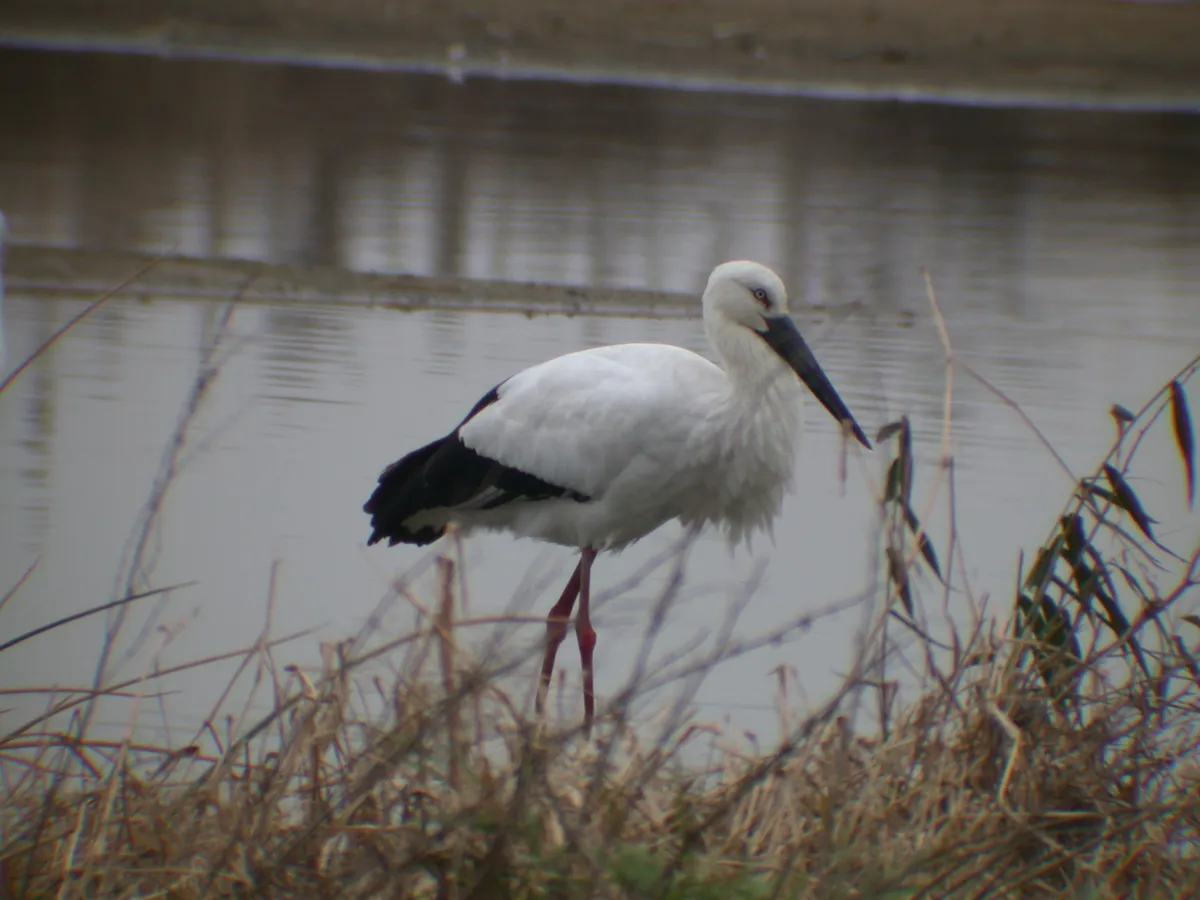
The Oriental Stork (Ciconia boyciana) is distributed and limited to Siberia, northeastern China, Japan, and Korea, wintering in eastern China and Korea. Its body size is 102 cm with a white head and body, straight thick black beak with black wing feathers and red legs. It inhabits waterside areas, building large plate-shaped nests 5-20 meters high in tree tops. Once commonly breeding as a resident bird throughout Korea, in 1971 a male Oriental Stork (Ciconia boyciana) breeding in Eumseong County was shot and killed by a hunter, while the breeding female was transferred to the Changgyeong Zoo in 1983 but died in 1994, with resident Oriental Stork (Ciconia boyciana)s disappearing from Korea. Currently, 5-10 birds irregularly arrive as winter visitors to areas including Cheonsu Bay, Suncheon Junam Reservoir, and Upo Wetland. With only approximately 660 Oriental Storks remaining worldwide, it is an internationally protected endangered bird species, designated and protected as a natural monument.
Location
지도를 불러오는 중…
Have you visited this place?
Log in and verify your visit on-site via GPS to record a stamp in My Journey. (QR verification coming later.)
Images: KOGL (khs.go.kr) · Data source: Korea Heritage Service Open API (khs.go.kr)