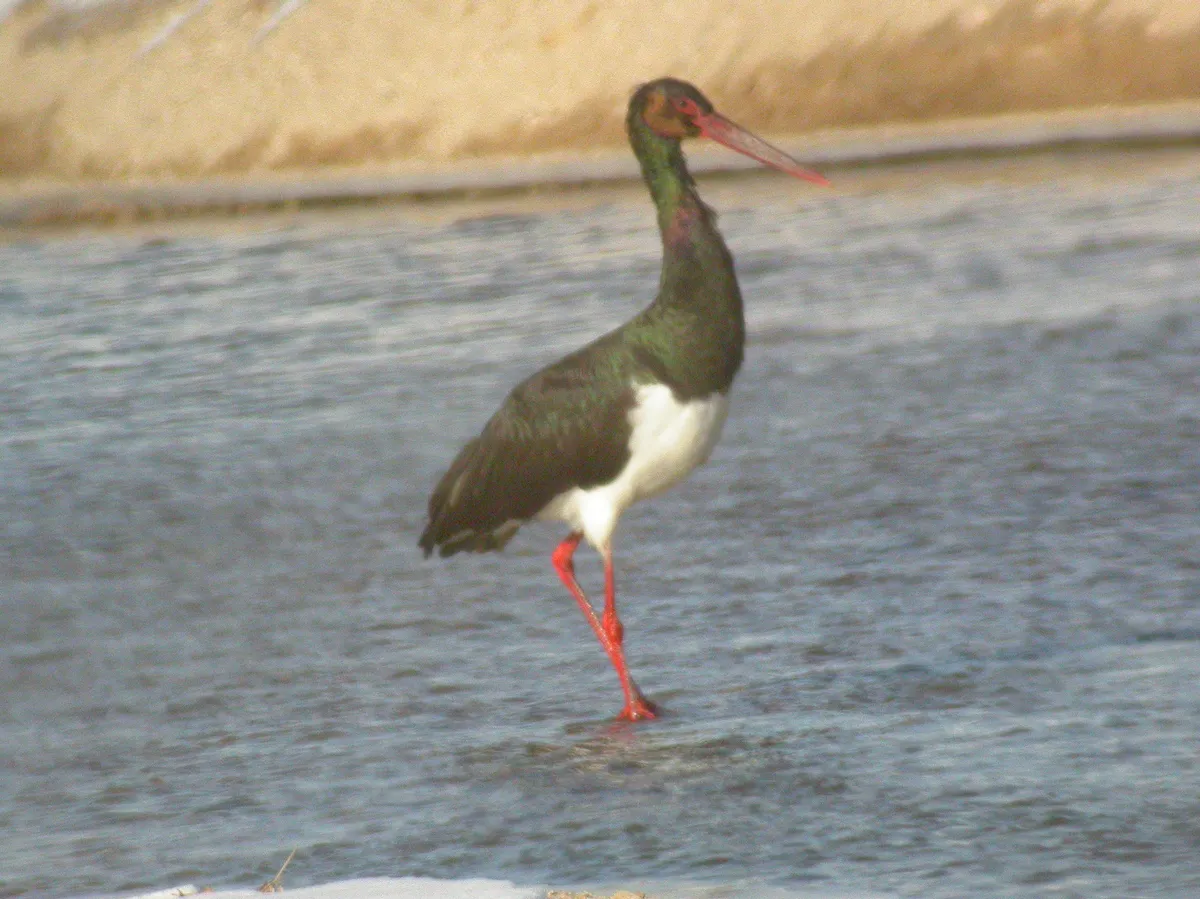
Meokhwangsae
기타 .
Basic information
- Designation
- Natural Monument No.200
- Category
- 동식물
- Designated year
- 1968
- Location
- ., 기타— 기타 전국일원
- Coordinates
- No precise coordinates are available, so this item is not shown as a map marker. To be added later.
AI Docent
Coming soonAn AI-generated, friendly retelling of this heritage site is available in Korean. An English version is on our roadmap — for now, please see the official description below.
Description
Machine-translatedThis English description was machine-translated and may contain inaccuracies. Refer to the original Korean text for details.
The black stork is distributed in Iran, Amur, Ussuri, northern northeast China, Korea, Japan, Africa, and India. It has a body length of 96 centimeters with a lustrous black head, neck, upper breast, and back, a white belly, and a reddish beak, legs, and eye-ring. Juvenile birds are generally dull-colored with brownish tones and lack luster. It inhabits marshes, riverbanks, and small mountain valleys, living singly or in pairs. It builds nests from small branches on tall trees or rocky cliffs where human access is rare, laying three to five white eggs. The black stork is an extremely rare endangered winter migrant appearing only very occasionally in Korea in September through October and January through February, making it a natural monument worthy of designation and protection.
Have you visited this place?
Log in and verify your visit on-site via GPS to record a stamp in My Journey. (QR verification coming later.)
Images: KOGL (khs.go.kr) · Data source: Korea Heritage Service Open API (khs.go.kr)