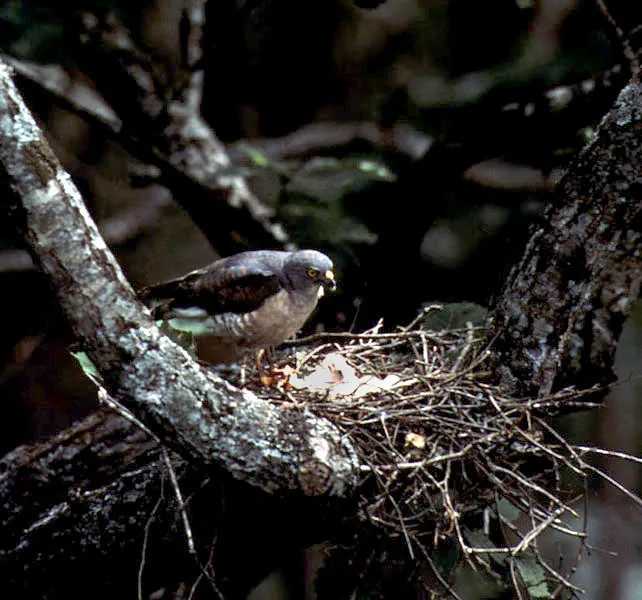
Bulgeunbaesaemae
기타 .
Basic information
- Designation
- Natural Monument No.323-2
- Category
- 동식물
- Designated year
- 1982
- Location
- ., 기타— 기타 전국일원
- Coordinates
- No precise coordinates are available, so this item is not shown as a map marker. To be added later.
AI Docent
Coming soonAn AI-generated, friendly retelling of this heritage site is available in Korean. An English version is on our roadmap — for now, please see the official description below.
Description
Machine-translatedThis English description was machine-translated and may contain inaccuracies. Refer to the original Korean text for details.
Hawks, including the Chinese Sparrowhawk (Tachyspiza soloensis), are protected by various international conventions and agreements due to their rarity, and as they are uncommon in Korea, they are designated and protected as Natural Monuments. The Chinese Sparrowhawk (Tachyspiza soloensis) is distributed in China, Korea, Taiwan, and other regions, measuring 28 cm in body length. It primarily inhabits plains, hills, and oak and pine forests. As a rare species, it is a relatively uncommon summer resident that arrives in early May and departs in September. The Chinese Sparrowhawk (Tachyspiza soloensis) is a rare species and a relatively uncommon summer resident in lowlands and forest regions. It arrives in early May and departs in September. Following the post-war excessive pesticide spraying, it began to decline and has become a very rare summer resident even in previously common central regions such as Gwangneung. It is known from the southern Manchuria (northeast China), western parts of eastern China (Sichuan Province), southern regions (Guangxi and Guangdong Provinces), and is also recorded in Taiwan; in Japan, it is recorded as a vagrant to southern Kyushu, Honshu, Izu-Nanado (Torishima), Nan'yo Islands (Nan'yo Gunto), Ryukyu, and other regions. Ecology: The most common hawk species in central Korea; breeding season is around May. Distribution: From temperate to subtropical regions in eastern Asia, from southern Manchuria to Guangdong Province in China, Korea, Taiwan, and other areas. Northern breeding populations migrate south for wintering. Designation Number Adjustment Reason: The current classification system for Natural Monument birds, in which 2-8 species are included under one designation number, is being reorganized by assigning independent subspecies numbers to prevent public confusion and maintain consistent management practices.
Have you visited this place?
Log in and verify your visit on-site via GPS to record a stamp in My Journey. (QR verification coming later.)
Images: KOGL (khs.go.kr) · Data source: Korea Heritage Service Open API (khs.go.kr)