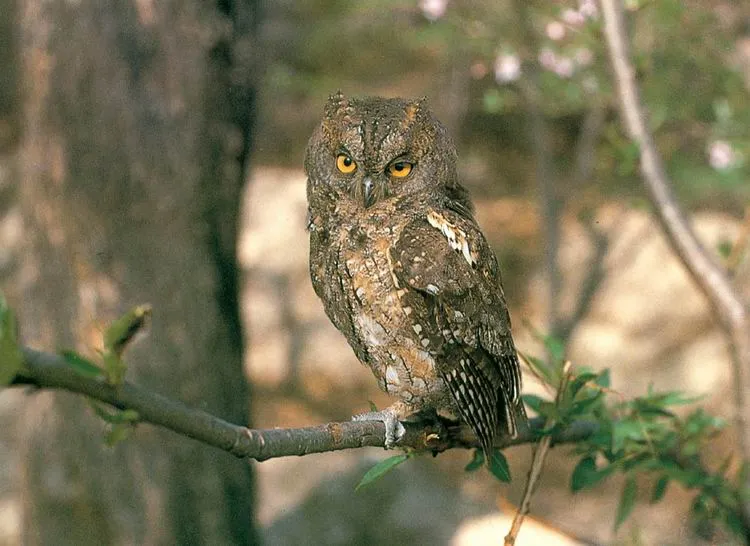
Sojjeoksae
기타 .
Basic information
- Designation
- Natural Monument No.324-6
- Category
- 동식물
- Designated year
- 1982
- Location
- ., 기타— 기타 전국일원
- Coordinates
- 37.288790, 128.015888Kakao address conversion
AI Docent
Coming soonAn AI-generated, friendly retelling of this heritage site is available in Korean. An English version is on our roadmap — for now, please see the official description below.
Description
Machine-translatedThis English description was machine-translated and may contain inaccuracies. Refer to the original Korean text for details.
The Oriental Scops Owl (Otus sunia) has a body length of approximately 20cm. It is a common summer bird found throughout Korea, resting in forests during the day and primarily active at night. It feeds on insects and arachnids. The Indian Scops Owl (Otus bakkamoena) has a body length of approximately 24cm. Its head and back are brown, the throat and belly are white, and its eyes are reddish. In Korea, it is a resident bird, though flocks breeding in the north descend southward during winter, and it is more common than the Oriental Scops Owl (소쩍새). It is nocturnal, resting in dark forests during the day and becoming active from evening onwards. It feeds on small birds, mammals, amphibians, reptiles, and insects. Owls and eagle owls are threatened by survival pressures from contaminated food sources and their numbers are declining daily due to habitat destruction of breeding and wintering grounds, as well as indiscriminate hunting by humans. Owls and eagle owls are internationally protected birds, and Korea designates 7 of 10 species as natural monuments for protection.
Location
지도를 불러오는 중…
Have you visited this place?
Log in and verify your visit on-site via GPS to record a stamp in My Journey. (QR verification coming later.)
Images: KOGL (khs.go.kr) · Data source: Korea Heritage Service Open API (khs.go.kr)