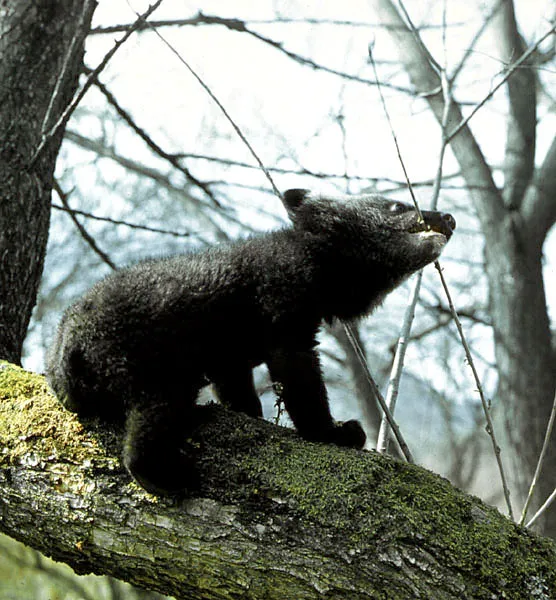
Bandalgaseumgom
기타 .
Basic information
- Designation
- Natural Monument No.329
- Category
- 동식물
- Designated year
- 1982
- Location
- ., 기타— 기타 전국일원
- Coordinates
- 35.241962, 127.490183Kakao address conversion
AI Docent
Coming soonAn AI-generated, friendly retelling of this heritage site is available in Korean. An English version is on our roadmap — for now, please see the official description below.
Description
Machine-translatedThis English description was machine-translated and may contain inaccuracies. Refer to the original Korean text for details.
The Asiatic Black Bear is distributed in eastern Siberia, China, Cambodia, Thailand, the Himalayas, Taiwan, Japan, and areas around Baekdudaegan, Seoraksan, and Jirisan in Korea. It measures approximately 1.92m in body length, 80cm in tail length, and weighs around 107kg. Its entire body is glossy black. It has a white crescent-shaped marking on the upper chest, though this marking varies greatly in size, and in rare cases may be entirely absent. Its snout is pointed and short, its forehead is broad, and its ears are relatively large. It is omnivorous and particularly enjoys wild grapes, raspberries, actinidia, and acorns. In spring, it feeds on young tree shoots and leaves, and digs out roots. It also feeds on decaying wood to obtain insects, ants, and pupae. Additionally, it captures crayfish, small fish, bird eggs, and chicks, and is particularly fond of honey. It hibernates beginning around the start of winter in caves and awakens in March of the following year to resume activity. The Asiatic Black Bear once inhabited high mountain regions throughout Korea, but currently, only an estimated 10-20 individuals remain. As Korea's largest resident animal, the Asiatic Black Bear is facing extinction and is protected internationally, making it a precious animal designated and protected as a natural monument.
Location
지도를 불러오는 중…
Have you visited this place?
Log in and verify your visit on-site via GPS to record a stamp in My Journey. (QR verification coming later.)
Images: KOGL (khs.go.kr) · Data source: Korea Heritage Service Open API (khs.go.kr)