Sudal
기타 .
Basic information
- Designation
- Natural Monument No.330
- Category
- 동식물
- Designated year
- 1982
- Location
- ., 기타— 기타 전국일원
- Coordinates
- 34.796879, 127.651830Kakao address conversion
AI Docent
Coming soonAn AI-generated, friendly retelling of this heritage site is available in Korean. An English version is on our roadmap — for now, please see the official description below.
Description
Machine-translatedThis English description was machine-translated and may contain inaccuracies. Refer to the original Korean text for details.
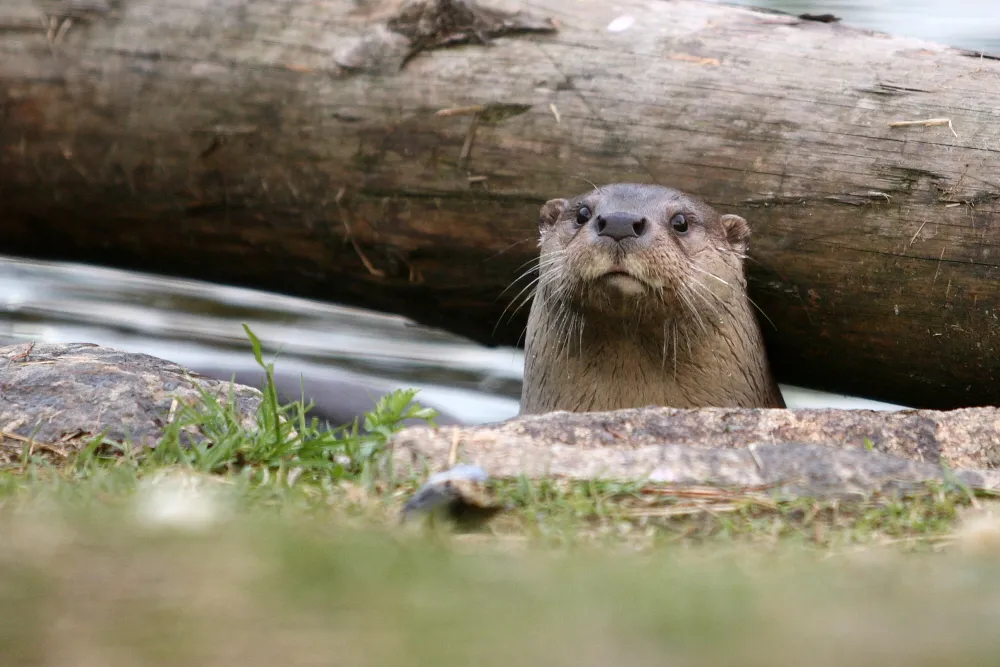
The Eurasian Otter belongs to the mustelid family and is widely distributed across Europe, Africa, and Asia, inhabiting northern and central Korea, Busan Jangnim, Gangneung, and Jirisan, among other locations. The Eurasian Otter is well-adapted to aquatic life, with body length of 63-75cm, tail length of 41-55cm, and weight of 5.8-10kg. Its head is flattened and round-shaped, its nose is rounded, its eyes are very small, and its ears are short, covered and hidden within wrinkled skin and fur. Its torso is very long and its tail is thick and rounded. The tail length is about 2/3 of the body length, its legs are short, and its toes have webbing extending to the claws for efficient swimming. When walking, all toes touch the ground, making its movements slow on land. Its entire body is covered with short, dense fur that is thick, dark brown, and has a glossy appearance with bristly guard hairs. It inhabits riverbanks and lakeshores, living in rock crevices near the water, under tree roots, or in burrows dug in the ground. The entrance hole faces the water while the air hole opens toward higher ground. Fish bones are scattered around its dwelling, making it easy to locate. It feeds well on catfish, snakeheads, loaches, frogs, and crabs. As a nocturnal animal, it rests during the day and enters the water when threatened. Its eyes and ears are well-developed, enabling it to see well both day and night and hear even very faint sounds. It also uses its sense of smell to detect fish presence and predator attacks. Its temperament is gentler than other mustelids, making it easy to tame. The Eurasian Otter is already extinct in neighboring Japan, and in Korea, it is still visible throughout the country but is becoming rare. Once common in mountain streams north of central Korea, after the Korean War, people hunted it indiscriminately, and river pollution reduced its food sources, causing otter numbers to decline rapidly. The Eurasian Otter is not only endangered, but also a precious animal well-adapted to aquatic life as a mammal, therefore designated and protected as a natural monument.
Location
지도를 불러오는 중…
Have you visited this place?
Log in and verify your visit on-site via GPS to record a stamp in My Journey. (QR verification coming later.)
Images: KOGL (khs.go.kr) · Data source: Korea Heritage Service Open API (khs.go.kr)