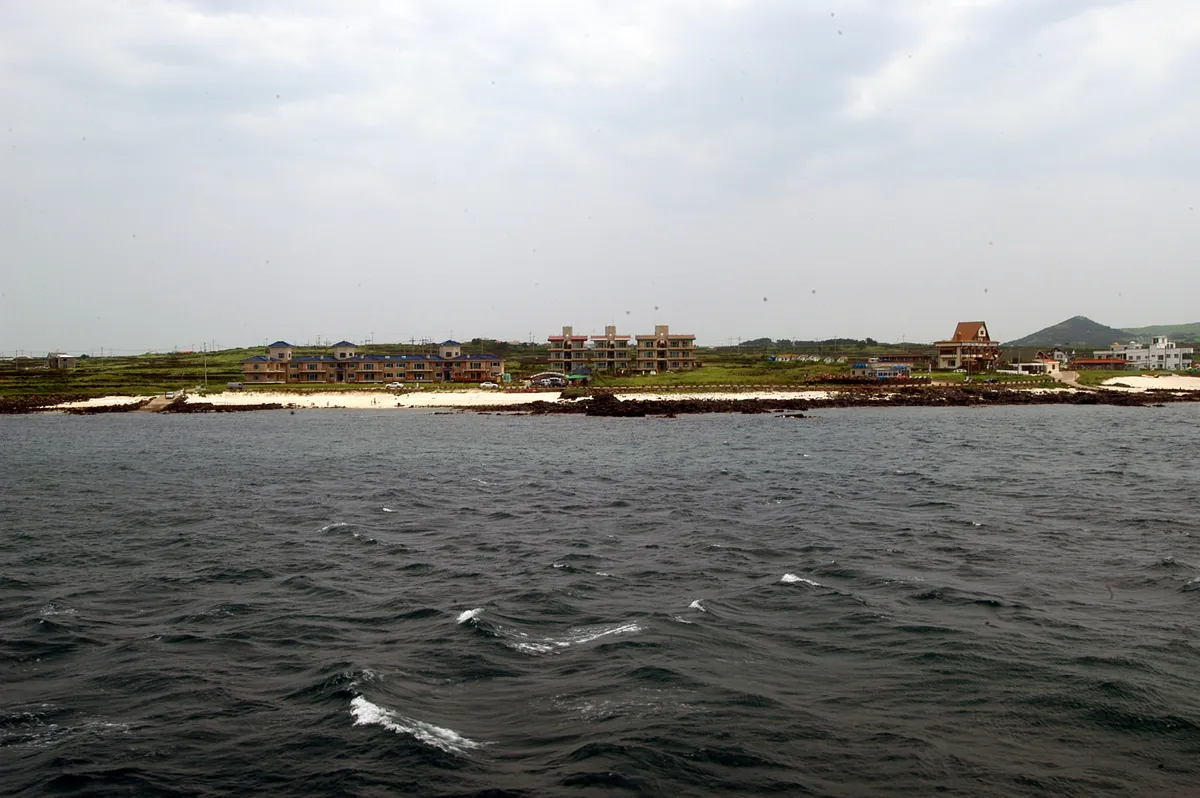
Rhodolith Beach on Udo Island, Jeju
濟州 牛島 紅藻團塊 海濱
제주특별자치도 제주시
Basic information
- Designation
- Natural Monument No.438
- Category
- 자연지형
- Designated year
- 2004
- Location
- 제주시, 제주특별자치도— 제주특별자치도 제주시 우도면 연평리 2215-5 등 지선에 인접한 공유수면
- Coordinates
- 33.502677, 126.940800
AI Docent
Coming soonAn AI-generated, friendly retelling of this heritage site is available in Korean. An English version is on our roadmap — for now, please see the official description below.
Description
Beaches and sand dunes mostly composed of shell sand are found in many places along the northern coast of Jeju Island. However, that the beach in Udo Island is composed not of shells but of rhodoliths (red algae nodules), which makes it very valuable for academic study. The rhodoliths vary greatly in size, with diameter ranging from 1cm to 5-8cm. The Rhodolith Beach of Udo Island stretches 300m and has width of 15m, forming stark contrast with the black basalt in this area. The beach was formerly known as a coral sand beach, but studies have revealed that the sand is made up of red-algae nodules rather than coral. Rhodoliths are a species of calcareous algae that deposits calcium carbonate in cells or walls between cells through photosynthesis. Nodules living underwater usually have diameter of approximately 4-5cm, spherical shape, and bumpy surfaces. In most nodules, the internal tissue and reproductive organs are intact. They are found in many parts of the United States such as Florida and the Bahamas, usually near sunken rocks. Since it is rare for an entire beach to be composed of red algae nodules, however, the Udo beach is very important for academic study.
Location
지도를 불러오는 중…
Have you visited this place?
Log in and verify your visit on-site via GPS to record a stamp in My Journey. (QR verification coming later.)
Images: KOGL (khs.go.kr) · Data source: Korea Heritage Service Open API (khs.go.kr)