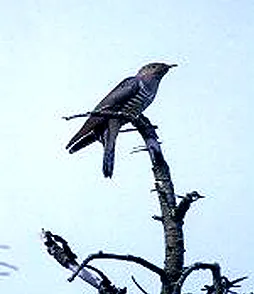
Dugyeon
杜鵑
기타 .
Basic information
- Designation
- Natural Monument No.447
- Category
- 동식물
- Designated year
- 2005
- Location
- ., 기타—
- Coordinates
- 37.290652, 126.997248Kakao address conversion
AI Docent
Coming soonAn AI-generated, friendly retelling of this heritage site is available in Korean. An English version is on our roadmap — for now, please see the official description below.
Description
Machine-translatedThis English description was machine-translated and may contain inaccuracies. Refer to the original Korean text for details.
The Lesser Cuckoo (Cuculus poliocephalus) breeds in eastern Asia, northeastern China, and Japan, wintering in Southeast Asia. In Korea, it is a rare summer bird confirmed in lowland forests throughout the country. Similar to the cuckoo but with thicker stripes and a body length of 24-28cm, making it smaller than the common cuckoo. The Lesser Cuckoo is called by many names in Chinese including Jianzhei (蜺涵), Buruigui (不如歸), Dubo (杜魄), Shuhun (蜀魂), Duyu (杜宇), and ZiGui (子規), numbering in the dozens. In Korea, it is also called Guisukdo (歸蜀道) or Imgungnae. It appears as subject matter in numerous classical poems including Kim Si-seup's "Buruigui," Du Fu's "Ducken Line," and Seo Geo-jeong's "Buruigui-geo," and is also famous through the poem about Danjong. However, it is frequently confused with the Eurasian Scops Owl, and many people still confuse the two. The Lesser Cuckoo is one of the most well-known birds due to its distinctive calls, inspiring poetic sentiment. It appears most frequently in classical Chinese poetry, and different people hear its calls differently, leading to various legends. However, recently, as whistle thrushes that engage in brood parasitism have greatly declined, lowland forests have been replaced by foreign artificial forests, and insect food sources have significantly decreased, its calls are disappearing from our ears. Although the Lesser Cuckoo was relatively uncommon as a summer bird, it has declined most dramatically among cuckoo species arriving in Korea recently, therefore designated and protected as a natural monument.
Location
지도를 불러오는 중…
Have you visited this place?
Log in and verify your visit on-site via GPS to record a stamp in My Journey. (QR verification coming later.)
Images: KOGL (khs.go.kr) · Data source: Korea Heritage Service Open API (khs.go.kr)