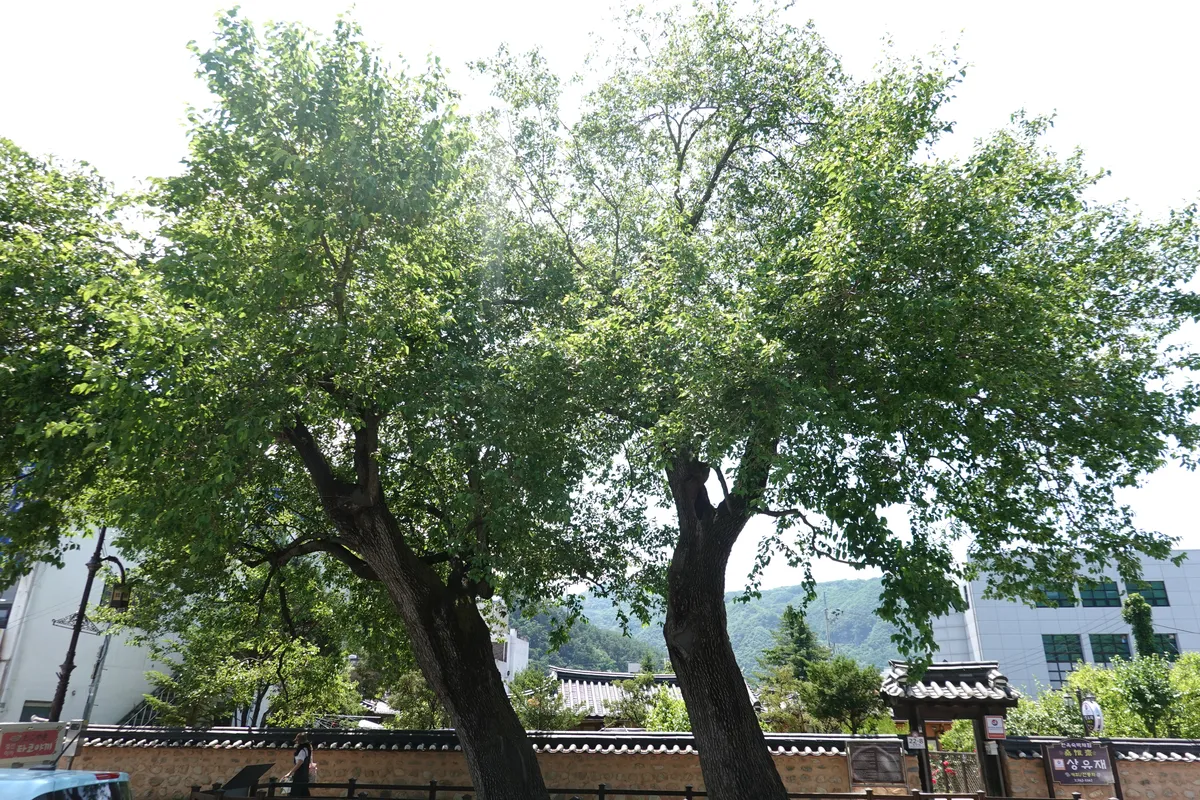
Bongyangri Ppong Tree, Jeongseon
旌善 鳳陽里 뽕나무
강원특별자치도 정선군
Basic information
- Designation
- Natural Monument No.568
- Category
- 동식물
- Designated year
- 2021
- Location
- 정선군, 강원특별자치도— 기타 정선군
- Coordinates
- 37.379747, 128.661193Kakao address conversion
AI Docent
Coming soonAn AI-generated, friendly retelling of this heritage site is available in Korean. An English version is on our roadmap — for now, please see the official description below.
Description
Machine-translatedThis English description was machine-translated and may contain inaccuracies. Refer to the original Korean text for details.
From ancient times, Joseon was an agrarian society where sericulture and the cultivation of mulberry trees, as expressed in the term 'non-sang' (agriculture and sericulture), were among the most important state undertakings. The court planted and cultivated mulberry trees in palace gardens and actively promoted sericulture among the people. The earliest official record of mulberry trees planted in the palace dates to the Taejong Annals (Taejong 9, March 1), where in 1409, following the public mulberry system of King Seong of the Zhou Dynasty in China, Taejong commanded the planting of mulberry trees in the palace gardens after the construction of Changdeokgung Palace. The Jeongson Bongyang-ri Mulberry Tree is distinctive in that two trees grow side by side, unlike the single trees previously designated as natural monuments. The trees are in good health with beautiful forms, and according to tradition, they were planted five hundred years ago when the Go family relocated from Jeju to Jeongson. The tree serves as a symbol of the sericulture culture of Jeongson and is an old-growth tree that has existed alongside traditional houses, making its cultural, folk, and historical value significant enough to merit designation and protection as a natural monument.
Location
지도를 불러오는 중…
Have you visited this place?
Log in and verify your visit on-site via GPS to record a stamp in My Journey. (QR verification coming later.)
Images: KOGL (khs.go.kr) · Data source: Korea Heritage Service Open API (khs.go.kr)