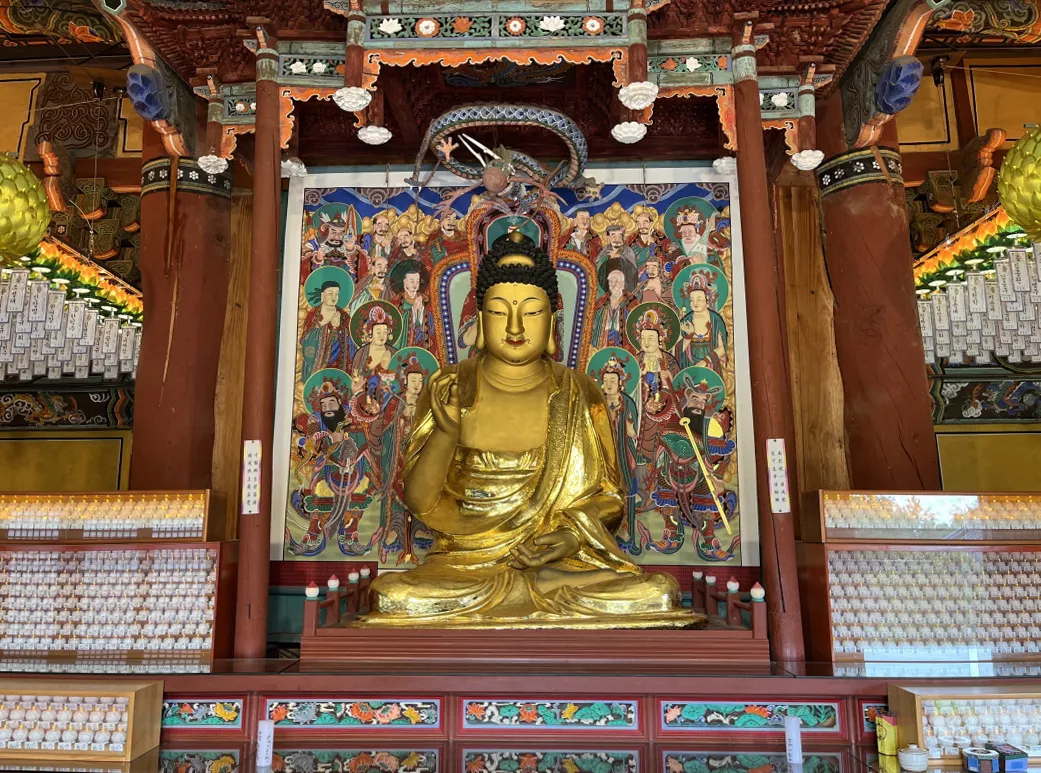
Biamsa Sojoamitayeorae Seated Figure, Sejong
世宗 碑岩寺 塑造阿彌陀如來坐像
세종특별자치시
Basic information
- Designation
- Treasure No.2300
- Category
- Sculpture
- Era
- 조선 전기(16세기)
- Designated year
- 2025
- Location
- , 세종특별자치시— 세종특별자치시 비암사길 137(전의면, 비암사) 비암사
- Coordinates
- 36.611208, 127.191585Kakao address conversion
AI Docent
Coming soonAn AI-generated, friendly retelling of this heritage site is available in Korean. An English version is on our roadmap — for now, please see the official description below.
Description
Machine-translatedThis English description was machine-translated and may contain inaccuracies. Refer to the original Korean text for details.
The clay sculpture of Amitabha Buddha in seated posture from Biamsa Temple in Sejong is an important Buddhist cultural heritage artifact. Most surviving Buddhist cultural treasures were created during the period of Buddhist restoration and reconstruction following major wars such as the Japanese Invasions of Korea. Buddhist artifacts created before this period are rare. Although this Amitabha sculpture lacks a production vow inscription that would provide exact dating and information about the sculptor-monk, stylistic features evident in the facial expression, anatomical proportions, and dynamic brushwork suggest it was produced in the mid-16th century. Unlike typical clay Buddha sculptures, which are constructed with a basic wooden framework covered in clay, this work features detailed wooden outlining that is then refined with a limited amount of clay. Like other early Joseon Buddhist statues, it exhibits a high ushnisha and disproportionately robust upper body compared to low, broad knees, with abundant sculptural volume. This 16th-century Buddhist statue is exceptionally rare in surviving examples and displays the sculptor's individuality in the facial expression, making it art-historically significant. Moreover, scientific investigation has clearly revealed its manufacturing technique, making it an important resource for future research on Buddhist sculpture history, particularly clay Buddha sculptures of early Joseon.
Location
지도를 불러오는 중…
Have you visited this place?
Log in and verify your visit on-site via GPS to record a stamp in My Journey. (QR verification coming later.)
Images: KOGL (khs.go.kr) · Data source: Korea Heritage Service Open API (khs.go.kr)