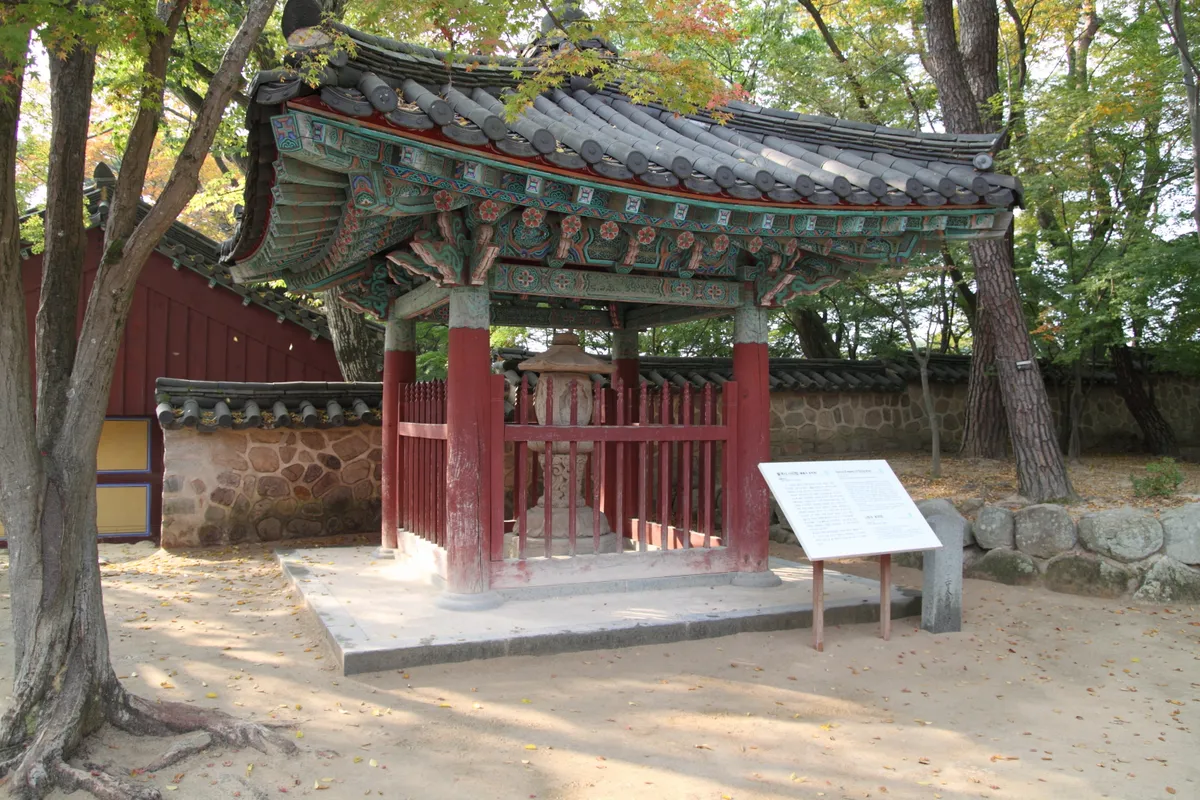
Sarira Pagoda of Bulguksa Temple, Gyeongju
慶州 佛國寺 舍利塔
경상북도 경주시
Basic information
- Designation
- Treasure No.61
- Category
- Sites & Pagodas
- Era
- 고려시대
- Designated year
- 1963
- Location
- 경주시, 경상북도— 경상북도 경주시 불국로 385(진현동, 불국사)
- Coordinates
- 35.790610, 129.331621
AI Docent
✨ AI-generatedWelcome to the Sarira Pagoda of Bulguksa Temple! Imagine stepping into the lecture hall here in Gyeongju and discovering this extraordinary stone stupa—a masterpiece that's part of our UNESCO World Heritage site. This isn't just any pagoda. It's a cylindrical tower designed to hold sacred Buddhist relics—either from eight revered monks or a queen who devoted herself to Buddhism after her husband, King Heongang, passed away. What makes it special is the craftsmanship: look closely and you'll see lotus flowers carved into the base, delicate cloud patterns on the connecting pillar, and niches holding images of Buddha and bodhisattvas. The design is fascinating—notice the twelve-angled roof edges and the hexagonal top, combining Unified Silla traditions with early Goryeo artistry. The stupa's journey is equally remarkable: taken to Tokyo in 1905, it returned home to Korea in 1933. This beautiful stone monument stands as a testament to Korea's profound Buddhist heritage and artistic achievement.
⚠ This is an AI-generated retelling of the official description. For accuracy, refer to the official description below.
Description
This stupa is housed in a protective building at the back of Bulguksa Temple's lecture hall. It is said that the stupa contains either the sarira of eight Buddhist Monks or the sarira of a queen who entered the Buddhist monkhood upon the death of her husband, King Heongang. Consisting of pedestal, main body and ornamental capstone, this stupa resembles a stone lantern. The pedestal is composed of two semi-circular stones - each carved with a lotus flower design on its octagonal ground stone - that are connected with a drum-shaped pillar bearing a vivid cloud design. The main body of the stupa is cylindrical, and is carved with four-pillar patterns decorated with flower designs. The four sides divided by the pole patterns have niches embossed with images of Buddha and bodhisattvas. The roof has twelve angles on the edges of the eaves but the top of the roof is hexagonal. The roof slopes gently; and only part of the finial remains. The profoundly beautiful style and delicate workmanship of the stupa indicate that it was made in the early Goryeo Dynasty while retaining certain features of the Unified Silla style. In 1905, the stupa was taken out of Korea to Ueno Onshi Park in Tokyo by the Japanese, and was returned to Korea in 1933.
Location
지도를 불러오는 중…
Have you visited this place?
Log in and verify your visit on-site via GPS to record a stamp in My Journey. (QR verification coming later.)
Images: KOGL (khs.go.kr) · Data source: Korea Heritage Service Open API (khs.go.kr)