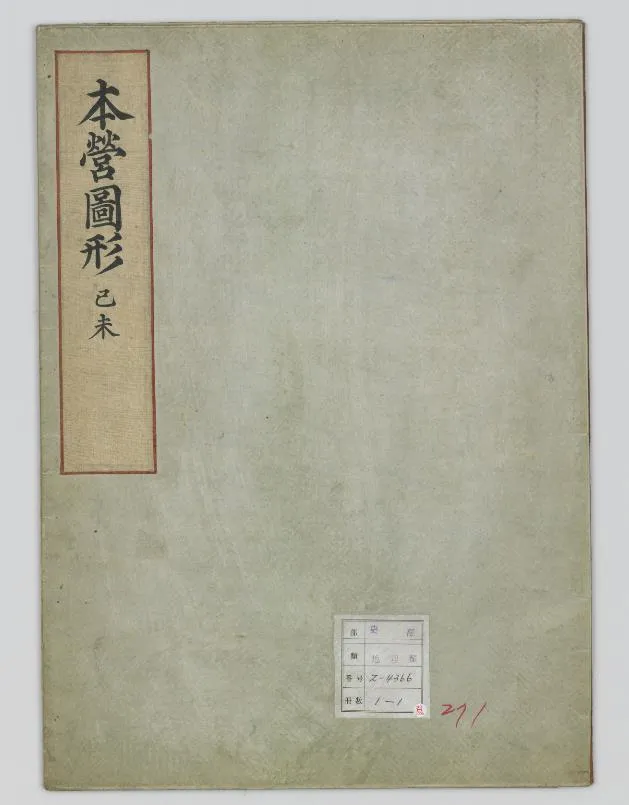
Jangyongyeong Bonyeongdohyeong (Collection)
壯勇營 本營圖形 一括
경기도 성남시
Basic information
- Designation
- Treasure No.2070
- Category
- Books & Records
- Era
- 조선 정조
- Designated year
- 2020
- Location
- 성남시, 경기도— 경기도 성남시 분당구 하오개로 323 (운중동, 한국학중앙연구원)
- Coordinates
- 37.391826, 127.055645Kakao address conversion
AI Docent
Coming soonAn AI-generated, friendly retelling of this heritage site is available in Korean. An English version is on our roadmap — for now, please see the official description below.
Description
The Treasure No. 2070, ‘Jangyongyeong Bonyeongdohyeong’ consists of a set of architecture paintings (a color drawing and two floor plan blueprint called ‘gangado’) depicting Jangyongyeong Headquarters. These drawings were made in 1799 and 1801. They are kept at Jangseogak Hall of the Academy of Korean Studies (AKS) and the Korea University Museum. Jangyongyeong was the site for a unit of royal sentries commissioned by King Jeongjo (r. 1776-1800) in 1793 to strengthen royal military. The headquarters and outpost station was located in Hanyang (present-day Seoul) and Hwaseong (present-day Suwon), respectively. The set of drawings was intended for reporting the general status of the military headquarters within the capital (now the site of Ihyeongung Palace at Jongno 4-ga, Seoul) to the King. The layout of the buildings are based on the exact scale of the the floor plan, and the precise brush strokes depict the buildings in vivid detail. The drawings have high historical value for describing the exact location of the military camp, its size, and the layout and functions of its buildings. They are some of the oldest artifacts left in the country in terms of a floor plan blueprint of an official outpost station along with the relevant color drawing of the buildings. They depict the contours of the land accurately based on the understanding of the exact scale and topography at that era when modern-day measurement was not unavailable. The floor plan blueprint along with the color drawing of the Jangyongyeong buildings made it easy for people using them to see how the buildings appeared. The floor plan blueprint along with color drawings of the expanded buildings made subsequently, allow us to look back at how the military camp was enlarged. In the absence of knowing the exact site and size of Jangyongyeong, these visual relics depicting the layout of the Jangyongyeong buildings and its changes have become even more important for their historic, artistic, and academic value. So, it is highly worth preserving these relics in good condition due for the reasons as follows: ① they show when and why the buildings were made; they show how architecture drawings were made, used, and developed in olden times; ② they are differentiated from ordinary floor plan drawings of that era as those accompanying color drawings of the buildings; ③ they show the shape of the land based on measurements, which signals tremendous advancement in technological accomplishment; ④ they provide sufficient information along with artistic aesthetics using realistic portrayals of the buildings.
Location
지도를 불러오는 중…
Have you visited this place?
Log in and verify your visit on-site via GPS to record a stamp in My Journey. (QR verification coming later.)
Images: KOGL (khs.go.kr) · Data source: Korea Heritage Service Open API (khs.go.kr)