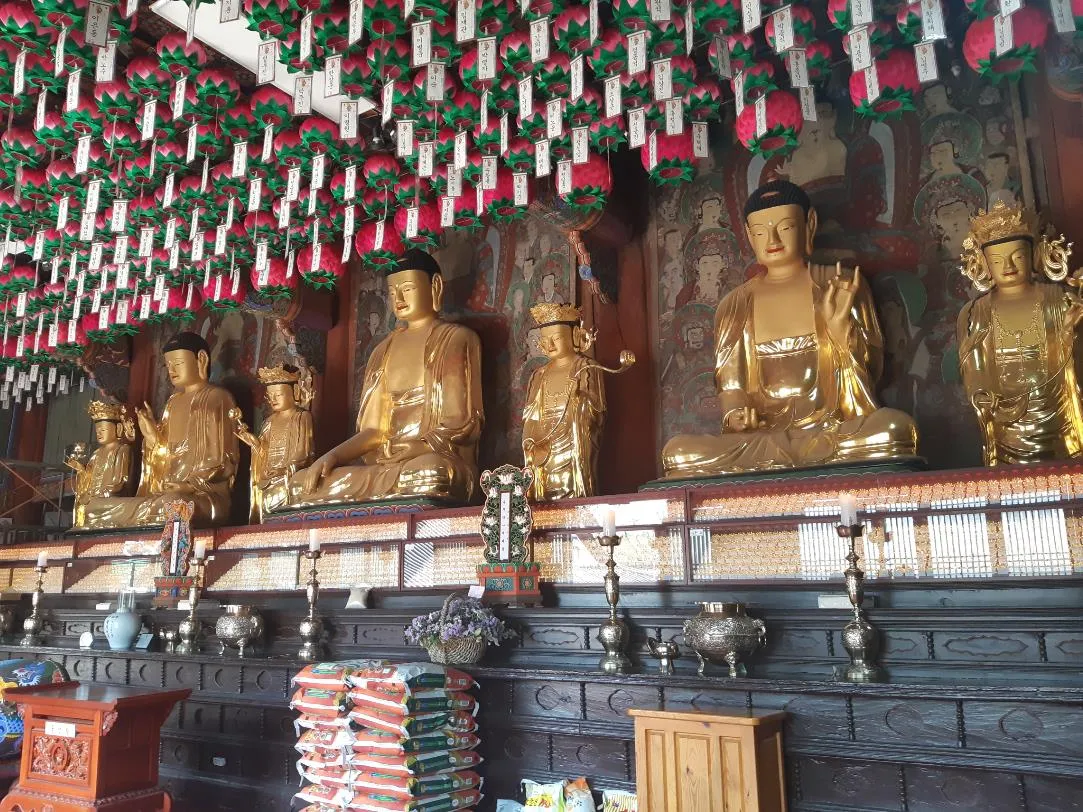
Gapsa Sojoseokgayeoraesambuljwasangㆍsabosaripsang Mit Reliquary Objects, Gongju
公州 甲寺 塑造釋迦如來三佛坐像ㆍ四菩薩立像 및 腹藏遺物
충청남도 공주시
Basic information
- Designation
- Treasure No.2076
- Category
- Sculpture
- Era
- 1617년(광해군 9)
- Designated year
- 2020
- Location
- 공주시, 충청남도— 충청남도 공주시 갑사로 567-3 (계룡면)
- Coordinates
- 36.366080, 127.186446Kakao address conversion
AI Docent
Coming soonAn AI-generated, friendly retelling of this heritage site is available in Korean. An English version is on our roadmap — for now, please see the official description below.
Description
Clay Seated Sakyamuni Buddha Triad, Four standing Bodhisattvas and excavated Relics of Gapsa Temple is a total of seven Buddha/ Bodhisattva statues made by nine monk sculptors including the leader Haengsa in 1617 (the 9th year of King Gwanghae’s reign). These statutes are believed to be the largest and the best in quality among the Buddha/ Bodhisattva statues made after the Imjin War (1592-1598). The Buddha statues are 2.5 m in height, and the Bodhisattva statues are about 2 m in height. Both of them appear awe-inspiring in stature. These precede the other clay-made, large-sized Buddha statues made in the early 17th century and are thought to be a reference for works of this type made in the late Joseon Dynasty Period. The letter of prayer concerning the construction of the statues found inside them provides information on when they were built (1617), the names of the builders, including Haengsa, and the number of benefactors of the work (2,300-plus people). The information reveals that it was a construction project on the grandest of scales in the late Joseon Dynasty Period. Haengsa inherited the sculpture tradition from monks Seokjun, Wono, and Gakmin, who carried out activities between the late 16th century and the late 17th century. These artifacts can be said to be one of the most monumental works made with their participation. The inverted triangle-shaped faces and prominent noses portray the features of works by Haengsa. The awe-inspiring posture, the steady body proportions, the facial expressions full of vigor show the prevailing characteristics of massive Buddha statues made after the Imjin War. The fact that leading monk sculptor of that era including Sumun, Hyeonjin, Eungwon, Bomnyeong provided support for the work reveals how monk sculptors cooperated and interacted with each other.
Location
지도를 불러오는 중…
Have you visited this place?
Log in and verify your visit on-site via GPS to record a stamp in My Journey. (QR verification coming later.)
Images: KOGL (khs.go.kr) · Data source: Korea Heritage Service Open API (khs.go.kr)