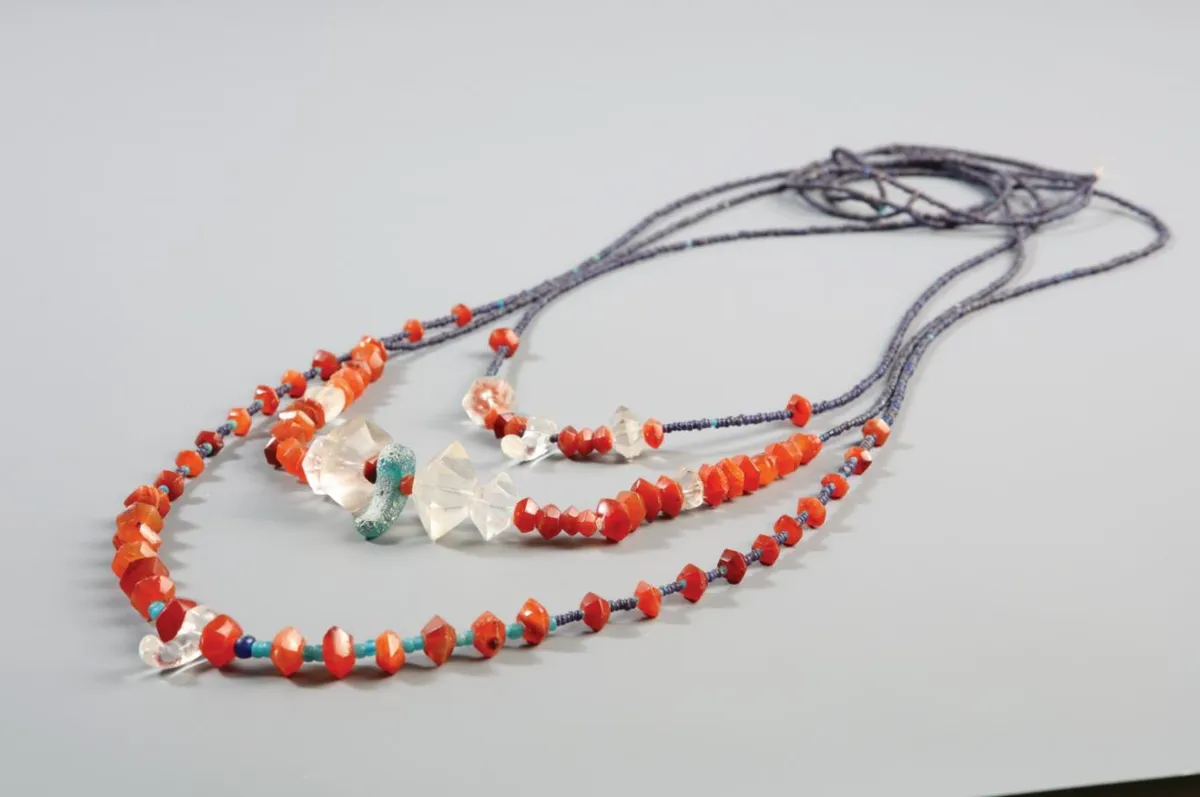
Daeseongdong 76hobun Chulto Mokgeori, Gimhae
金海 大成洞 七十六號墳 出土 頸飾
경상남도 김해시
Basic information
- Designation
- Treasure No.2081
- Category
- Craft
- Era
- 삼국시대(3~4세기)
- Designated year
- 2020
- Location
- 김해시, 경상남도— 경상남도 김해시 가야의길 126 (대성동, 고분박물관) 대성동고분박물관
- Coordinates
- 35.236133, 128.872858Kakao address conversion
AI Docent
Coming soonAn AI-generated, friendly retelling of this heritage site is available in Korean. An English version is on our roadmap — for now, please see the official description below.
Description
The National Treasure No. 2081 consists of necklaces excavated from Tomb No. 76 of Daeseong-dong Tumuli, Gimhae and was excavated together with earthenware and ironware from a wooden coffin tomb dating from the late 3rd century to the early 4th century during a survey by those of the Daeseong-dong Tombs Museum in 2011. They are valuable artifacts for two reasons: detailed information on where they were excavated; ornaments and accessories that represent Geumgwan Gaya. At a total of 2,473 artifacts, including 10 crystal beads, 77 agate beads, and 2,386 glass beads, it is a very rare case to discover so many objects excavated in one tomb. There has never been a case in which so many necklace accessories are excavated from a historic site associated with Geumgwan Gaya. It is surmised that the large number of accessories and ornaments were used to display social status of those buried. As to the techniques used to make them, they are composed of diverse materials and colors (i.e. clear crystal, reddish-yellow agate, and blue glass) harmoniously mixed. They also show excellent craftsmanship like glass intricately processed into curved jade or multi-faceted objects, small holes made to link them together, or their smoothly trimmed surface. To summarize, the location where these artifacts were excavated has been discovered, and they demonstrate the excellent skills needed to process diverse materials so intricately, as well as the harmony of diverse colors and materials. What’s more, these artifacts give a glimpse of the Gaya people’s sophisticated taste in accessories.
Location
지도를 불러오는 중…
Have you visited this place?
Log in and verify your visit on-site via GPS to record a stamp in My Journey. (QR verification coming later.)
Images: KOGL (khs.go.kr) · Data source: Korea Heritage Service Open API (khs.go.kr)