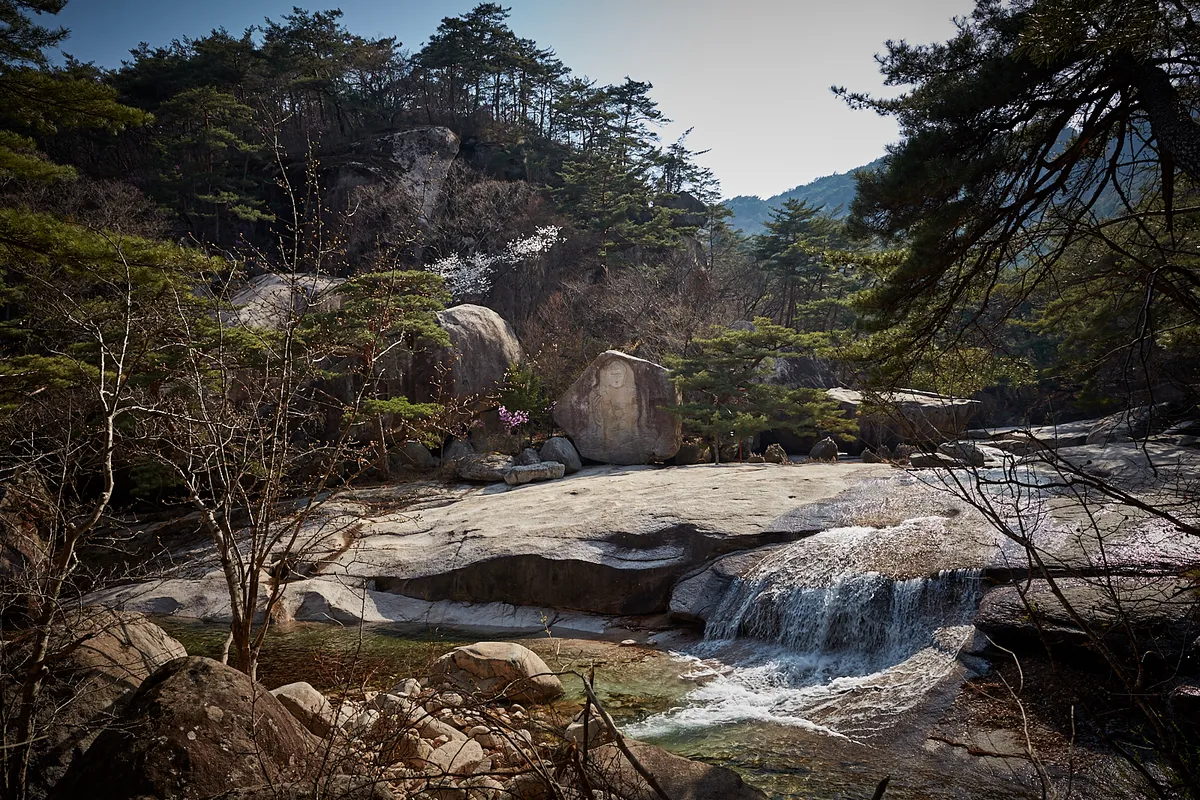
Bongamsa Maaemireugyeorae Seated Figure, Mungyeong
聞慶 鳳巖寺 磨崖彌勒如來坐像
경상북도 문경시
Basic information
- Designation
- Treasure No.2108
- Category
- Sculpture
- Era
- 조선시대(1663년(현종 4))
- Designated year
- 2021
- Location
- 문경시, 경상북도— 경상북도 문경시 원북길 313 (가은읍, 봉암사)
- Coordinates
- 36.702521, 128.001000
AI Docent
Coming soonAn AI-generated, friendly retelling of this heritage site is available in Korean. An English version is on our roadmap — for now, please see the official description below.
Description
Rock-carved Seated Maitreya Bodhisattva of Bongamsa Temple, Mungyeong (National Treasure No. 2108)was built in 1663 (the 4th year of King Hyeonjong’s reign). The stories about Monk Euicheon (penname: Hwanjeokdang) included in The Collection of Punggye’s Writings contains information on when it was created and who led its production. The book contains the story about the construction of the rock-carved statue with Monk Euicheon in the leading role. Monk Euicheon was born in Seonsan, Gyeongsangbuk-do in 1630, being a monk at aged 11, and passed away at aged 88 at Baengnyeonam Hermitage, Haeinsa Temple. He had practiced asceticism at Bongamsa Temple at the ripe age of 60 and 61 (1662 and 1663). The stories about him describe how he got this statue built up at Baegundae Platform, Bongamsa, as well as a memorial stone and a hermitage named Hwanjeokam. The rock-carved Seated Maitreya Buddha Statue is 539.6 cm high and 502.6 cm wide. The shape of a halo was formed behind the head, which was made using the technique of relief engraving marked by a deep engraving on the upper part and a shallower engraving on the lower part. Its white hair, round slender face, sharp nose, soft eyes, and gently closed mouth blend together as an ensemble. Three thin vertical lines are distinctly etched on the neck with a robe draped over the shoulders, the wrinkles of which are simplistically depicted. The statue’s posture is an auspicious pose, and the exposed right foot is rather small compared to the overall size of the statue or to the proportion of the lap of the statue. It is noteworthy that the intricate features of its face, posture, and robe reflect similar characteristics found in hanging scroll ornament drawings dating to the 17th century such as the hanging scroll drawinging of Buddha at Jungnimsa Temple in Naju (1622); the hanging scroll drawing of Shakyamuni Preaching the Lotus Sutra at Vulture Peak; Gijjhakuta Hill at Hwaeomsa Temple in Gurye (1653); the drawing of Shakyamuni Preaching the Lotus Sutra at Vulture Peak; Gijjhakuta Hill at Palsangjeon Hall, Ssanggyesa Temple in Hadong (1688); and the drawing of Shakyamuni Preaching the Lotus Sutra at Vulture Peak, Gijjhakuta Hill at Heungguksa Temple in Yeosu (1693). In the two hands of the statue are a bouquet-shaped flower stems. The Rock-carved Seated Maitreya Buddha Statue is one of a few rock-carved Buddha statues whose date of construction, pretext for production, benefactors and patronage behind it, detailed images are known by referring to writings of that era. It is a valuable relic for the study of rock-carved Buddha statues dating to the late Joseon Dynasty Period and the images of Maitreya Buddha. It also holds artistic value for using realistic sculptural techniques and creative expressions associated with Buddhist paintings of that era.
Location
지도를 불러오는 중…
Have you visited this place?
Log in and verify your visit on-site via GPS to record a stamp in My Journey. (QR verification coming later.)
Images: KOGL (khs.go.kr) · Data source: Korea Heritage Service Open API (khs.go.kr)