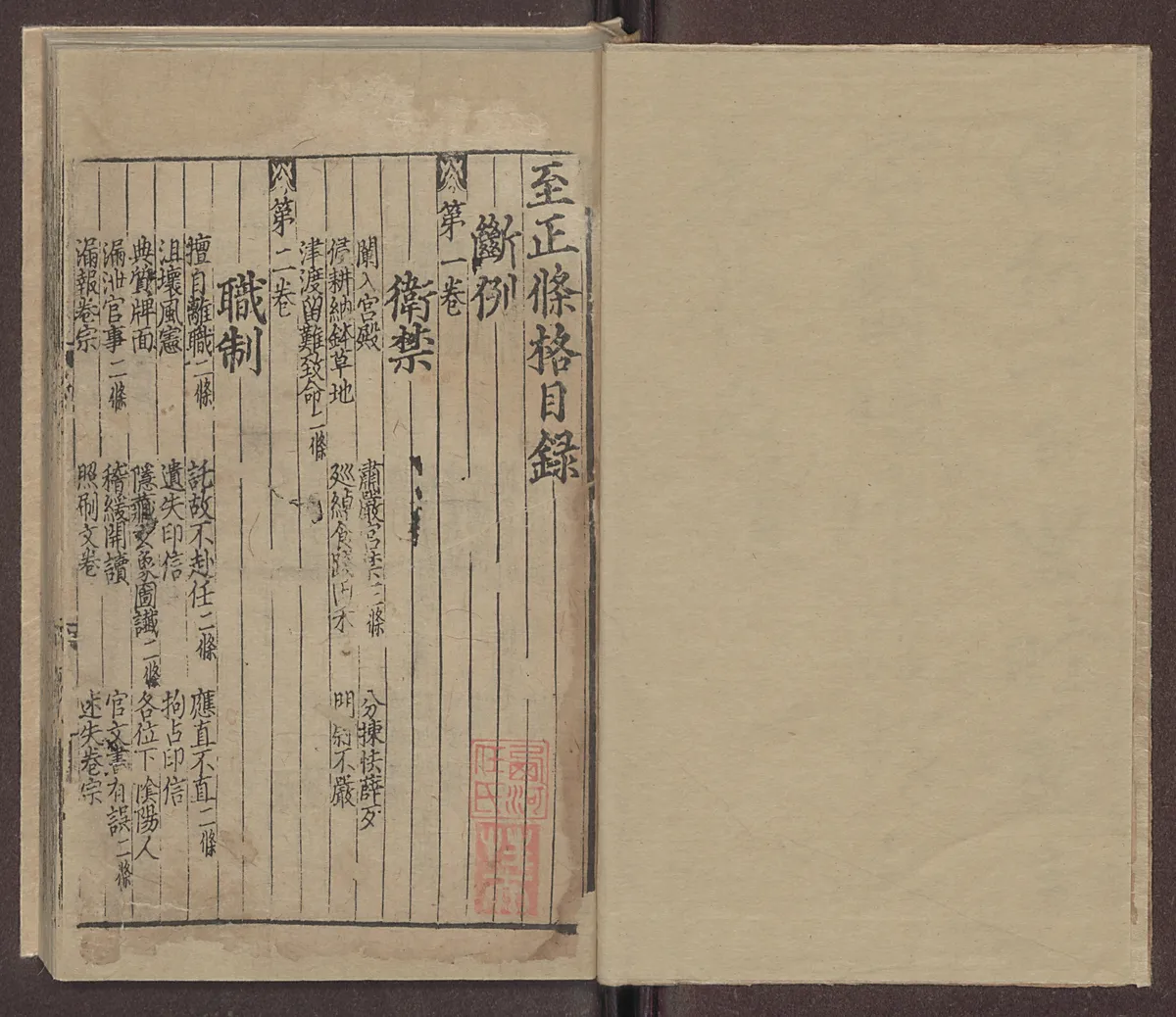
Jijeongjogyeok Gwon1∼12, 23∼34
至正條格 卷一∼十二, 二十三∼三十四
경기도 성남시
Basic information
- Designation
- Treasure No.2118
- Category
- Books & Records
- Era
- 1346년(원 순제 6, 고려 충목왕 2년)
- Designated year
- 2021
- Location
- 성남시, 경기도— 경기도 성남시
- Coordinates
- 37.419932, 127.126290
AI Docent
Coming soonAn AI-generated, friendly retelling of this heritage site is available in Korean. An English version is on our roadmap — for now, please see the official description below.
Description
Machine-translatedThis English description was machine-translated and may contain inaccuracies. Refer to the original Korean text for details.
The Zhizhengtiaoge (Zhizheng Code) represents the final legal code of the Yuan dynasty, promulgated in 1346 (sixth year of Emperor Shun of Yuan, second year of King Chungmok of Goryeo). The 'Zhizhengtiaoge' terminology references compilation of statutory provisions during the Zhizheng era, with both 'tiaogesuo' (statutory codes) and 'duanli' (case precedents) being carved and distributed in Zhizheng's sixth year. The Yuan compiled legal codes twice—in 1323 and 1346—with no surviving Chinese examples of Yuan legal codes presently discovered. This legal code became lost during the early Ming period, surviving only through references in titles and catalogs appearing in works such as the Imperially-Compiled Complete Library Catalog, preserving only fragmentary content knowledge. Following its discovery in Korea in 2003, international attention was drawn for the first time. The Zhizhengtiaoge Volumes 1-12, 23-34, though incomplete, represents the sole currently-identified surviving Yuan dynasty legal code worldwide, housed within Gyeongju Sonssi family documents of UNESCO-designated Yangdong Village. The Goryeo Sonssi family's possession of Zhizhengtiaoge reflects likely acquisition through early-Joseon ancestors including Sonsasung (1396-1435) and Sonjo (1433-1484), who held official positions at the Chancellery managing diplomatic documents, thereby accessing legal knowledge during that period. The Zhizhengtiaoge transmission to late-Goryeo profoundly influenced Korean legal and cultural history, confirmed through multiple sources including Joseon dynasty official records and government council diaries. Records document separate printing of fifty copies based on Yuan editions in 1423 (fifth year of King Sejong) and distribution to officials by King Seongjong in 1493 (twenty-fourth year of King Seongjong) for reading, confirming utilization as fundamental research material for studying foreign law and systems among Joseon officials. Thus, the Zhizhengtiaoge constitutes Yuan law influenced Korean governance following Mongol invasions, serving as basic reference material until Gyeongguktaejeon's promulgation. Additionally, this represents the sole surviving Yuan-printed edition unknown in China or Mongolia, maintaining high scholarly value for research into Goryeo late-to-Joseon early-period legal history and bibliography. The Zhizhengtiaoge Volumes 1-12, 23-34 warrants treasure designation for preservation and scholarly research based on exceptional global rarity as the sole known surviving Yuan legal code, coupled with profound importance in East Asian legal development influencing Korea and the world, representing significant cultural heritage of unparalleled historical meaning.
Location
지도를 불러오는 중…
Have you visited this place?
Log in and verify your visit on-site via GPS to record a stamp in My Journey. (QR verification coming later.)
Images: KOGL (khs.go.kr) · Data source: Korea Heritage Service Open API (khs.go.kr)